Fertiliser Shock Raises Africa’s Food Price Risks
By Stephen Nkrumah | 20 September 2026
Summary
The closure of the Strait of Hormuz on February 28 2026, created a fertiliser shock, with urea prices increasing from around USD 400 per metric ton to more than USD 850 per metric ton in April 2026 before partially easing.
High import dependence, weak local currencies, high sea freight and inland security risks in sub-Saharan Africa contribute to a slow pass-through of higher food prices to farmers.
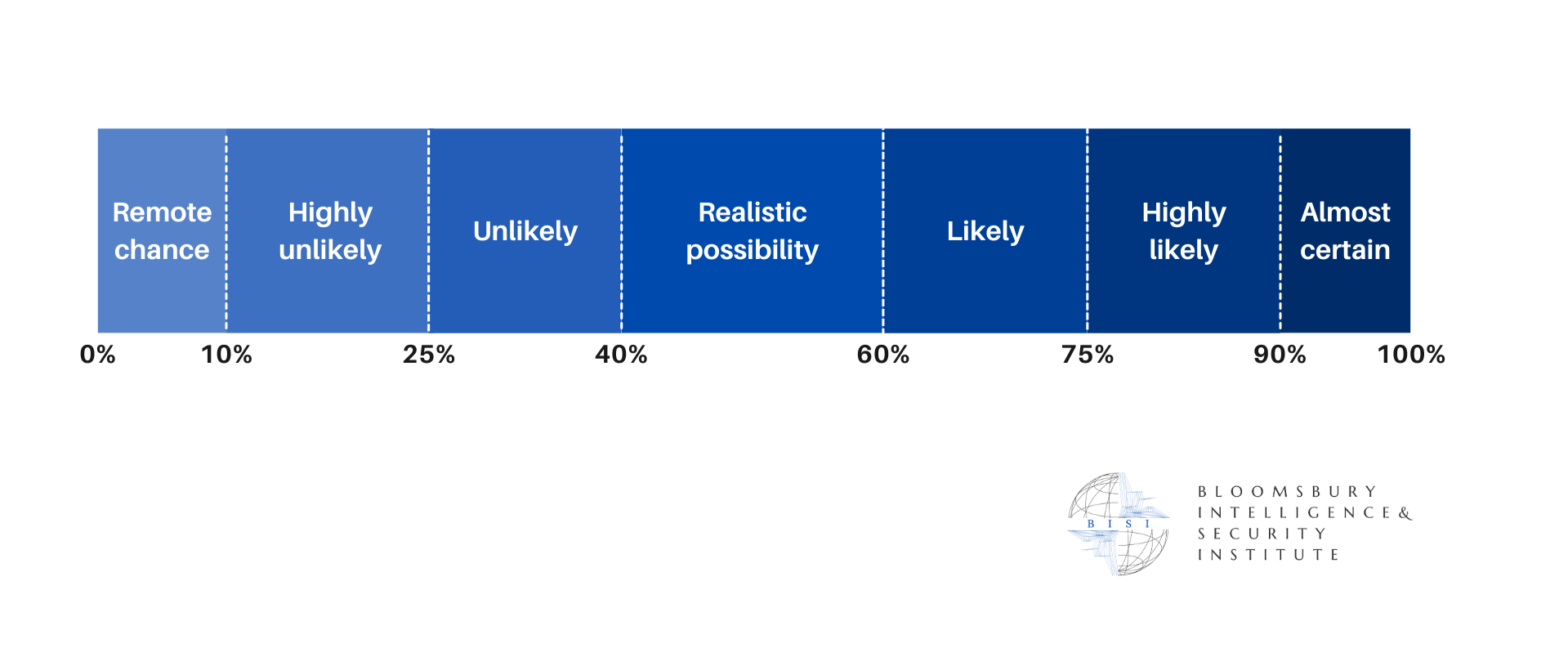
Food inflation is likely to peak from late 2026 to mid-2027 as farmers cut back on fertilisers before major planting and harvesting seasons.
Context
The ongoing Middle East conflict has turned fertiliser into a direct food-security risk for Africa. About one-third of the global seaborne trade in fertilisers and huge volumes of sulphur typically pass through the Strait of Hormuz. Gulf producers of fertilisers, such as urea and phosphate, are major suppliers to Africa. Sharp price increases in urea due to the disruption from 28 February 2026 caused immediate concern for African farmers. Since then, global prices have decreased sharply from their peak in April, but they remain extremely sensitive to a variety of factors including shipping, insurance and routes affecting landed costs.
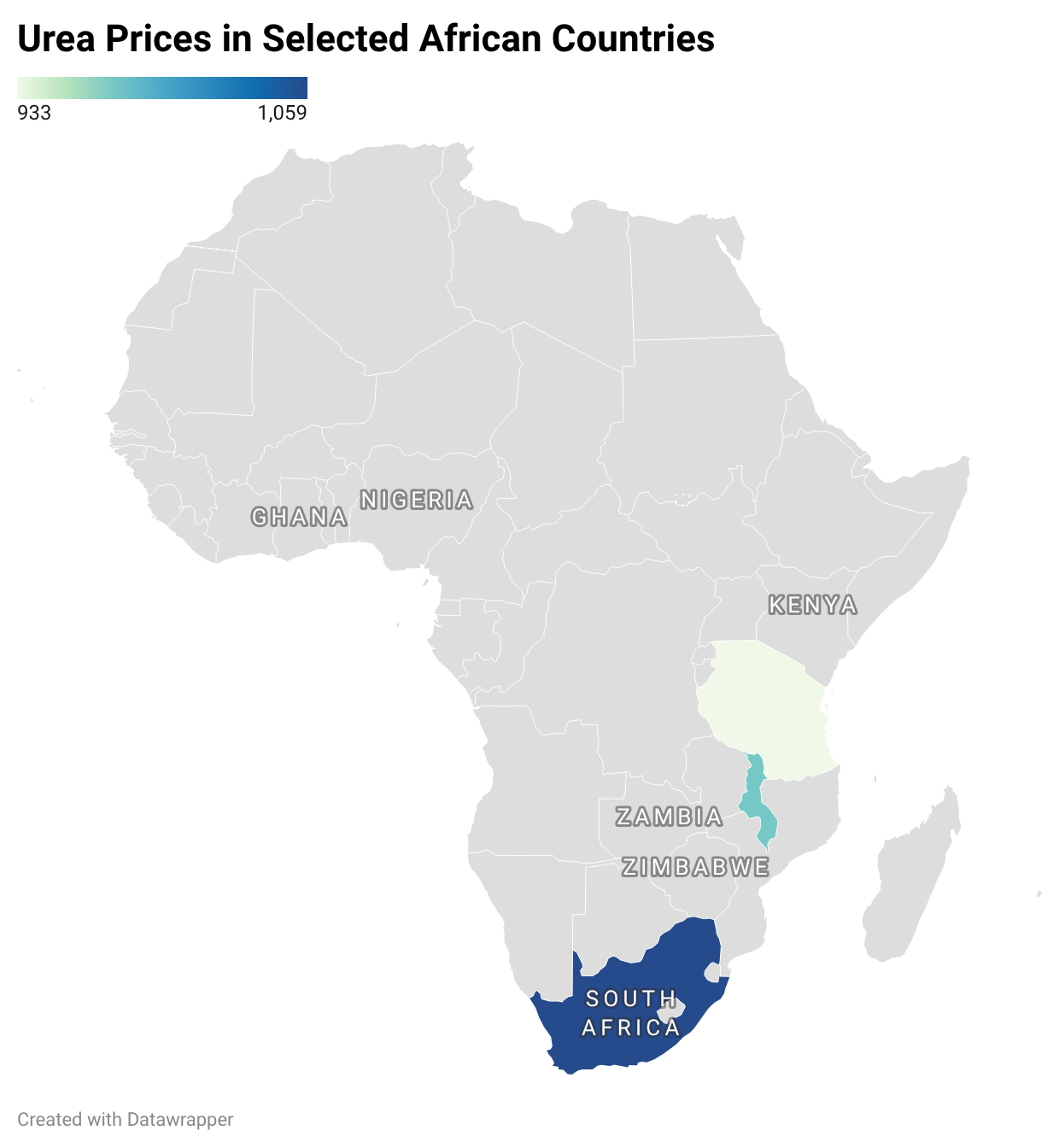
The main risk for Africa is not only high global prices, but rather the weak transmission between global benchmark prices and the prices farmers receive at the farm gate. Many countries in sub-Saharan Africa import most of their fertiliser, and in several East and Southern African countries, elevated local prices for urea, diammonium phosphate (DAP) and nitrogen-phosphorus-potassium (NPK) fertilisers continue to be sold at high prices on the local market. Despite global urea prices declining to around pre-conflict levels in July 2026, locally traded urea remained very expensive in Malawi, Tanzania, and South Africa. In July, urea prices were about USD 975 per tonne in Malawi, USD 933 per tonne in Tanzania, and USD 1,059 per tonne in South Africa, compared with a global price of around USD 400 per tonne.
Implications
Operationally, there is likely to be further pressure on the availability and affordability of fertilisers in markets in East and Southern Africa. Local prices are already at high levels and weak local currencies, delayed shipments through ports, and high inland transport costs will continue to mean that prices do not reflect lower global prices. Businesses that rely on imports of fertilisers and other connections to the agricultural industry like logistics, grain trading and food processing, may experience higher required working capital, lower stock turns and reduced demand as farmers are expected to apply less fertiliser. Therefore, stakeholders such as fertiliser importers, logistics companies, insurers, food processors, grain traders, and farmers, as well as public institutions that rely on fertiliser to support agricultural production, will likely come under further pressure as they struggle to maintain timely input supply to support agricultural cycles.
From a food-security and political-risk perspective, a drop in use of fertilisers before the planting season for main crops poses a risk to overall crop yields and human security. Maize and other staple foods are likely to see excess demand in 2026 and into 2027 as a result of lower harvests brought about by reduced use of fertilisers before the main planting times for key crops. Subsidised foods can become more expensive when governments are slow to provide more support to deal with the rising import or distribution costs. For example, Egypt relies heavily on imported wheat for its subsidised bread programme. So when global wheat prices rise, or the Egyptian pound weakens, the cost of maintaining low subsidised bread prices increases. Egypt’s experience shows how sensitive such situations can be, as changes to bread subsidies have previously led to protests from the public. Emergency aid and commercial supplies could also be delayed because of strains on transport and distribution systems already under pressure. Companies and governments in exposed countries should consider contingency plans, review existing subsidy and trade finance offers and explore alternative sources of food as quickly as possible. Farmers, rural and urban households, governments’ security and disaster management departments, investors and companies running critical food supply systems will all be affected.
Forecast
Short-term (Now - 3 months)
In the first three months after a sharp increase in fertiliser prices paid by farmers in East and Southern Africa, high fertiliser costs are likely to prevent farmers from buying enough quantities to apply before planting.
Medium-term (3 - 12 months)
From late 2026 to mid-2027, it is likely that the reduced use of fertilisers will put upward pressure on staple food prices, most notably in maize-related markets.
Long-term (>1 year)
The effects of this shock are likely to vary greatly over the next year, with import-dependent countries such as Malawi and Tanzania likely to face more pressure from high fertiliser costs.
The shock could also speed up existing trends like regional fertiliser blending, finance for trade and investment in local fertiliser production.