
Benin’s Failed Coup Attempt: West Africa’s “Cold War” Continues To Consolidate
By Michele Santolini | December 2025
Summary
As Beninese loyalist troops thwart a coup attempt against President Talon, the country appears in a state of profound unrest. Political crackdowns are likely while renewed military uprisings remain a realistic possibility.
The coup reflects a growing deterioration of West Africa’s security environment, which appears likely to worsen further amid increasing jihadist pressure on several local governments and rising political instability.
The ongoing confrontation between a pro-Russian “coup belt” and the Western-aligned Economic Community of West African States (ECOWAS) bloc is likely to consolidate and fuel polarisation in the region.
Context
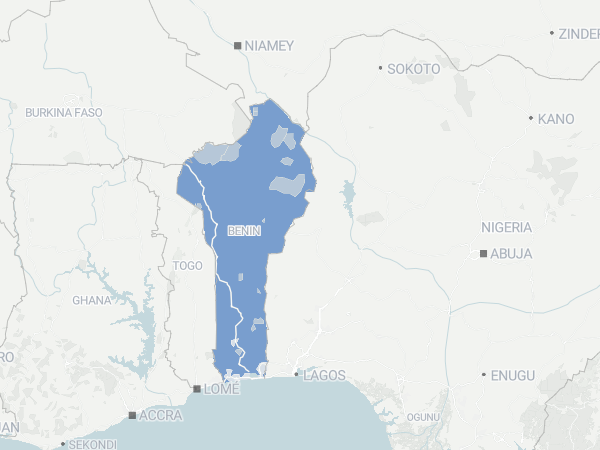
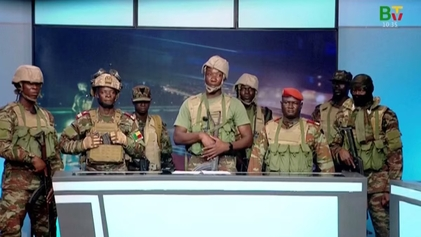
On 7 December 2025, Beninese armed forces officials, led by Col. Pascal Tigri, launched an appeal on the national state television, declaring the provisional suspension of the constitution and the ousting of President Patrice Talon. After twelve tense hours of instability, with international news outlets reporting widespread gunfire and an attempted assault on the presidential palace in Cotonou, the country’s main economic hub, President Talon communicated in a live broadcast that the situation was “totally under control”.
Despite initial contrasting reports suggesting that Talon was offered a safe passage abroad by the local French embassy, the mutiny appears to have been thwarted by loyalist troops. Nevertheless, as instability looms over the country and clashes continue, there is a realistic possibility of continued military uprisings and riots, and a crackdown on opposition appears highly likely, as Talon publicly vowed that “treachery will not go unpunished”
Implications
The coup attempt reflects the proliferation of military-led regimes in West Africa, exemplified by the creation of the Russia-sponsored “Alliance of Sahel States” among neighbouring Burkina Faso, Niger, and Mali, and by the cases of Guinea, Guinea-Bissau, and Gabon, commonly referred to together as the “coup belt”.
The phenomenon echoes the fragility of local regimes vis-à-vis emerging jihadist groups, weak democratic governance, and the retrenchment of France’s influence in the region, historically the main guarantor of security and stability. Guinea-Bissau’s case in November 2025 suggests how the phenomenon continues to unfold across West Africa.
Benin, once often portrayed as a resilient emerging democracy, closely aligns with this pattern in light of its current democratic backsliding and deteriorating security environment.
Talon, dubbed by the press as the “King of Cotton” due to his extensive business ventures and family ties to the slave trade, has since 2019 centralised power, pursuing disputed electoral reforms and imposing growing restrictions on media and the opposition.
At the same time, as mentioned by the coup plotters decrying “the ignorance and neglect of the situation”, Benin has suffered heavy military losses in its northern regions amid counter-terrorism operations along the northern border with Burkina Faso, where jihadist cells affiliated with Jama'at Nusrat ul-Islam wa al-Muslimin (JNIM) gained ground in recent months.
On the international level, the BBC noted that Russian-aligned local media outlets and social media channels hailed the event, underlining the ideological linkages between the coup sympathisers and the broader “coup belt” coalition emerging in the Sahel.
Conversely, Nigeria conducted airstrikes on rebel positions in Benin. It protested the event as an attack on “Beninese democracy”, suggesting that the coup is highly likely to prompt a more assertive Nigerian stance towards the Sahel alliance and military insurrections in the region. Parallelly, the ECOWAS announced the deployment of its standby force to the country, breaking away from the cautious approach it has so far followed.
Forecast
Short-term (Now - 3 months)
Benin is highly likely to remain volatile, given heightened military alert and expanded security operations in Cotonou.
Further uprisings remain a realistic possibility, while purges in the armed forces and tighter controls on civil liberties are likely as the government seeks to reconsolidate power.
Medium-term (3-12 months)
Regional instability and jihadist activities are highly likely to increase as military uprisings become the norm in the region. Consequently, Benin’s military effectiveness in the north of the country is likely to degrade, enabling further cross-border jihadist incursions.
Long-term (>1 year)
The confrontation between the Sahelian “coup belt” and the Western-aligned ECOWAS bloc is highly likely to intensify, driving further regional polarisation and instability following the Beninese case, as shown by the Nigerian and ECOWAS assertive stances.
Benin’s diplomatic relations with the Alliance of the Sahel are very likely to deteriorate, as ECOWAS is considering further collective sanctions against the Alliance.
