By Hossamaldeen Ibrahim | 26 October 2026
Summary
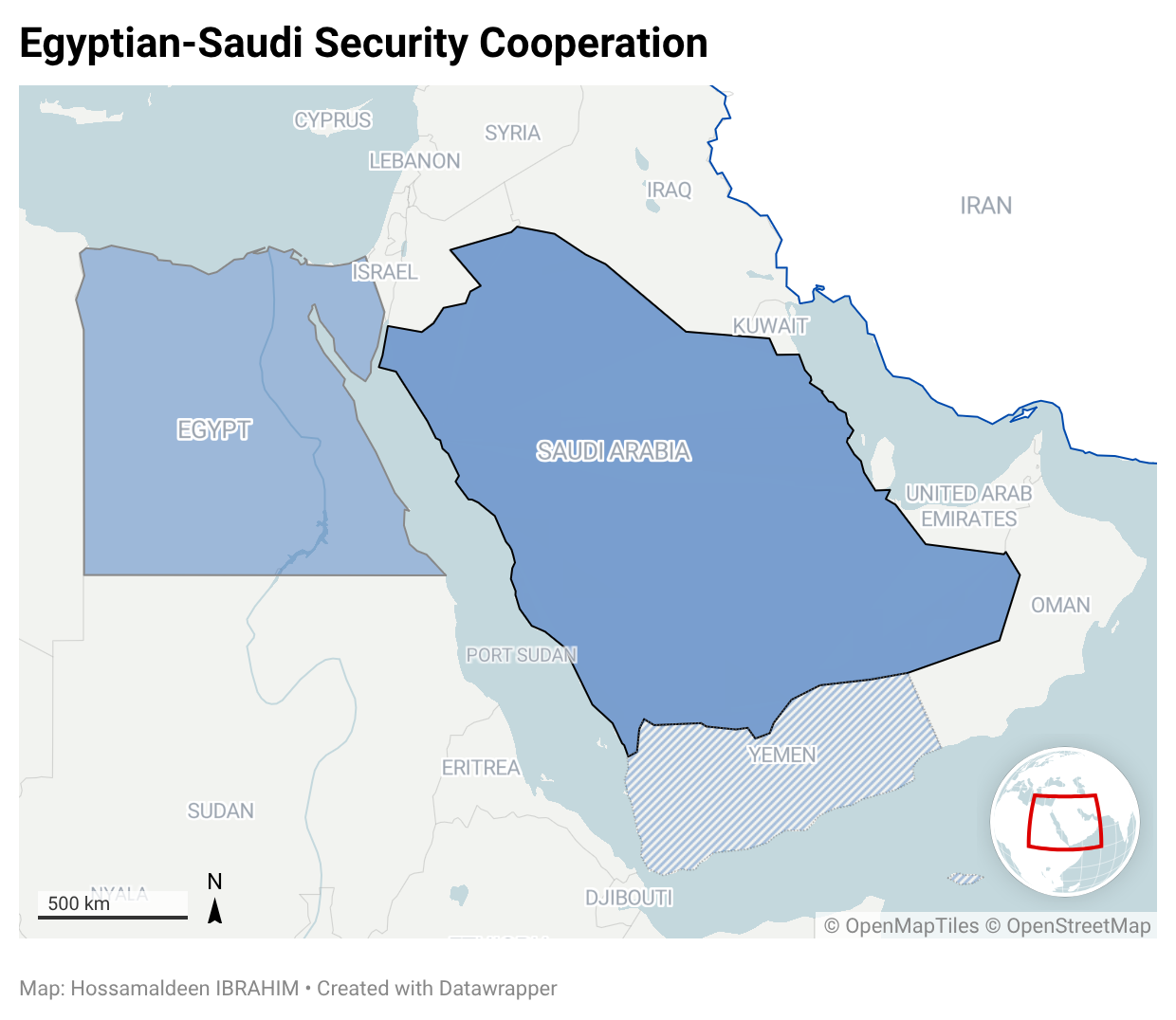
Egypt's National Defense Council approved all necessary forms of support for Saudi Arabia on 18 October 2026 following intensified Houthi attacks, while parliamentary authorisation remains pending but is highly likely to be granted.
The decision is driven by shared concerns over Red Sea navigation security, control of the Bab al-Mandeb Strait and the severe economic impact on the Suez Canal, which has already suffered multi-billion-dollar revenue losses.
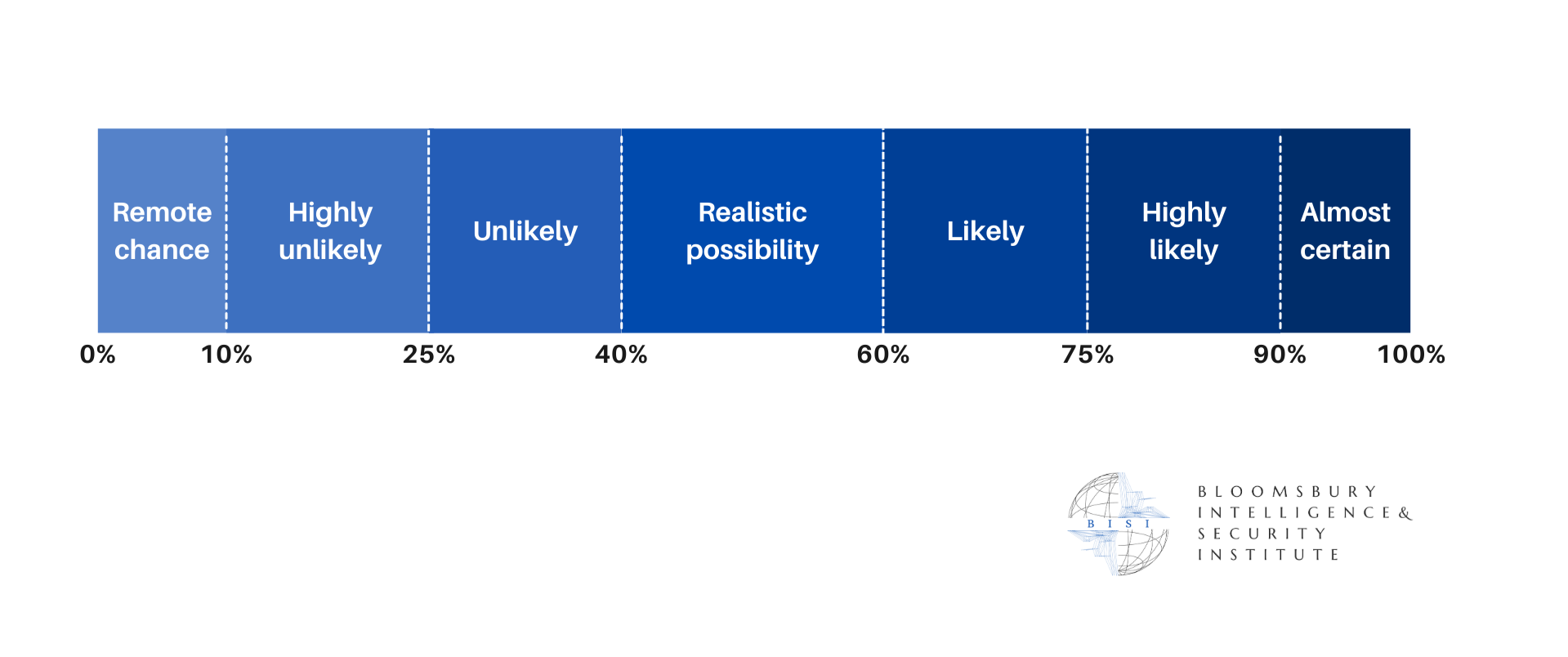
Enhanced Egyptian-Saudi coordination is highly likely to strengthen defensive capabilities along the Red Sea coast in the short term, though the risk of wider regional escalation remains a realistic possibility.
Context
Following intensified Houthi attacks on Saudi airports, energy facilities and infrastructure, Egyptian President Abdel Fattah el-Sisi on 17 October 2026 publicly stated that Egypt would take any necessary measures to defend Saudi Arabia if requested, describing any threat to the kingdom’s security or stability as inconceivable. He called for an emergency parliamentary session to grant the required authorisation. The following day, Egypt's National Defense Council, chaired by the president and attended by senior civilian and military officials, approved the provision of all necessary and possible forms of support to defend Saudi security, territorial integrity, resources and Islamic holy sites. Parliamentary discussions scheduled for 19 October were deferred, with formal confirmation delayed until the next session on 26 October.
Reports indicated that at least two Egyptian C-130H military transport aircraft landed at King Fahd Air Base in Taif on 18 October, suggesting the early stages of logistical movement. This development followed a sharp escalation in attacks by Yemen’s Houthi movement against Saudi airports, energy facilities and other infrastructure after the group expanded its control over parts of Yemen’s Red Sea coastline, including areas near the strategic Bab al-Mandeb Strait, in September 2026.
Egypt has long framed the security of Saudi Arabia and the wider Gulf as an integral component of its own national security. It previously contributed naval and air assets to the Saudi-led coalition formed in 2015, primarily focused on securing maritime routes rather than sustained ground operations inside Yemen. More recently, Egypt became a founding member of the Multinational Maritime Defense Coalition launched by Saudi Arabia in 2026, which aims to protect commercial shipping in the Red Sea and Bab al-Mandeb. The latest move occurs against the backdrop of sustained Houthi pressure on these routes, which directly affects Egypt's strategic and economic interests.
Implications
The decision carries significant political, security and economic implications. Politically, it reinforces long-standing Egyptian-Saudi defence coordination and projects a message of Arab solidarity against Iranian-aligned pressure through the Houthis. Any Egyptian contribution is expected to focus on air and missile defense, drone interception, intelligence sharing, early-warning systems and naval escort operations rather than the deployment of ground combat forces inside Yemen. Operationally, the positioning of Egyptian capabilities closer to the Red Sea coast and the Yemeni border zone could improve interception capacity against missiles and drones targeting Saudi coastal infrastructure and commercial shipping lanes. Enhanced coordination within existing maritime coalitions may raise the operational cost of Houthi attacks and contribute to a gradual stabilisation of shipping routes.
From a security perspective, the Houthi advances near Bab al-Mandeb represent a direct challenge to one of the world’s most critical maritime chokepoints. The strait serves as the southern gateway to the Red Sea and the Suez Canal, through which a substantial portion of global trade and energy shipments normally passes. Persistent insecurity has forced many commercial vessels to divert around the Cape of Good Hope, significantly increasing transit times, fuel costs and insurance premiums. Egypt has already recorded cumulative Suez Canal revenue losses estimated at approximately USD 9 to 10 b since Houthi attacks on commercial shipping intensified in late 2023. Restoring confidence in Red Sea navigation is therefore both a strategic priority and an immediate economic necessity for Egypt.
Economically, sustained disruption in the Red Sea continues to affect global supply chains, energy markets and insurance costs. For Egypt, any measurable recovery in Suez Canal traffic would provide immediate fiscal relief and support foreign-currency earnings at a time of domestic economic pressure. For Saudi Arabia, improved protection of Red Sea export corridors and coastal assets reduces vulnerability following earlier attacks on alternative energy infrastructure and pipelines. The interlocking nature of these security and economic interests explains why Egypt has framed support for Riyadh as a core national priority rather than a discretionary alliance commitment.
Forecast
Short-term (Now - 3 months)
It is highly likely that parliamentary authorization will be granted on or after 26 October and that Egyptian defensive support, including air defense systems, intelligence coordination and limited naval assets, will be activated or expanded if formal Saudi requests are confirmed.
Medium-term (3 - 12 months)
Enhanced Egyptian-Saudi and multinational maritime coordination is likely to reduce the frequency of successful attacks on commercial shipping in the southern Red Sea, supporting a gradual recovery in Suez Canal traffic.
Complete normalization of shipping patterns remains unlikely without a broader political settlement involving the main conflict parties.
Long-term (>1 year)
Sustained Egyptian involvement remains a realistic possibility if Houthi pressure persists.
The conflict is likely to remain multi-dimensional, with external enabling networks and competing regional interests continuing to constrain prospects for lasting maritime security in the absence of coordinated diplomatic and enforcement measures.