By Mason Hurlocker | 26 October 2026
The views expressed in this article are the author’s own and do not reflect those of any institution with which the author is or may be affiliated.

Lorie Shaull/wikimedia, CC BY-SA 4.0
Summary
Russia-linked networks have targeted at least three contenders in France’s April 2027 presidential election with deepfakes and forged media reports, prompting criminal investigations and a government bill that triples penalties for electoral disinformation.
Despite having one of Europe’s strongest electoral counter-interference systems, France’s legislative tools cannot reach perpetrators abroad, rely heavily on European Union (EU) enforcement against platforms, and are themselves becoming a political wedge issue.
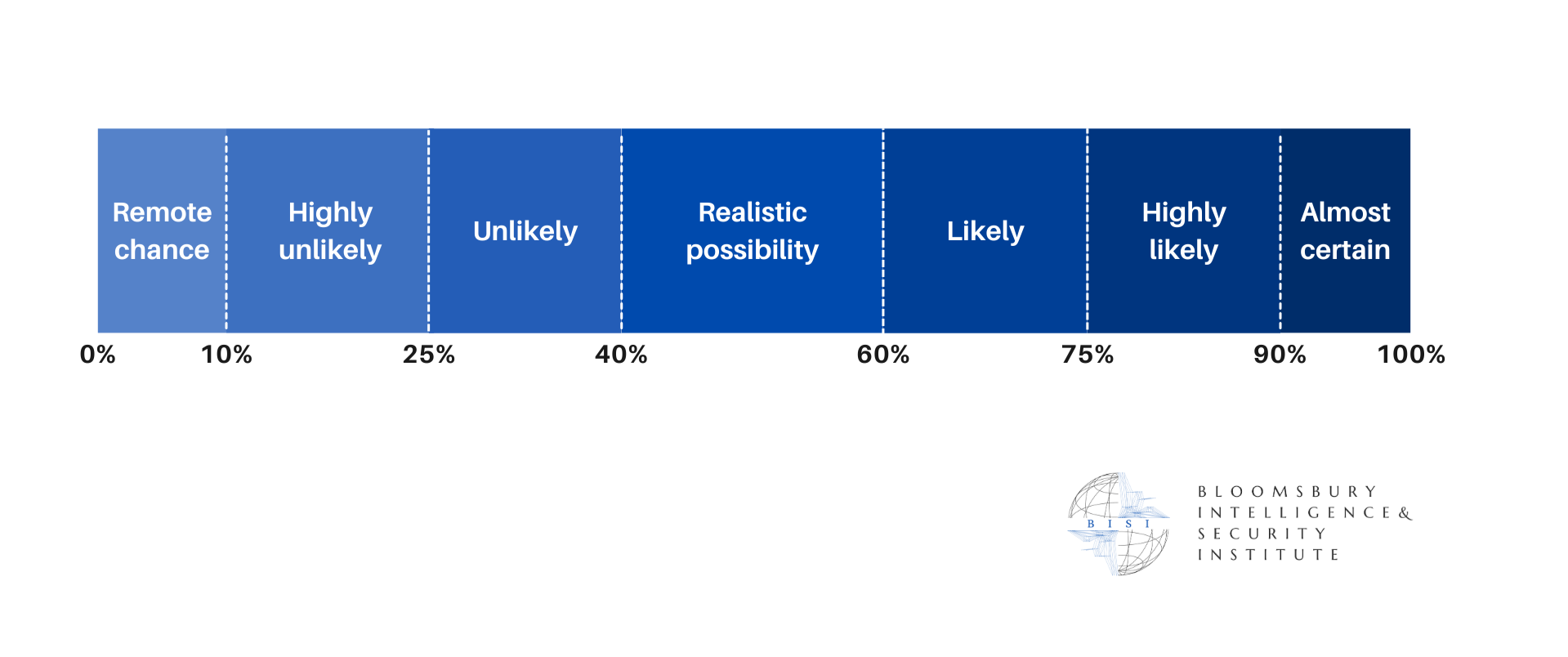
Interference attempts are highly likely to intensify before the election’s first round on 18 April 2027, creating an unlikely but growing possibility that the losing camp refuses to accept the results.
Context
Since late July 2026, Russia-linked networks have targeted three contenders for the French presidency with deepfakes and forged media reports. One group, Storm-1516, is reportedly affiliated with Russia’s military intelligence service (GRU) and has spread false health claims about former Prime Minister Édouard Philippe and bribery allegations involving the partner of MEP Raphaël Glucksmann. Another, the Matryoshka network, falsely claimed that former Prime Minister Gabriel Attal had Parkinson's disease. Together, these developments caused the Paris prosecutor’s office to open an investigation in August. Then, on 9 October, an unattributed cyberattack slowed online voting in the left-wing parties’ primary, causing further concerns about electoral integrity.
These events are part of a years-long pattern. In 2024, Viginum, the French government’s foreign interference watchdog, identified a planned large-scale Russian disinformation campaign linked to 193 fake accounts, while in 2025, the EU’s External Action Service identified 107 major Russian-attributed information attacks against France, making it the second most targeted country in the world, behind only Ukraine.
To try to address these issues, on 22 July, the French government tabled a bill in the Senate, which would triple the penalty for undermining a vote through false information, raising the penalty from one year in prison and a EUR 15,000 (USD 16,800) fine to three years and EUR 45,000 (USD 50,000), while also extending fast-track judicial removal of false content. A parallel decree created an independent commission of three magistrates to alert candidates and the public to such incidents.
Implications
The ongoing campaign aligns with BISI’s April assessment that Russian services would likely try to interfere in the presidential race. The government’s proposed response has been rapid. However, heavier sentences only raise the cost of interference for actors within the reach of French courts. Groups like Storm-1516 and Matryoshka largely work from abroad, and anonymous websites and Telegram channels carry 97% of associated disinformation content. The bill is therefore unlikely to deter these networks. Its practical effect will fall on domestic amplifiers and on hosts ordered to remove content.
The bill has also received some reservations from actors within France. The Conseil d’État, the government’s legal adviser, observed that the bill’s scope is limited, and that however fast a judge can handle the cases, they still “risk arriving too late, given the speed at which false information propagates”. Meanwhile, Socialist Party Senator Rachid Temal criticised its silence on platforms and the use of generative artificial intelligence.
Additionally, removing content at scale largely depends on the Digital Services Act (DSA), which is enforced by the European Commission. In March 2026, President Emmanuel Macron asked the Commission for updated election guidelines and full use of DSA powers, including fines of up to 6% of global revenue. While still unlikely, Viginum has assessed that France could face methods of interference similar to those used in Romania, where the first round of the 2024 presidential election was annulled over coordinated amplification of disinformation on TikTok.
Enforcement of the bill itself is almost certain to be politically charged. In July, X owner Elon Musk’s public support for Le Pen drew accusations of foreign interference. The leader of the Green Party has since called for the option of suspending X during election periods, while Attal has said that Russian interference has always aimed to help the RN, which the party has objected to. The Foreign Minister has accused both Le Pen and left-wing politician Jean-Luc Mélenchon of “systematically” aligning their positions with those of the Kremlin. These accusations are likely to further entrench France’s political polarisation and ongoing government instability, as Russian interference in the political process is becoming a significant wedge issue.
This presidential election will also determine France’s future political orientation towards Russia. Current President Emmanuel Macron cannot run again, while Marine Le Pen of the populist right-wing National Rally (RN) now leads first-round polling at around 35%. For years, both RN and Le Pen personally have faced accusations about their political leniency towards Russia and financial ties to Russian interests.
Russian-linked actors are exploiting these divisions as well, portraying Viginum as an instrument of censorship, likely preparing the ground for claims that the 2027 vote is rigged. In parallel, they are advancing narratives portraying the current authorities as unaccountable and corrupt, and systematically spreading rumours about outspoken public officials, especially sowing division around LGBTQ and gender issues.
Forecast
Short-term (Now - 3 months)
Russia-linked networks are highly likely to keep targeting declared candidates with deepfakes and forged media reports, widening to new entrants as party nominations settle.
Further attempted cyber attacks against party voting and campaign infrastructure are also likely.
Parliament is likely to adopt the anti-disinformation bill before the three-month pre-election window opens in mid-January 2027, given the accelerated procedure and its broadly favourable reception in the Senate.
Medium-term (3 - 12 months)
The Commission will likely increase DSA pressure on platforms through information requests and updated guidance, but is unlikely to impose sanctions before the vote.
Long-term (>1 year)
If the vote passes without a contested result, France’s combination of fast-track judicial removal and an independent magistrates’ commission will likely become a reference for other EU member states.
There is a realistic possibility that the next president revises Viginum’s mandate, particularly if the winner campaigned against it as a restriction on speech.