By Stephen Nkrumah | 3 August 2026
Summary
African countries are tightening their control over exports and also strengthening the requirements for their local content so that they can gain more value from their copper, cobalt and lithium resources instead of exporting them in their raw form.
The main risks in the mining sector are no longer limited to geology, as investors now pay attention to changes in policy, reviews of contracts and the threat of insurgencies, which can affect operations in mining and investment decisions.
The Lobito Corridor is expected to attract huge refining investment because it has a strong mineral base and a strategic location; Zimbabwe also has the potential to attract similar investment despite facing higher risks related to policy.
Context
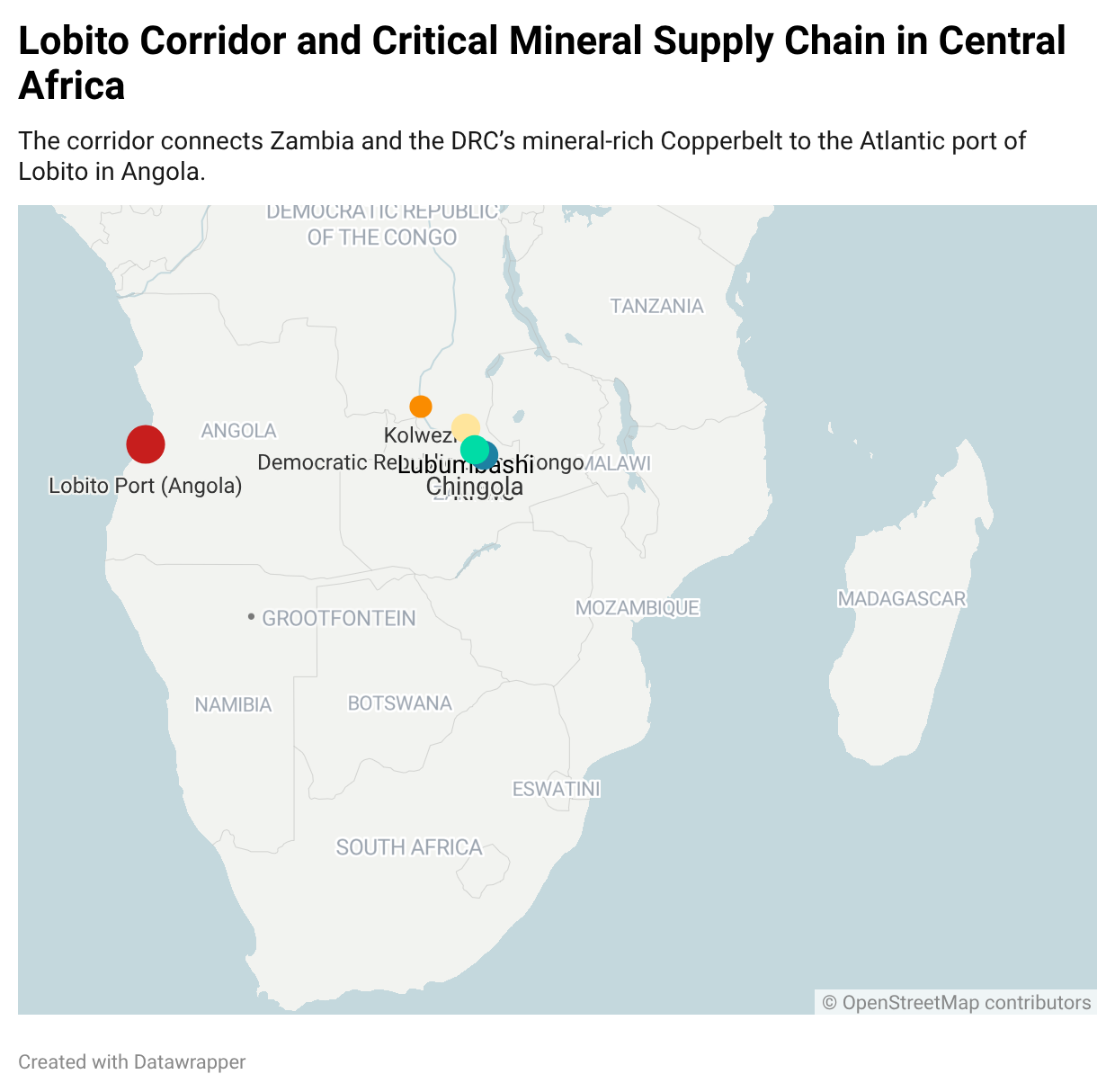
African producers have a huge control over the strategies for their mineral resources. For instance, Zimbabwe has restricted the export of lithium that has not been processed in order to encourage local value addition, and the Democratic Republic of the Congo (DRC) has introduced quotas of 96,600 tonnes of cobalt export for 2026 to 2027, which is about half of the volume recorded in 2024. In the first quarter of 2026, the DRC exported 955,000 tonnes of copper, which represents a 14.6% fall relative to the same period the previous year. Due to the lifting of an export freeze, the country also exported 48,800 tonnes of cobalt. At the same time, Zambia is strengthening their position as a reliable mining and transport corridor partner. This is supported by the development of the Lobito Corridor, which is located in Angola, and has secured more than USD 753m in financing from the United States Development Finance Corporation (US DFC) and the Development Bank of Southern Africa (DBSA), as well as over EUR 2b mobilised by the European Union.
Economic indicators show that there are both progress and ongoing challenges across the region, as Zambia’s debt-to-GDP ratio stands at 83.9% in 2026, while its S&P credit rating remains at CCC+ with a stable outlook. In Zimbabwe, for instance, there has been stable inflation at 4.4% in March 2026, and foreign reserves reached USD 1.4 b, providing about 1.5 months of import cover. These figures suggest that although fiscal pressures still exist, there has been improvement in monetary stability. The DRC continues to dominate the global cobalt market, as the country accounts for about 70% of the world’s cobalt reserves. Nonetheless, insecurity in the eastern part of the country and frequent policy changes continue to affect investor confidence and increase business risk.
Implications
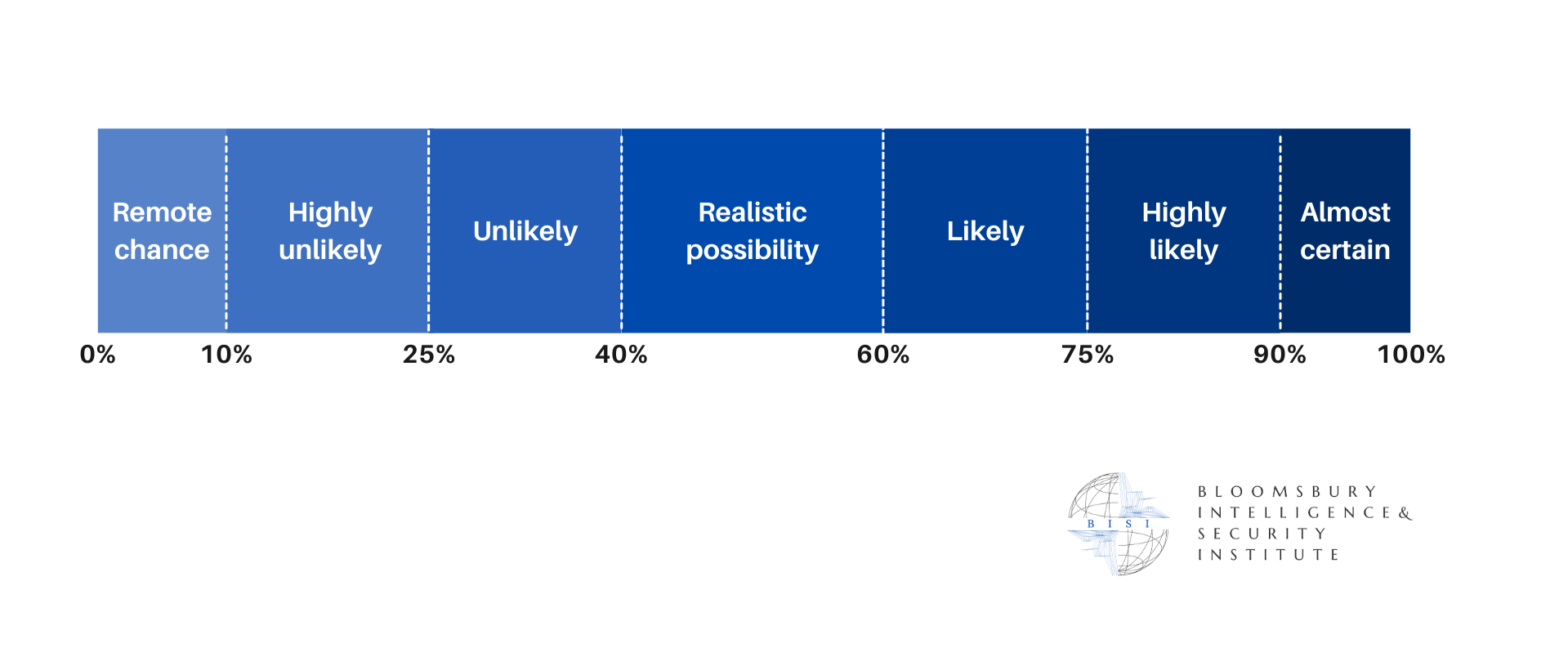
There are diverse political risks across Zambia, the DRC and Zimbabwe. Zambia’s legislative and judicial stability make it likely to remain comparatively investable, although debt pressures such as rising public debt, high debt-servicing costs, and fiscal deficits continue to exist. The Democratic Republic of the Congo (DRC) faces a realistic possibility of policy volatility, which is driven by frequent contract revisions and executive interference in decision-making. Also, corruption is likely to remain a persistent challenge, which will further undermine governance credibility and weaken investor confidence. In Zimbabwe, sudden government interventions lead to a realistic possibility of electoral instability, which influences mining policy.
Operational risk in the region is influenced by both infrastructure and policy challenges. Dependence on the Lobito Corridor is likely to strengthen the logistics of Zambia and the DRC, even though the insurgency in eastern DRC creates bottlenecks in their transport systems. The restrictions on the exportation of lithium and cobalt are also likely to tighten pressure on beneficiation across the region. Also, the deficits in power supply in Zambia and Zimbabwe are likely to increase operating costs, while shortages in foreign exchange in Zimbabwe create a realistic possibility of delays in projects.
The economic risk across the region remains significant. For instance, Zambia’s debt-to-GDP ratio is likely to limit fiscal space, even with ongoing corridor investment. In Zimbabwe, the shortages in FX create a realistic possibility of a rise in inflation and even hyperinflationary pressures. The DRC’s heavy reliance on the exportation of cobalt and copper makes it likely to remain exposed to global price shocks. Moreover, Western supply chain initiatives are likely to improve governance over time, but progress is expected to be slower than capital flows from China. At the same time, indicators like Zambia’s sovereign rating and the DRC’s Human Development Index score are likely to play a key role in influencing the confidence of investors.
Forecast
Short-term (Now - 3 months)
Export controls and licensing reviews are likely to tighten beneficiation pressure, with effects being immediate yet manageable.
Medium-term (3 - 12 months)
The Lobito Corridor is likely to attract refining investment, while investment in Zimbabwe remains a realistic possibility but with higher policy risk.
Long-term (>1 year)
Improvements in power supply and logistics infrastructure are expected to improve industrial conditions in the mining sector.
Under these improved conditions, fully integrated battery manufacturing remains unlikely; however, expanded mineral refining and intermediate processing are likely to occur.