By Rakotoarimanga Tinah | 10 March 2026
Taylor Vick/Unsplash
Summary
The increasing concentration of advanced computing capacity among a narrow oligopoly of hyperscale cloud providers and semiconductor firms transforms compute from a commercial input into a critical infrastructure layer, increasing structural exposure within an increasingly interconnected digital ecosystem.
Economic stability becomes heavily dependent on these centralised and opaque technical architectures, geopolitical restrictions, cyber disruption or regulatory changes affecting key nodes could generate simultaneous, cascading failures across multiple sectors.
To mitigate this structural exposure, states are increasingly driven to pursue partial sovereignty strategies, a dynamic that is likely to contribute to market fragmentation and alter the integrated technological frameworks that previously supported the digital economic integration.
Context
For more than a decade, the expansion of the digital economy has been primarily driven by scale. Cloud computing, artificial intelligence (AI), and large-scale data analytics has evolved within an environment where efficiency, cost optimisation and performance maximisation are systematically prioritised over distributional resilience. The result is a high degree of structural concentration. Global cloud infrastructure is now dominated by a small number of hyperscale providers, notably Amazon Web Services, Microsoft and Google. At the hardware level, the advanced GPUs required for AI training and inference are overwhelmingly supplied by Nvidia, with fabrication dependent on a limited set of highly specialised semiconductor foundries.
This architecture has enabled rapid innovation, but it has also embedded critical sectors, including finance, healthcare, logistics, defence supply chains, and public administration, within a narrow compute ecosystem. As a result, computing is no longer just a commercial service bought on demand. It has become foundational infrastructure, quietly sustaining essential state functions and the continuity of economic life. Its resilience is therefore tied not only to operational efficiency, but to economic stability itself.
Yet unlike traditional infrastructure such as energy grids or financial clearing systems, whose governance frameworks reflect their systemic importance, the digital compute layer remains largely organised around commercial incentives within a fragmented regulatory environment. Investment decisions, access conditions, and geographic concentration are primarily shaped by private actors rather than by coordinated public-interest oversight.
Implications
The systemic risk within the digital economy does not derive from technological advancement itself, but from architectural centralisation. Indeed, as computing becomes a central enabler of military and economic power, concentration creates identifiable strategic pressure points.
This shift transforms compute into a significant geoeconomic leverage point. Export controls on advanced semiconductors, restrictions on cross-border data flows and foreign investment screening mechanisms indicate that processing power is now increasingly embedded in strategic competition. Access to high-performance compute, particularly the H100 or Blackwell architectures essential for frontier AI, can be restricted, delayed or politicised. Such dynamics introduce structural uncertainty for firms operating across jurisdictions, where a sudden shift in export licensing can significantly disrupt business models or national AI strategies.
Beyond geopolitics, operational dependence creates cascading exposure. Many multinational corporations rely on a single hyperscale provider for core digital infrastructure, including data storage, AI development and enterprise systems. Vendor lock-in, complex migration processes and limited interoperability constrain rapid diversification. A prolonged outage, regulatory dispute or sanction affecting a major provider like Amazon Web Services or Microsoft Azure would extend beyond a contained technical disruption, affecting multiple sectors including logistics, finance and public administration from global logistics to financial clearing, producing systemic shocks rather than isolated operational incidents.
This vulnerability is compounded by the fact that hyperscale infrastructure increasingly occupies a dual-use space. Data centres and semiconductor supply chains support both civilian economic functions and national security architectures. As digital infrastructure becomes embedded in military logistics, intelligence processing and critical communications, major compute providers are increasingly perceived as strategic targets. In periods of heightened tension, these facilities face heightened exposure to cyber operations or coercive measures, as adversaries may seek to degrade early-warning, intelligence, or command capabilities by targeting commercial cloud infrastructure.
Ultimately, economic asymmetry may widen. Access to advanced GPUs and scalable compute capacity now determines competitive positioning in AI-intensive industries. States and firms with privileged access to capital and infrastructure can accelerate technological development, while others face structural barriers that are increasingly difficult to overcome. Concentration therefore risks reinforcing digital inequality across geopolitical blocs, creating a paradox where global efficiency has been maximised, but resilience has not been proportionally embedded.
Forecast
Short-term (Now - 3 months)
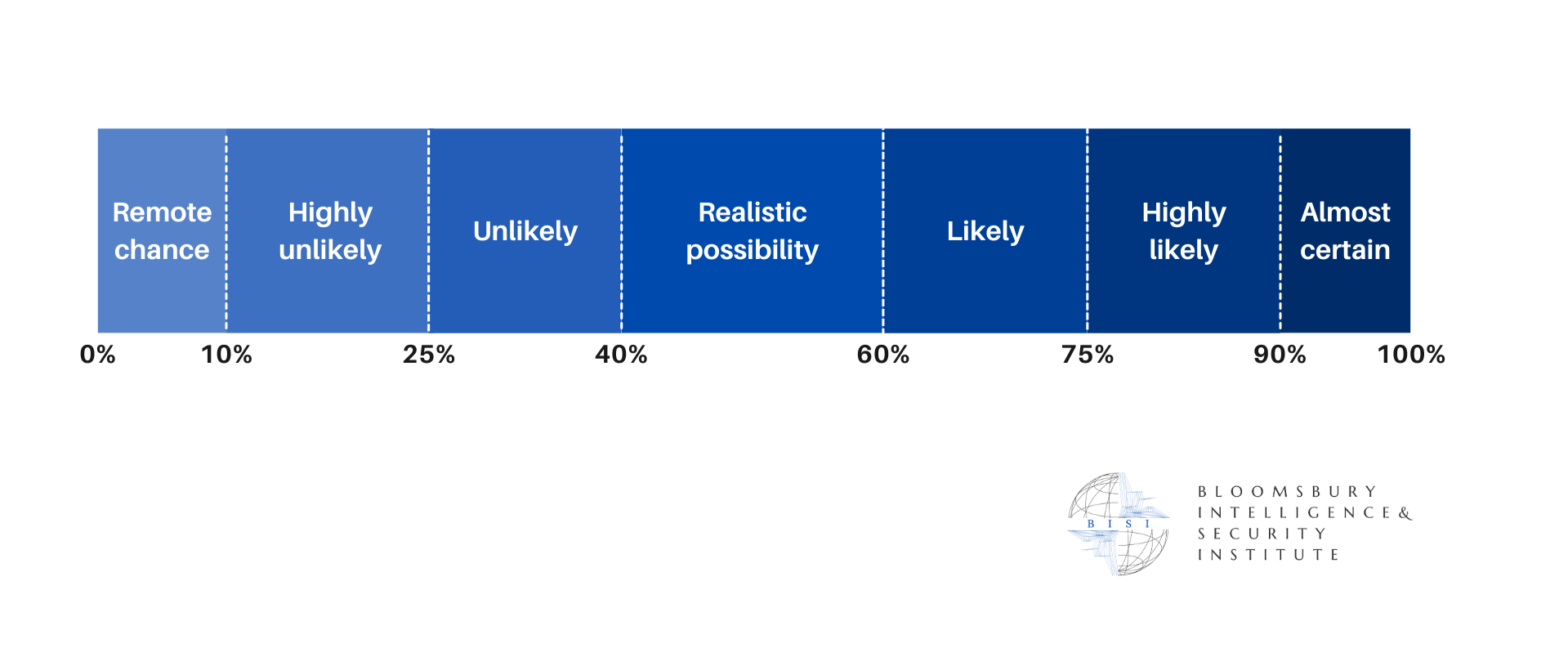
Regulatory scrutiny of advanced semiconductor exports and cross-border cloud operations is highly likely to intensify amid escalating geopolitical frictions.
The absence of transparency in compute allocation can likely create a climate of informational uncertainty, where routine maintenance or commercial shifts are increasingly misread as acts of strategic denial.
There is a realistic possibility that technical anomalies or sudden outages will be misinterpreted as deliberate state interference, narrowing the window for de-escalatory clarification.
Medium-term (3 - 12 months)
State-driven initiatives to mitigate systemic exposure through sovereign cloud investments and domestic compute capacity will likely accelerate, reducing dependence on foreign hyperscalers.
These policies are highly likely to generate profound regulatory divergence across regions, making strategic stability increasingly dependent on fragmented technical systems.
The transition towards nationalised infrastructures may be perceived by adversaries not as a defensive resilience measure, but as preparation for offensive digital decoupling or a shift in the strategic balance.
Long-term (>1 year)
The global digital economy is likely to face a terminal fragmentation into distinct compute ecosystems aligned with geopolitical blocs, increasing inefficiencies and competition over semiconductor supply chains.
A deep governance gap is highly likely to emerge as the pace of strategic innovation terminally outruns the capacity of institutional diplomacy to absorb and regulate technological change.
Strategic stability will likely be shaped by systemic vulnerability across interconnected domains, where deterrence becomes increasingly sensitive to disruptions occurring well below the threshold of overt conflict.