Cocaine's Caribbean Gateway to America
By Gabriel Perkins | 11 May 2026

Summary
Cocaine trafficking through the Caribbean to the United States (US) has surged, with US Coast Guard maritime seizures reaching a service record of approximately 231,000 kg in fiscal year 2025 as traffickers exploit Pacific and Central American interdiction pressure.
Operation Southern Spear has delivered at least 50 strikes on suspected drug vessels as of mid-April 2026 and has drawn critical responses from several Caribbean Community (CARICOM) leaders over sovereignty and extrajudicial action.
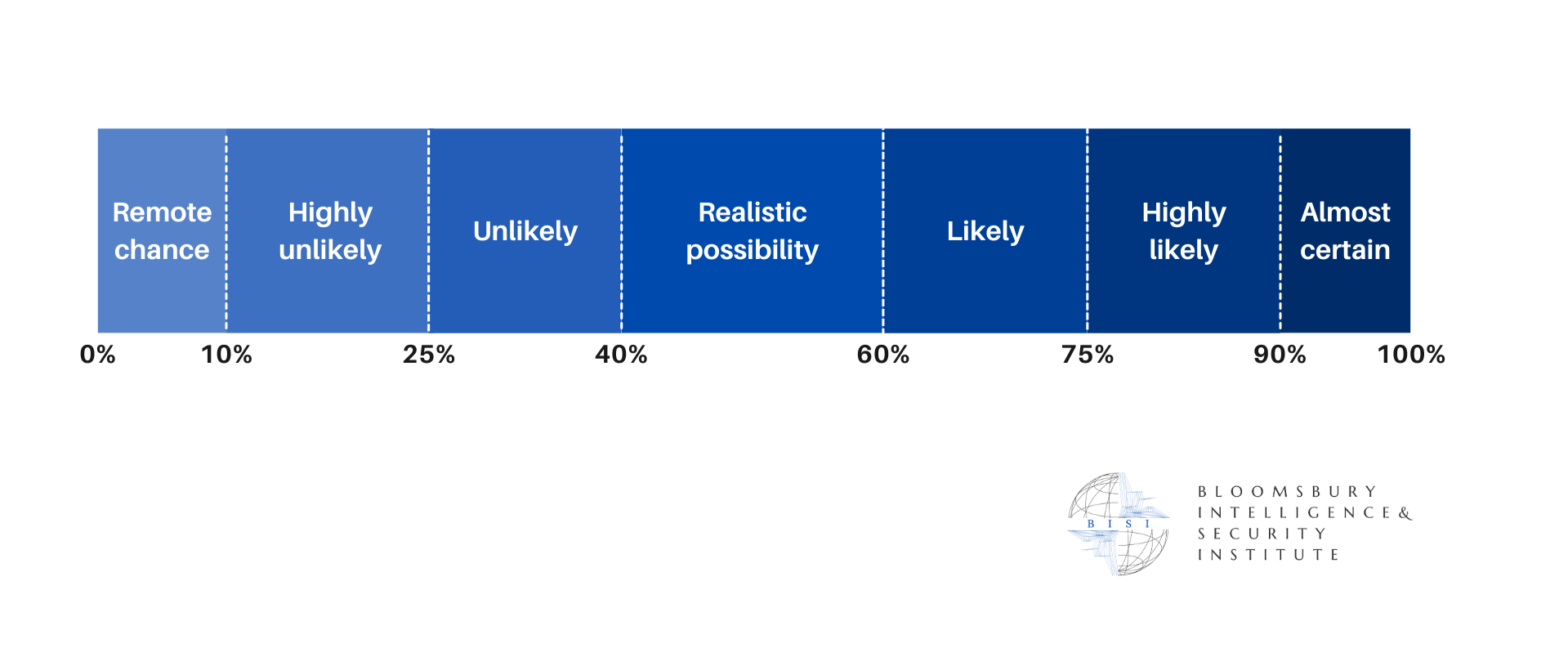
It is highly likely that US military and intelligence deployment to the Caribbean will intensify over the next 12 months, with secondary effects on regional sovereignty, financial integrity, and bilateral relations.
Context
The Caribbean has reemerged as a primary transit corridor for Colombian and Venezuelan cocaine destined for the US market. According to the Drug Enforcement Administration’s (DEA) National Drug Threat Assessment in 2025, the Caribbean and Eastern Pacific have been identified as principal maritime trafficking routes. Islands like the Dominican Republic, Jamaica, Trinidad and Tobago and Puerto Rico were identified as transportation hubs. The US Coast Guard intercepted approximately 231,000 kg of cocaine across both corridors in fiscal year 2025. This was a fiscal year service record with the cocaine being recorded at a value over USD 7.2b (more than triple the long-term annual average). This shift is reflected in the saturation of Central American overland routes following increased Mexican interdiction as well as the collapse of state capacity in Haiti, where the Viv Ansanm gang coalition controls approximately 85% of Port-au-Prince. Venezuelan coastal territory remains a key departure zone with cocaine being moved via speed boats, semi-submersible vessels, and commercial cargo ships. The United Nations Office on Drugs and Crime (UNODC) World Drug Report 2025 records global cocaine production at 3,708 tonnes in 2023, nearly 34% above 2022. This increase was driven by expanded coca cultivation in Colombia. Under Operation Southern Spear, launched in September 2025, the administration of President Donald Trump has conducted at least 50 strikes on suspected drug vessels as of mid-April 2026.
Implications
The most immediate implication is an increase in criminalisation in the Caribbean maritime space. Trinidad and Tobago recorded 400 murders in 2025, a rate of 26.7 per 100,000, and overall recorded crime has risen by 45.6% in the first 108 days of 2026, prompting the government of Prime Minister Kamla Persad-Bissessar to declare a fresh state of emergency on 3 March 2026. In Jamaica, cocaine transit has reinforced the alliance between domestic gangs and Colombian suppliers, complicating the agenda of Prime Minister Andrew Holness following his re-election to a third term in September 2025. Haiti’s institutional collapse creates both causes and consequences for increased cocaine trafficking. In Haiti, narcotics revenue sustains gang coalitions that now contest state authority, while the absence of coast guard capacity has produced a permissive maritime environment.
For the US, the pivot strains the Department of Homeland Security (DHS) and the DEA, which must reallocate resources. Executive Order 14157 of 20 January 2025 led to the designation of eight criminal groups as Foreign Terrorist Organisations (FTOs), including the Sinaloa Cartel, the Cártel de Jalisco Nueva Generación (CJNG), and the Venezuelan Tren de Aragua, with Viv Ansanm added in May 2025. The accompanying lethal strikes have produced critical responses from CARICOM leaders. Prime Minister Mia Mottley of Barbados has rejected what she described as extrajudicial killings, and ten former CARICOM heads of government have called for a halt to the regional military buildup.
Economically, the cocaine transit trade damages Caribbean economies. Money laundering through real estate, financial services, and tourism undermines controls in jurisdictions, including the British Virgin Islands, which was added to the Financial Action Task Force (FATF) grey list in June 2025 due to offshore sector risks and beneficial ownership deficiencies. Tourism, which accounts for over 30% of gross domestic product (GDP) in several smaller Caribbean states, is exposed to reputational damage should violence spill into visitor areas.
Regionally, the trade is reshaping security partnerships. The United Kingdom (UK) Royal Navy has sustained counter-narcotics deployments using vessels such as HMS Trent, while French Forces in the Caribbean coordinate operations from Martinique and Guadeloupe. Venezuela's position has been transformed by the 3 January 2026 US special forces operation that captured former President Nicolás Maduro and removed him to face drug trafficking charges in the US. Interim President Delcy Rodríguez, recognised by the administration of President Donald Trump in March 2026 and relieved of personal sanctions in April, retains the Chavista governing framework, leaving alleged state-level complicity in narcotics flows an unresolved question even as oil sanctions have been lifted.
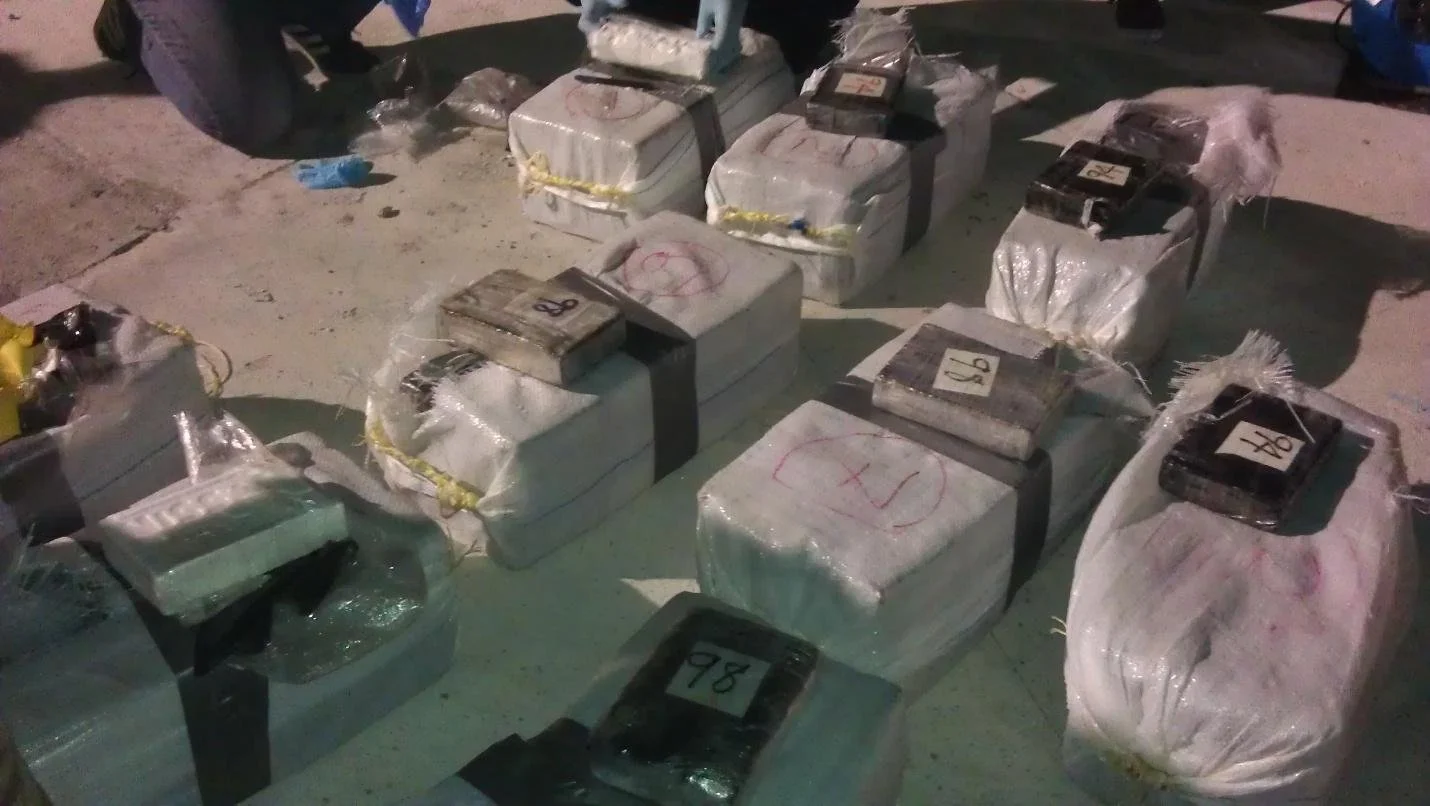
“Cocaine yacht” by The National Crime Agency
Forecast
Short-term (Now - 3 months)
It is almost certain that US naval and air deployments under Operation Southern Spear will continue at elevated levels, with further vessel strikes and public disclosure of seizure statistics intended to demonstrate operational success.
Medium-term (3 - 12 months)
It is highly likely that CARICOM states will press for a formalised consultation mechanism on US extraterritorial operations, while expanding bilateral intelligence cooperation with the UK, France, and the Netherlands to supplement limited domestic capacity.
Long-term (>1 year)
There is a realistic possibility that the Caribbean will be formally reconstituted as a priority theatre within US Southern Command (SOUTHCOM) planning, provided cocaine flows and associated homicide rates do not decline in response to current interdiction pressure.