China's Rare Earth Processing Dominance and What the Trump-Xi Summit Didn't Change
By Ipek Kara | 30 September 2026
Summary
As of late September 2026, the one-year suspension of China’s rare earth export controls has been extended until 10 January 2027, following the Trump-Xi summit in Washington. There was no jointly documented settlement on critical minerals.
Due to China's control of an estimated 90% of global rare earth processing and magnet fabrication capacity, the rollover buys time without altering the structural dependency of US defence and consumer electronics manufacturers on Chinese exports.
US and allied countries’ efforts to build alternative mine to magnet capacity are accelerating, but new capacity is unlikely to eliminate Chinese leverage in the near term, leaving manufacturers and defence suppliers exposed to further licensing disruptions ahead of 2027.
Context
Rare earth magnets (principally NdFeB alloys) are non-substitutable components in permanent magnet motors, electric vehicles, smartphones, renewable energy systems, and various defence systems, including missiles. These magnets require some heavy rare earths such as dysprosium and terbium to operate under high temperature environments. China produces approximately 90% of the global demand at the moment.
China’s dominance in the market is not only caused by raw material reserves, but comes from decades long, state supported refining capacity. Starting in the 1990s, middle processing was slowly abandoned by Western producers due to rising costs and environmental concerns. As of 2026, Western capacity remains insufficient compared to industry demand. The US holds an estimated 15,000 tonnes of annual separation capacity against domestic demand of roughly 45,000 tonnes, and non-Chinese processors worldwide still account for only a small share. China controls approximately 88% of global light rare earth oxide separation capacity and 97% of heavy rare earth oxide separation capacity. The US Government Accountability Office has estimated that rebuilding a fully domestic mining to magnet supply chain could take up to 15 years.
China escalated its leverage in April 2025 with licensing requirements on seven medium and heavy rare earth categories, then later on 9 October 2025, with an expansion covering magnet-manufacturing technology and extraterritorial application to foreign made products containing Chinese origin rare earth content. Following the Trump-Xi meeting in Busan, South Korea, on 30 October 2025, China suspended the 9 October measures for one year (through 10 November 2026) in exchange for a matching one year US suspension of its "affiliates rule," an Entity List provision extending restrictions to firms majority owned by blacklisted Chinese companies.
Rare earths returned to the negotiations during the Washington summit in September 2026, alongside artificial intelligence. The suspension from 2025 was extended to last until 10 January 2027. This extension is in proximity to two other deadlines: White House’s January 2027 target to block all Chinese rare earth imports, and the Pentagon’s January 2027 DFARS cutoff for Chinese-sourced magnets in defence procurement.
Implications
The gap between the two governments' official summit statements is significant in itself. China's silence on rare earths in its statement, set against the White House's vague language, suggests both sides are treating the extension as an unfinished negotiation. Other post-summit reporting supports that the summit postponed negotiation of rare earths to a future round of talks, with US officials stating Chinese deliveries had already fallen short of prior commitments.
This continued uncertainty comes with differentiated exposure across different sectors in the US. MP Materials, in which the Pentagon holds a 15% stake via a USD 400M preferred-share investment, and USA Rare Earth, which secured USD 277M through direct funding from the Department of Commerce followed by a USD 1.3B loan commitment in 2026, are positioned as principal beneficiaries, though neither is expected to reach meaningful production scale before 2028. Additionally, non-Chinese mid-stream processors such as Lynas Rare Earths (Australia) similarly benefit from continued uncertainty as the US and allied buyers seek to diversify agreements regardless of the January 2027 goals.
In contrast to the benefits, US manufacturers in EV and consumer electronics are the most exposed to near-term Chinese magnet imports. They remain vulnerable to the licensing regime's extraterritorial reach since components manufactured even outside of China can still trigger Chinese export approval requirements if they contain any rare earth content.
At the multilateral level, expansion of Pax Silica represents the long term de-risking of the US against bilateral volatility. It is designed to create a US-led alliance for primary and secondary processes regarding critical minerals. However, given development timelines associated with new separation and heavy rare earth refining capacity, even substantial progress under Pax Silica is unlikely to displace China's dominant position before 2030, as China is highly likely to continue investing in its own supply chains.
Forecast
Short-term (Now - 3 months)
US defence contractors are highly likely to face increasing compliance and sourcing pressure ahead of the January 2027 DFARS magnet sourcing deadline.
Medium-term (3 - 12 months)
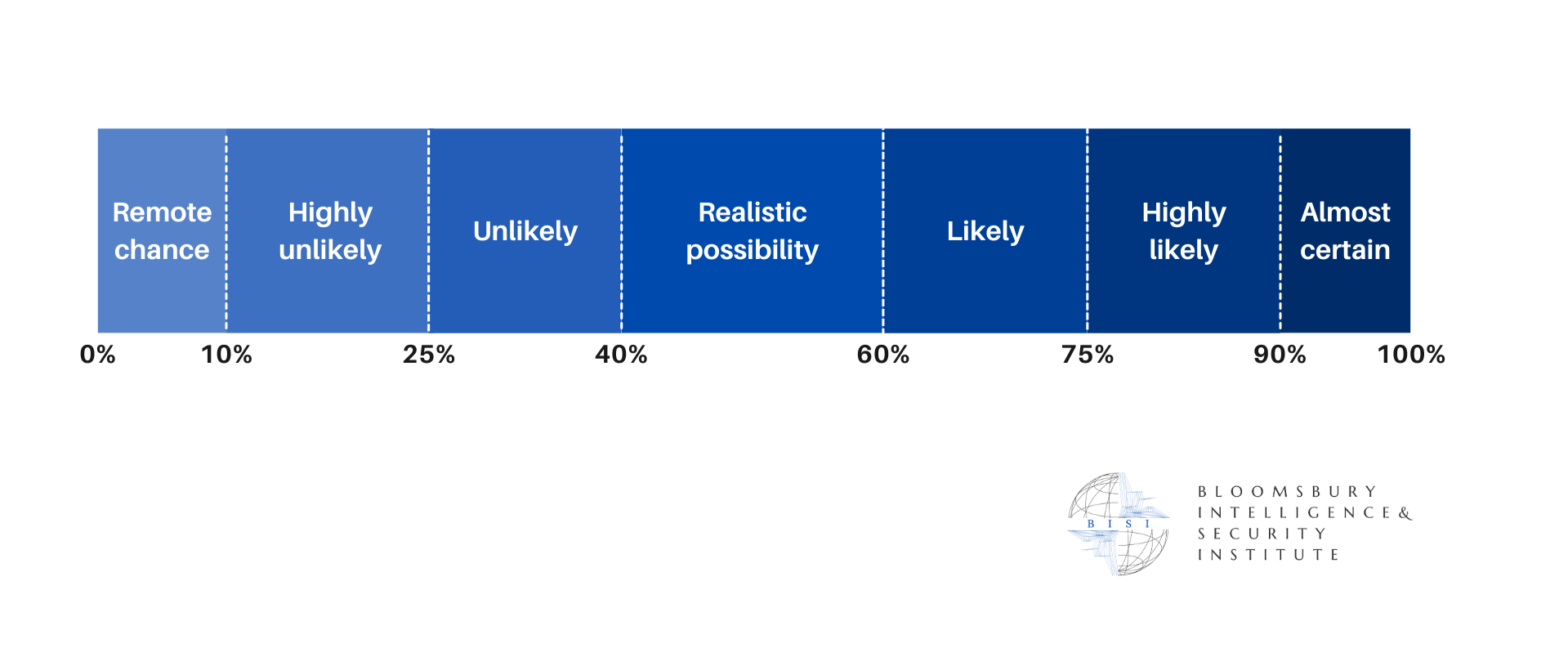
The rare earth issue is highly likely to resurface around early 2027, with a realistic possibility of further extension of the current suspension.
Pax Silica is likely to add additional signatories and cooperative projects, but is unlikely to materially shift its global rare earth processing share within this window given the multi year lead time for capacity building.
Long-term (>1 year)
China is highly likely to retain its dominant role in the global rare earth processing and magnet production capacity through at least 2030. Meanwhile, US and allied de-risking efforts are likely to reduce but not eliminate exposure to Chinese supply decisions.
Countries and coalitions that secure durable, non-Chinese midstream capacity are highly likely to gain greater supply chain resilience and bargaining power relative to those dependent on Chinese processing.