The Rise of Hisense
By Wen-Qing (Sarah) Jiang | 30 September 2026
Summary
Hisense Group, an electronics and appliance manufacturer, and its subsidiary, Hisense Electronics, have successfully entered the global market, owing to their market strategy and state sponsorship.
Hisense’s link with the Chinese Communist Party (CCP) may affect its reputation as a brand given that security breaches involving CCP backed companies is an ongoing issue.
Hisense's growing market influence is likely to prompt negative feedback in Europe due to potential trade imbalance.
Context
The FIFA World Cup saw fierce competition among major TV brands in the UK as they sought to ride the surge in demand for HD TVs to boost sales and promotions. Hisense and TCL electronic products, particularly their smart TVs, have emerged in the electronics market because of their high picture quality and brightness, making them ideal for watching sporting events.
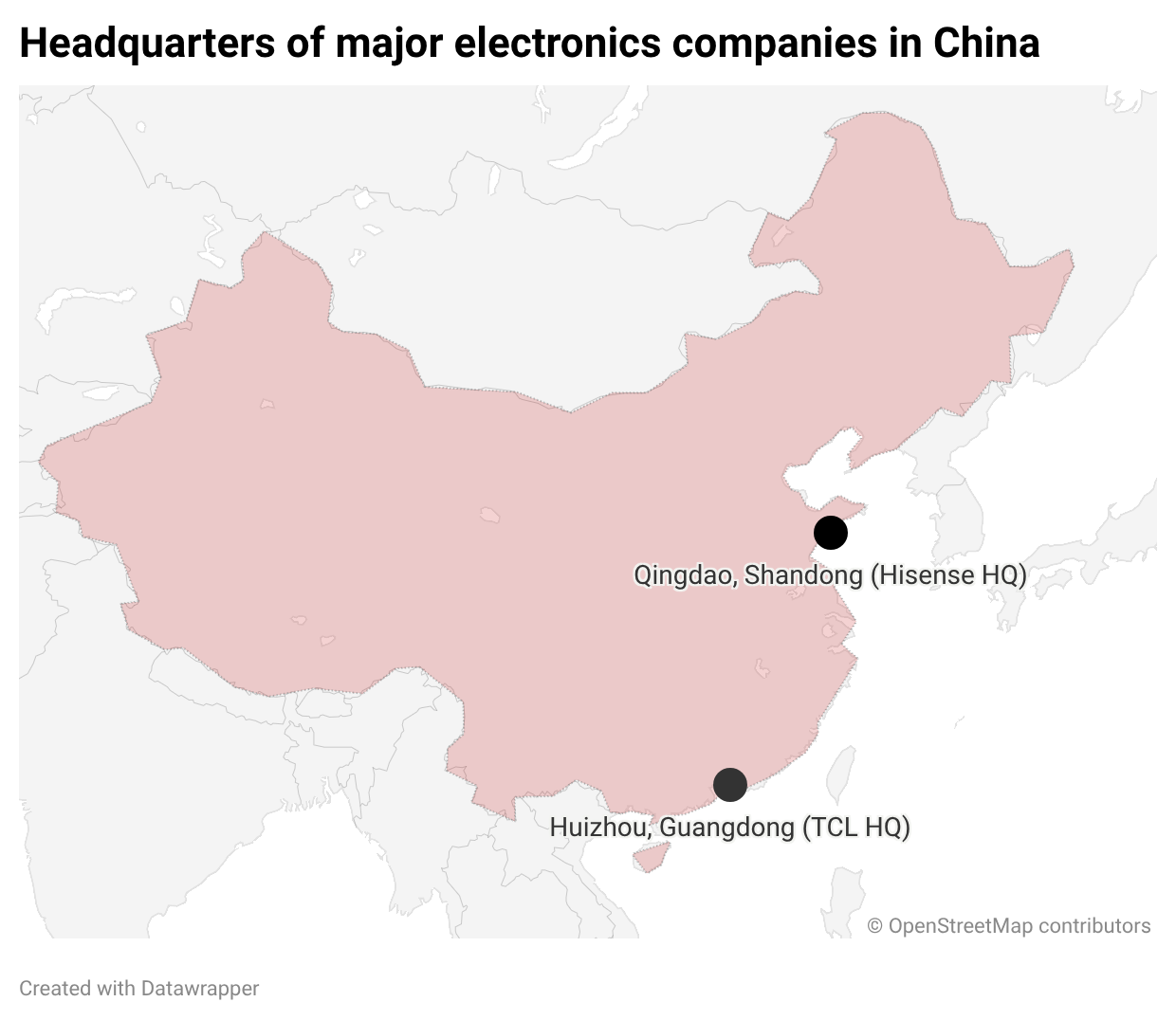
Hisense's expansion in Europe began with the success of the Hisense Group, which was founded in 1969 in Qingdao, China. The group was one of the pioneering cases in China’s attempt to partially privatise state-owned enterprises. By expanding its strategic stakeholders and investor base, the group brought in private capital and relinquished ownership of its subsidiaries (i.e., Hisense Visual Technology and Hisense Home Appliances). The reform enabled the optimisation of the group’s overall operating efficiency and still guaranteed the absolute state ownership of the Hisense group. In addition, Hisense acquired several foreign subsidiaries, notably the Slovenian home appliance company Gorenje in 2018, along with its subsidiary companies (i.e. Asko, Etna, Upo, Fridgemaster, Mora and Korting). This served as an entry point to the European market, thereby enhancing its global market share and visibility, while reducing its dependence on third-party supply chains.
Moreover, Hisense became an official partner of the FIFA Club World Cup in 2025 and has been sponsoring the FIFA World Cup since 2017. This further enhanced its global recognition and popularity within the UK.
Implications
Hisense competes directly with top-tier electronics brands such as Samsung, Sony, and LG. However, being a state-owned enterprise (SOE), its popularity can be hindered by its link with the Qingdao government and the CCP. The CCP’s framework of “Intelligence Connection of Everything” (万物智联) envisioned linking state-owned telecom networks to external digital infrastructure while remaining subject to CCP regulation of data collection and security apparatus.
Another concern is the CCP’s party cells (党支部), established within Hisense to ensure that the company aligns with the government’s policy and ideology. According to the CCP Statute, any Chinese enterprises or organisations with three or more official members within, either state-owned or private, must establish a party cell to facilitate the party-state agenda and to monitor the companies’ compliance with these terms. In the case of the Hisense Group, its Chairman Shaoqian Jia, a CCP member, also holds a seat on the general secretariat of the Hisense party cell committee.
In addition, security and privacy concerns associated with Hisense devices, e.g., smart TVs, have sparked controversy despite its market presence and growth. One major concern is the potential risk of user data being collected and stored for malicious use. For instance, Hisense USA has faced several lawsuits concerning its automatic content recognition (ACR) technology and the VIDAA operating system embedded in smart devices, which was claimed to redirect users' personal data to the Hisense parent company as well as its subsidiaries in China. In Europe, a less visible risk is present but not yet being investigated. Hisense home appliances’ market share in Europe is far more extensive than the official statistics of 9.1%. This is a result of Hisense’s comprehensive manufacturing model, which covers the production of high-end products as well as white-label goods (products that are manufactured by one company and rebranded and sold under the name of other brands or retailers). For instance, while private data seems secure in reputable software or platforms, the hardware that processes this data could be compromised, as the ownership of these white-label goods remains ambiguous and untraceable, making it challenging for customers to research and assess the security features of the device. Consequently, Hisense’s trustworthiness in smart home appliances and devices remains to be tested in the next few years to come.
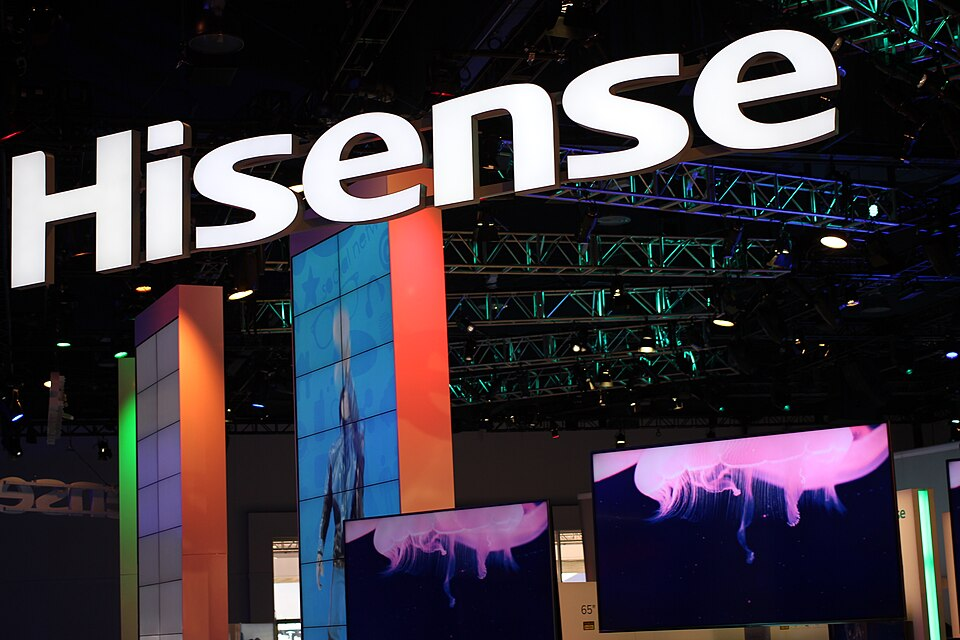
Maurizio Pesce/Flickr
Forecast
Short-term (Now - 12 months)
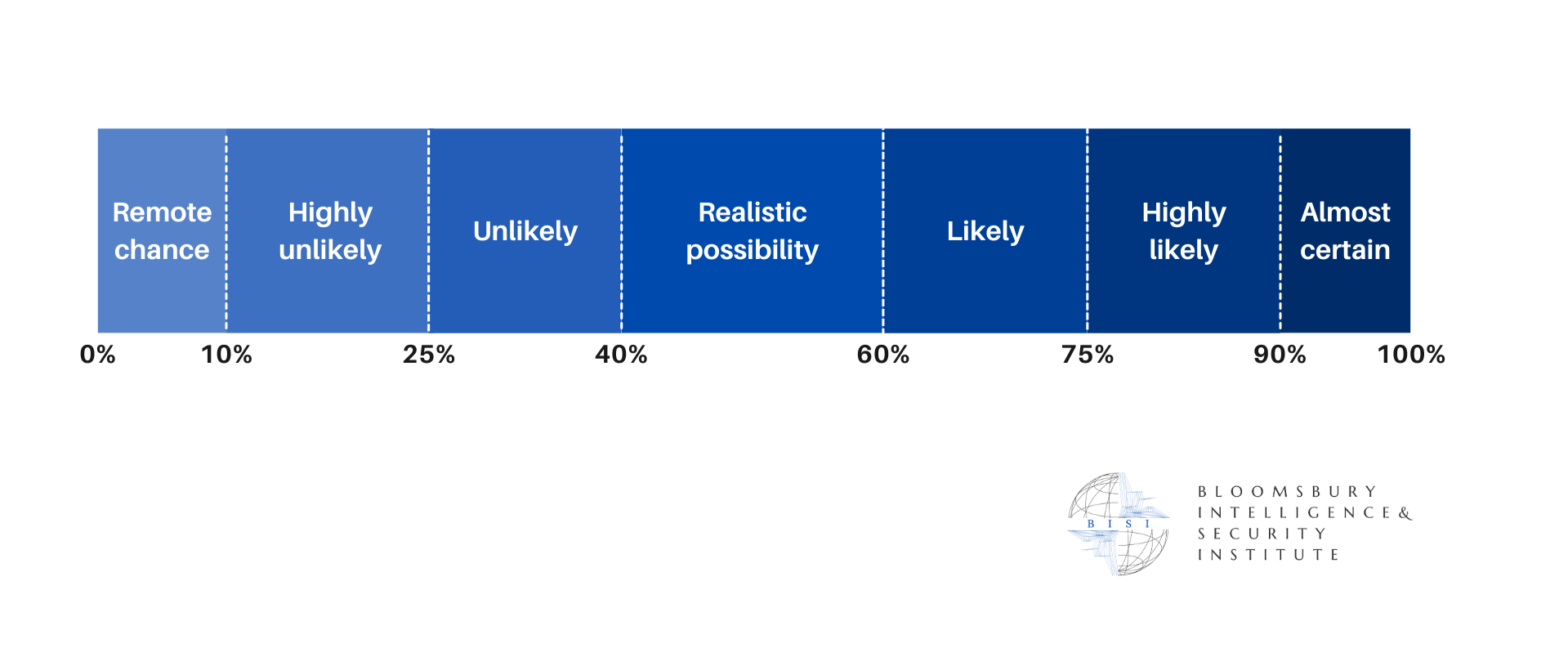
It is almost certain that Hisense Electronics, especially its smart TVs, would increase its European visibility and popularity after the 2026 FIFA World Cup due to Hisense’s FIFA sponsorship and marketing strategies.
Long-term (>1 year)
It is highly likely that Hisense smart TVs will be among the top 3 most purchased TV brands in the UK, replacing top-tier brands such as Samsung, LG, and Sony.
It is likely that UK/European legal entities would enhance data protection and security regulations if Chinese electronic and home appliance companies expand further in the market.
It is highly likely that the Hisense group would continue its acquisition efforts in Europe, negatively impacting the revenue gains of domestic European electronics and home appliances brands.