China’s Oil Price Adjustment Reflects Pressures from Continuing Iran Conflict
By Yuan Yan | 13 April 2026
Summary
China’s moderated fuel price increase reflects an attempt to balance between responding to rising global oil prices driven by the Iran conflict and containing domestic inflation and consumer pressure.
Despite China’s relative resilience due to large reserves and diversified energy sources, sustained high oil prices are likely to strain refining margins, industrial costs, and consumer confidence, while intensifying competition for alternative crude supplies, particularly with India.
The crisis is likely to accelerate China’s strategic adjustments, including diversifying import sources, strengthening energy security and financial mechanisms, and advancing the long-term transition toward renewable energy and reduced oil dependence.
Context
On 23 March, China’s National Development and Reform Commission (NDRC) raised the maximum retail prices of gasoline and diesel by RMB 1,160 (USD 168) and RMB 1,115 (USD 161) per metric ton, respectively. The increase was approximately half of what would typically be applied under China’s pricing mechanism. The NDRC reviews fuel prices every 10 working days and adjusts them in line with changes in international crude oil prices. Under the standard formula, the latest adjustment would have resulted in increases of RMB 2,205 (USD 319) per metric ton for gasoline and RMB 2,210 (USD 320) for diesel. Despite the moderated adjustment, gasoline prices have risen by about 20% since the start of the Iran War.
Implications
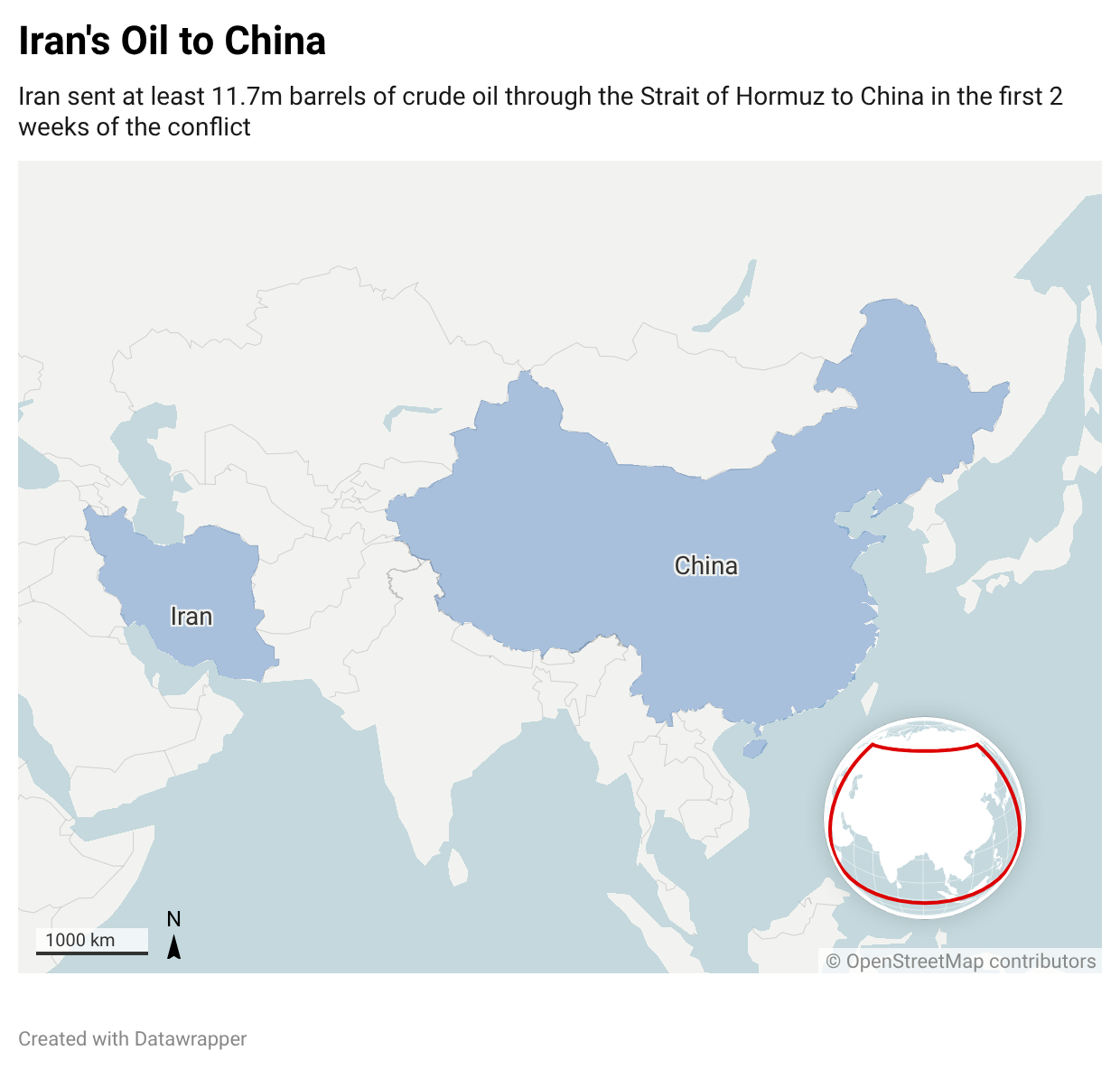
Compared with other Asian economies such as South Korea and Japan, the short-term impact of rising oil prices on China appears moderate. The country’s energy system also includes multiple buffers, including large reserves of oil and liquefied natural gas (LNG), as well as a strong domestic supply and alternative energy sources such as wind and solar. Following the start of the Iran conflict, Beijing reportedly directed domestic refineries to halt exports, topping the approximately 140 days of oil reserves.
As the conflict enters its fourth week, however, Monday’s policy adjustment suggests that Beijing is attentive to inflationary pressures and their implications for consumer affordability. Higher oil prices add to the challenges facing efforts to stabilise consumer confidence, which has already been affected by a prolonged property sector downturn and slower economic growth. Although electric and hybrid vehicles account for roughly half of new car sales and about 12% of the overall vehicle fleet, an estimated 300m drivers in China still depend on gasoline-powered cars. In addition, a 10% rise in oil prices could increase China’s producer price index to -0.5%.
China’s independent refiners—among the largest importers of Iranian crude—are particularly exposed, even as they seek to replace supplies with Russian oil and potentially Canadian heavy crude. Industrial and chemical sectors that depend on LNG are likely to face higher costs and possible supply constraints. However, sustained pressure in oil markets could create opportunities for further expansion of renewable energy and electric vehicle industries, and contribute to a faster pace of energy transition.
Furthermore, a prolonged conflict in the Middle East could affect a key market for Chinese exports and investment. In response to shifting energy conditions, Beijing is likely to increase oil imports from alternative suppliers such as Russia, Brazil, Angola, Canada, and potentially the United States. China’s imports of discounted Russian crude increased in January and February, though volumes are likely to moderate in the coming months as the conflict in Iran heightens global competition for these supplies. In this context, India and China will increasingly compete for access to Russian oil. Given these pressures, the scale of China’s energy constraints is likely to prompt Beijing to engage more actively in diplomatic efforts aimed at resolving the conflict.
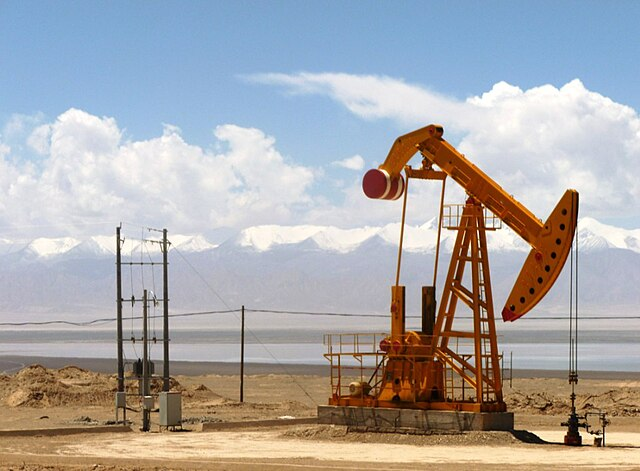
China/Wikimedia
Forecast
Short-term (Now - 3 months)
China would likely strengthen oil transportation security and financial safeguards by prioritising Chinese-flagged vessels for Middle East routes, while introducing escort mechanisms and insurance backstop policies to reduce risk premiums. Meanwhile, it would move to maximise throughput on overland oil and gas pipelines, particularly those linking China with Russia, Kazakhstan, and Central Asia.
Medium-term (3 - 12 months)
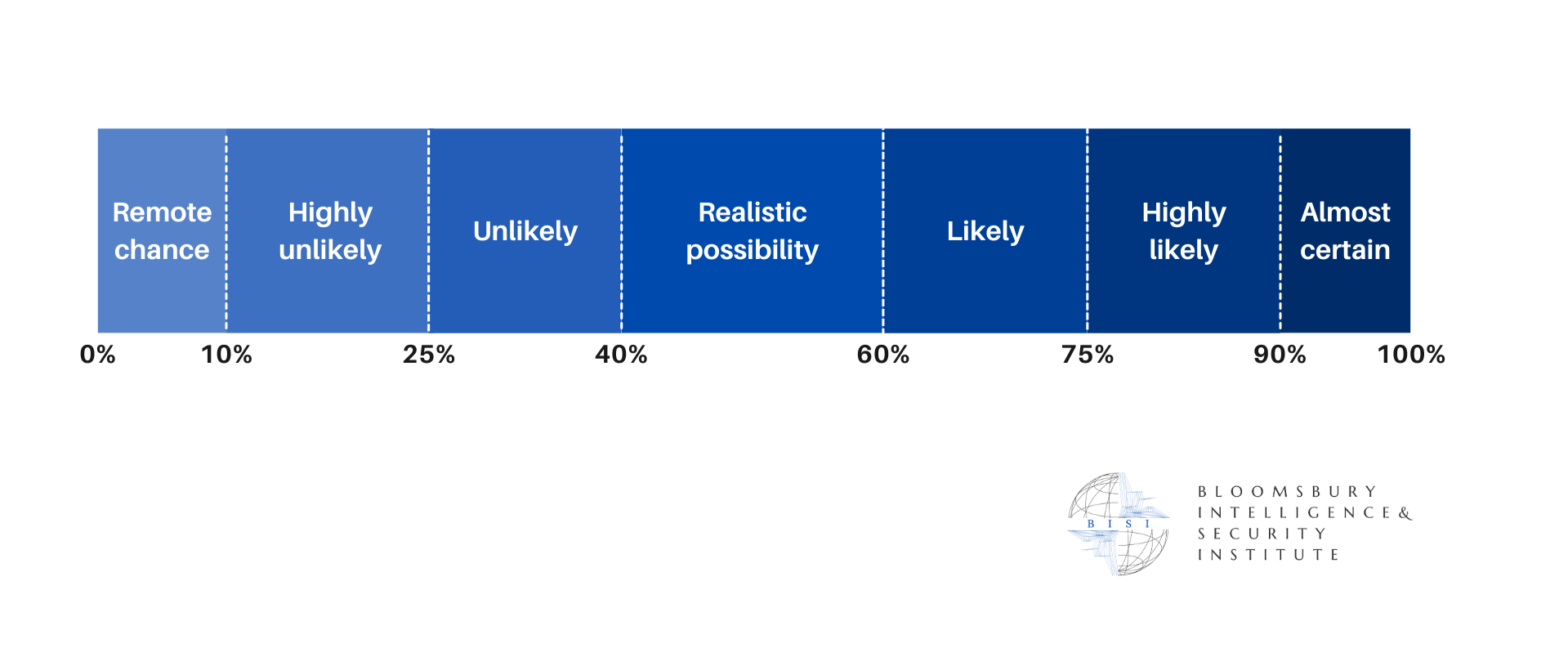
It is highly likely that China would deepen cooperation with countries such as Russia, Saudi Arabia, Iraq, Brazil, and Angola to secure additional supply. There is also a realistic possibility that China would expand the coverage of the CIPS system and, by leveraging its interconnection with Russia’s SPFS system, develop a ‘de-SWIFT’ channel.
Long-term (>1 year)
China will highly likely to accelerate the transition to alternative energy sources by advancing large-scale wind and solar bases, energy storage, ultra-high-voltage (UHV) transmission, and the new energy vehicle industry—thereby increasing the share of renewables in overall energy consumption and reducing dependence on oil.
There is a realistic possibility that China would further strengthen its strategic reserve capacity by expanding storage infrastructure, with the aim of reaching reserves equivalent to six months of national oil consumption.
China will likely expand the use of RMB settlement and local currency swap arrangements in oil trade. Meanwhile, it would further develop energy-related financial derivatives markets, enabling firms to use instruments such as futures and options to hedge against oil price volatility.