By Daniyar Egen | 25 February 2026
Summary
The recent meeting (11 February 2026) of the German Minister of Foreign Affairs, Johann Wadephul, with his Central Asian colleagues confirmed the increased interest of the European Union (EU) in Central Asia, due to its rich natural resources.
Attended by politicians and businessmen, the meeting had an overall friendly tone, both sides emphasising the need for further cooperation. However, the EU has also made a plan to sanction more Central Asian banks (like Keremet and OJSC) and stop certain dual-use imports due to their complicity in Russia’s circumvention of sanctions.
Central Asia’s political future depends on the regional government's ability to balance the presence of all actors in the region and to create a stable and transparent political climate, suitable for further investments and cooperation.
Context
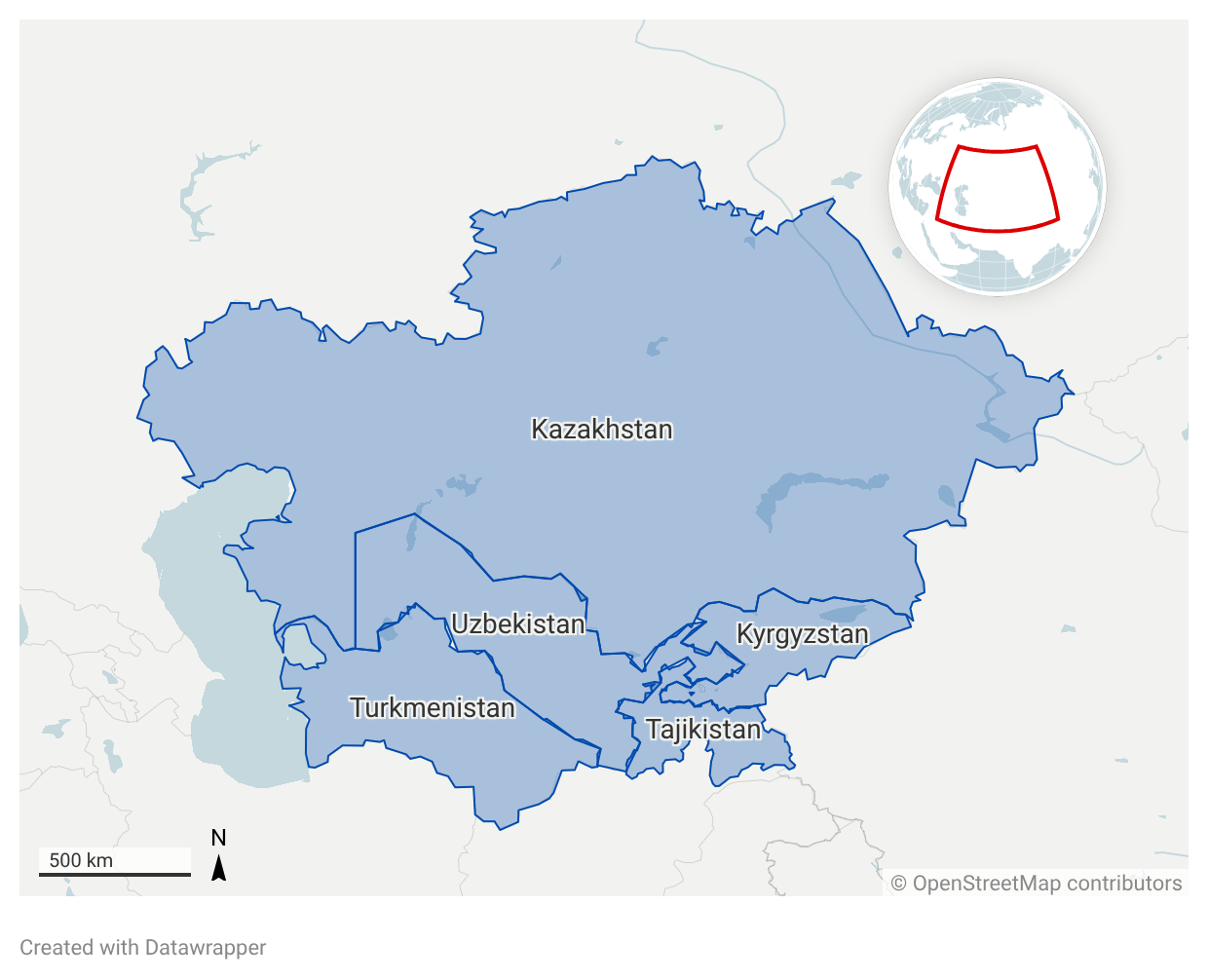
Since 2022, Central Asia pursued a multi-vector foreign policy. On the one hand, the Central Asian governments have been helping Russia circumvent the sanctions by offering alternative trade routes and banking operations. On the other hand, the EU has been gaining influence in the region, funding sustainable development, NGOs and mining. For Kazakhstan, Uzbekistan, Kyrgyzstan, Tajikistan, and Turkmenistan, balancing economic and diplomatic ties with Russia while deepening partnerships with Western powers has become a defining feature of their foreign policy.
Europe’s renewed interest in Central Asia is rooted in strategic necessity. The need for climate-friendly energy solutions demands new resources, and the EU must find new ways to procure them to continue facilitating its green transition. Central Asia offers significant reserves of recoverable gas and oil (6,3% of the world’s total resources), uranium (Kazakhstan supplies 43% of the world’s uranium), and critical raw materials essential for that goal. Additionally, geopolitical pressure on existing supply chains has urged the EU to look for alternatives, such as the Trans Caspian Transport Corridor—linking Europe to Asia via the Caspian Sea and the South Caucasus (an alternative to the Northern Corridor through Russia).
Implications
Cooperation comes alongside a more assertive sanctions policy. The EU has repeatedly expressed concern about the circumvention of sanctions against Russia through third countries. For example, according to the Oxford Economics Report of 2024, the exports to Russia grew by 30% for Kazakhstan. European officials have responded with diplomatic warnings, compliance monitoring mechanisms, and the possibility of secondary sanctions.
The most prominent example includes proposed sanctions against Kyrgyzstan, namely, stopping the import of machine tools and radio equipment, and adding two Kyrgyz banks (Keremet and OJSC Capital Bank of Central Asia) to the sanctions list. As these banks have been active in cryptocurrency (TengriCoin) activity that has been connected to the Russian financial sectors. This puts a severe risk on Kyrgyzstan’s reputation for western investors, and resulted in a swift reaction from the government, namely meeting with EU sanctions envoy, David O’Sullivan, scheduled on February 26th and tightened governmental control of cryptocurrency operations.
This precedent demonstrates how Central Asia values the ties it has to the EU, yet is unable to evade their significant trading partner, Russia (around 15% of total trade). With another binding factor, such as remittances from Central Asian migrant workers in Russia that make up a substantial share of GDP (18-40%), Central Asian governments are unable to pursue a harsher political course.
This creates a climate where an abrupt economic and political distancing from Moscow is neither politically nor economically feasible. For Central Asian governments, Russia remains a major trading partner and migration destination. Making uncalculated moves might result in peace threats through provoked tensions at the borders of three states (Kyrgyzstan, Uzbekistan and Tajikistan), as the borders have been heavily disputed since the fall of the USSR (resulting in armed conflicts, most notably the Batken conflict of 2022) and only recently agreed upon (Khujand treaty of March 2025). Another unwanted result might be rougher treatment of Central Asian migrant workers on Russian territory (ultimately resulting in less remittances). Currently, the downward trend is slow, but noticeable, with central asians rethinking their destinations, and the Russian government looking for other sources to the resulting low-skilled labour shortage.
At the same time, it is agreed upon that overdependence on Russia limits economic diversification and strategic autonomy of the region. The region’s leadership has increasingly pursued a multilateral foreign policy—seeking balanced relations with Russia, China, the EU, and other actors. Although countless deals have been struck, Europe’s sanctions regime tests how far Central Asian governments can go with this diversification. However, Europe’s challenge lies in the delicacy of this approach, as pressure might result in Central Asia backing away and choosing other cooperative partners.

Forecast
Short-term (Now - 3 months)
The upcoming meeting will most likely result in the Kyrgyz government further tightening the measures around cryptocurrency; however, the effect on the Western investors remains uncertain.
Medium-term (3 - 12 months)
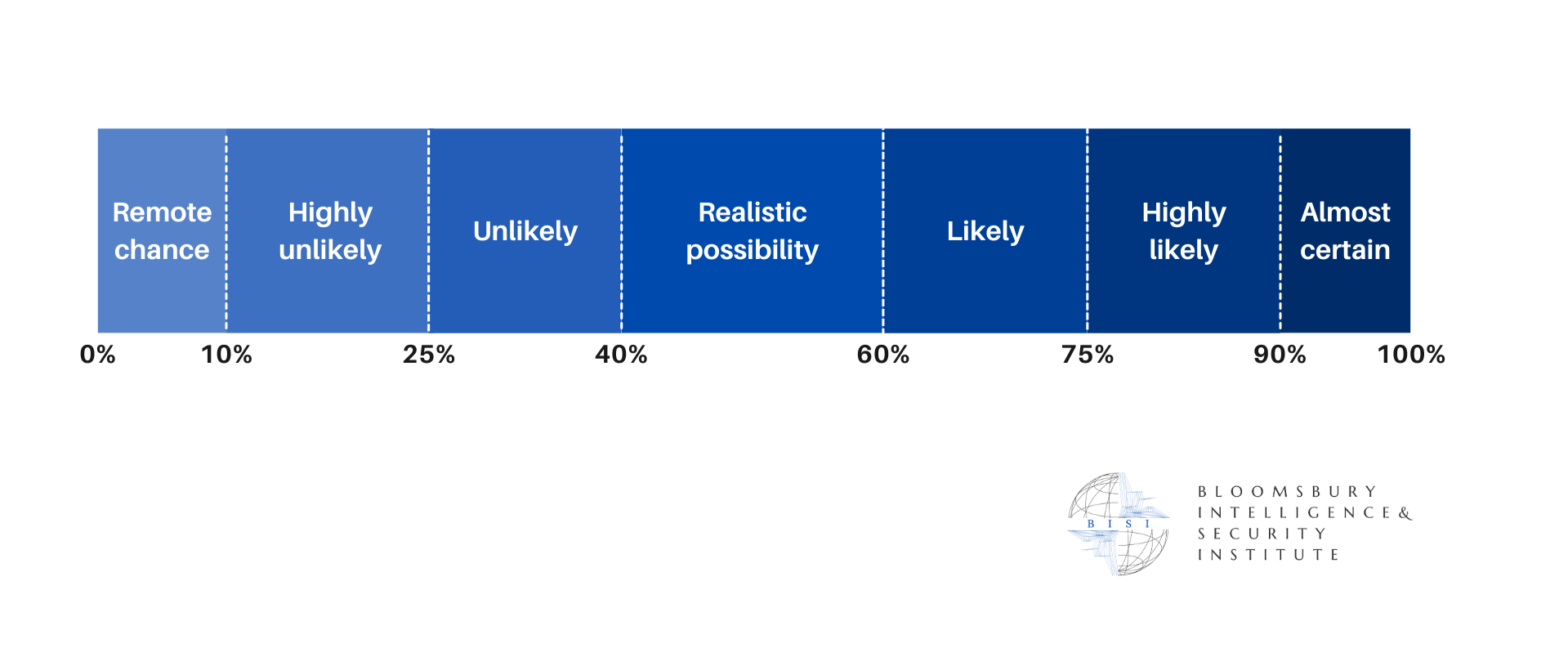
Following the current development, Central Asia will very likely remain a significant partner for the EU due to the abundance of raw materials. It is a realistic possibility that China will interfere and attract the Central Asian governments to increase trade.
Long-term (>1 year)
With Kazakhstan’s tungsten deposits being developed by the private US company, there exists a realistic possibility for the region's increased cooperation with the USA, but this cooperation will most likely increase the attention of China and Russia and alert the European partners.