Aryamehr Fattahi | 12 July 2026
Summary
During the 2026 Iran war, United States (US) Central Command (CENTCOM) transformed its X account into a real-time counter-disinformation channel, rebutting Iranian claims through a recurring "CLAIM" / "TRUTH" format that functioned as both correction and combat messaging.
The approach blunted some viral Iranian falsehoods, yet its credibility was undercut when CENTCOM’s stance on the Minab school strike, an edited fighter jet post, and contested Strait of Hormuz claims were contradicted by The New York Times, BBC Verify and many other analysts.
Combatant-command fact-checking is likely to become a standard feature of future conflicts; however, this model remains structurally vulnerable to credibility collapse whenever a single denial is disproven, and the medium-term trajectory points towards greater reliance on independent verification rather than military self-attestation.
Context
CENTCOM launched Operation Epic Fury against Iran on 28 February 2026, opening a kinetic campaign. By 11 March 2026, CENTCOM Commander Admiral Brad Cooper reported that US forces had struck more than 5,500 targets. From the first hours, the conflict generated the first Artificial Intelligence (AI)-native war, with AI-generated and recycled imagery flooding social media at an unprecedented scale. NewsGuard documented at least 120 false war-related claims since the start of the conflict. These included a viral claim that Iranian missiles had sunk the USS Abraham Lincoln, which reached 8 million views on X.
Against this backdrop, CENTCOM repurposed its X account as a rapid-rebuttal channel. Posts adopted a standardised "CLAIM" / "TRUTH" (and sometimes "LIE" / "FACT") format: a quoted Iranian assertion, a one-word verdict, and a corrective line. CENTCOM deployed this format to deny that 50 United States service members had been killed, that the Abraham Lincoln was hit, that Iran's Islamic Revolutionary Guard Corps (IRGC) had struck a warship, and that the Strait of Hormuz was closed. Defence Secretary Pete Hegseth amplified the messaging, reposting CENTCOM updates with "Great update. Media should take note."
The format matters because it positions a combatant command in the role normally occupied by independent fact-checkers such as BBC Verify. This came at a moment when the public's ability to verify wartime claims was collapsing. On 3 March 2026, X announced it would suspend creators from its revenue-sharing programme for 90 days for posting undisclosed AI war videos, a policy researchers found weakly enforced as fabricated visuals continued accumulating millions of views.
Yet CENTCOM's credibility was tested almost immediately. On the opening day, strikes hit a school in Minab, where Iranian officials said at least 150 people died. CENTCOM and Hegseth declined to comment, but The New York Times, citing United States (US) officials, later reported a preliminary military inquiry found American forces likely fired the Tomahawk using outdated targeting data. This was alongside many other incidents, including both the Strait of Hormuz, with Iran saying it is closed and the US saying it is open and an edited post about a fighter jet, where CENTCOM quietly changed a denial of a "crash" over Basra to a denial of a "shot down" event, compounding the impression of managed language.
Implications
CENTCOM's fact-checking encompasses multiple dimensions: the structural conflict between public affairs and verification, the credibility cost of disproven denials, the comparative information contest with Iran, and the downstream effects on allies, the media, and doctrine. The central argument is that CENTCOM's "CLAIM" / "TRUTH" model delivered short-term tactical advantage in the disinformation contest while incurring a strategic credibility liability that an interested combatant cannot fully escape.
A warring command cannot be a neutral fact-checker
CENTCOM's core vulnerability is structural rather than incidental. A command simultaneously prosecuting a war and adjudicating the truth of that war's events has an inherent incentive to shade findings towards operational and political convenience. The "TRUTH" label borrows the vocabulary of independent verification while lacking its essential feature: Disinterest. This tension is not hypothetical. A House Permanent Select Committee on Intelligence joint task force report of August 2016, prompted by a July 2015 complaint from more than 50 CENTCOM analysts, found that intelligence products approved by senior CENTCOM leaders typically provided a more positive depiction of United States antiterrorism efforts than was warranted by facts on the ground. This shows how the same institutions now ask audiences to accept their unevidenced one-word verdicts during an active campaign.
Every disproven denial hands authority to independent verifiers
The credibility cost crystallised around civilian-casualty incidents on the opening day. CENTCOM's inconsistent approach to the Minab school strike was undercut when preliminary US military findings, reported by The New York Times, attributed the strike to outdated American targeting data. The edited fighter jet post compounded the pattern. The corrosive effect is cumulative: Each verified contradiction does not merely correct one claim; it retroactively discounts every prior "TRUTH," handing interpretive authority to independent analysts.
CENTCOM out-messaged Iran, but on terms that reward evidence
Iran's information operation was higher in volume but lower in quality, creating an opening CENTCOM exploited. Iranian and aligned outlets relied on recycled footage and AI-generated fabrication, producing claims that were quickly falsified, such as the sunk-carrier narrative. CENTCOM's denials of those specific fabrications were vindicated and likely reduced their reach. However, the asymmetry cuts both ways: Where Iran's lies were exposed by evidence, so were some of CENTCOM's denials, and the same forensic ecosystem that debunked Tehran also debunked Washington. This exposes the fundamental limitation of combatant-led fact-checking: Authority rests on the accuracy of each post rather than institutional trust.
X amplified official reach while degrading the wider information space
X's design simultaneously elevated CENTCOM and undercut the information environment it operated in. The revenue-sharing model rewarded sensational falsehoods, and even after X announced its 90-day demonetisation policy for undisclosed AI war content, researchers found creators continued pushing misleading AI-generated imagery. X's own Grok chatbot misidentified AI content as authentic, sometimes contradicting itself within minutes. In this setting, an authoritative official voice had clear utility, but it also meant CENTCOM's messaging shared a feed with engagement-farming accounts and unreliable automated verification. The structural ambiguity of the platform blurred the line between official correction and the noise it sought to counter.
Credibility gaps strain allied confidence and coalition cohesion
The reputational damage extends beyond domestic audiences to partners who depend on CENTCOM's account of events. Persian Gulf states, already questioning the value of their security relationship with Washington, were the most exposed to the war's disruptions. When a command's public denials are contradicted by allied-nation media such as the BBC, partners face a choice between echoing claims they cannot independently verify and distancing themselves. Neither strengthens coalition cohesion. It is a realistic possibility that sustained credibility gaps make allied governments more reliant on their own intelligence and on independent verification than on CENTCOM bulletins. This is also important for shipping companies and private sectors who also operate within the area.
Restricted scrutiny leaves 'TRUTH' resting on assertion
The fact-checking controversy unfolded alongside an unusually adversarial posture towards the press. The Pentagon under Hegseth imposed credentialing restrictions that a federal court found unconstitutional on 20 March 2026, later ruling on 9 April that a revised policy continued to violate the First Amendment. The Pentagon barred photojournalists after unflattering images, and the months-long absence of a released Minab investigation drew criticism even from within the President's party. These conditions matter analytically because military fact-checking depends on an implicit promise of eventual transparency; when accountability mechanisms are constrained, the "TRUTH" label rests on assertion alone. The combination of confident public verdicts paired with restricted scrutiny is precisely the configuration most likely to erode trust over time.
A precedent militaries will copy, and adversaries will exploit
CENTCOM has demonstrated a replicable model: Fast, branded, combatant-led rebuttal at the speed of social media. It is highly likely that other militaries adopt comparable real-time fact-checking, given the demonstrated reach. The same precedent, however, normalises the "liar's dividend," a term coined by law professors Bobby Chesney and Danielle Citron in 2019 for the benefit a liar gains by falsely branding authentic content as fabricated. Authentic Iranian missile footage was indeed widely dismissed as fake. The lasting doctrinal lesson is double-edged: official rebuttal can suppress specific falsehoods, but a combatant that brands itself the arbiter of truth makes its own credibility a high-value target that a single disproven claim can degrade.
Forecast
Short-term (Now - 3 months)
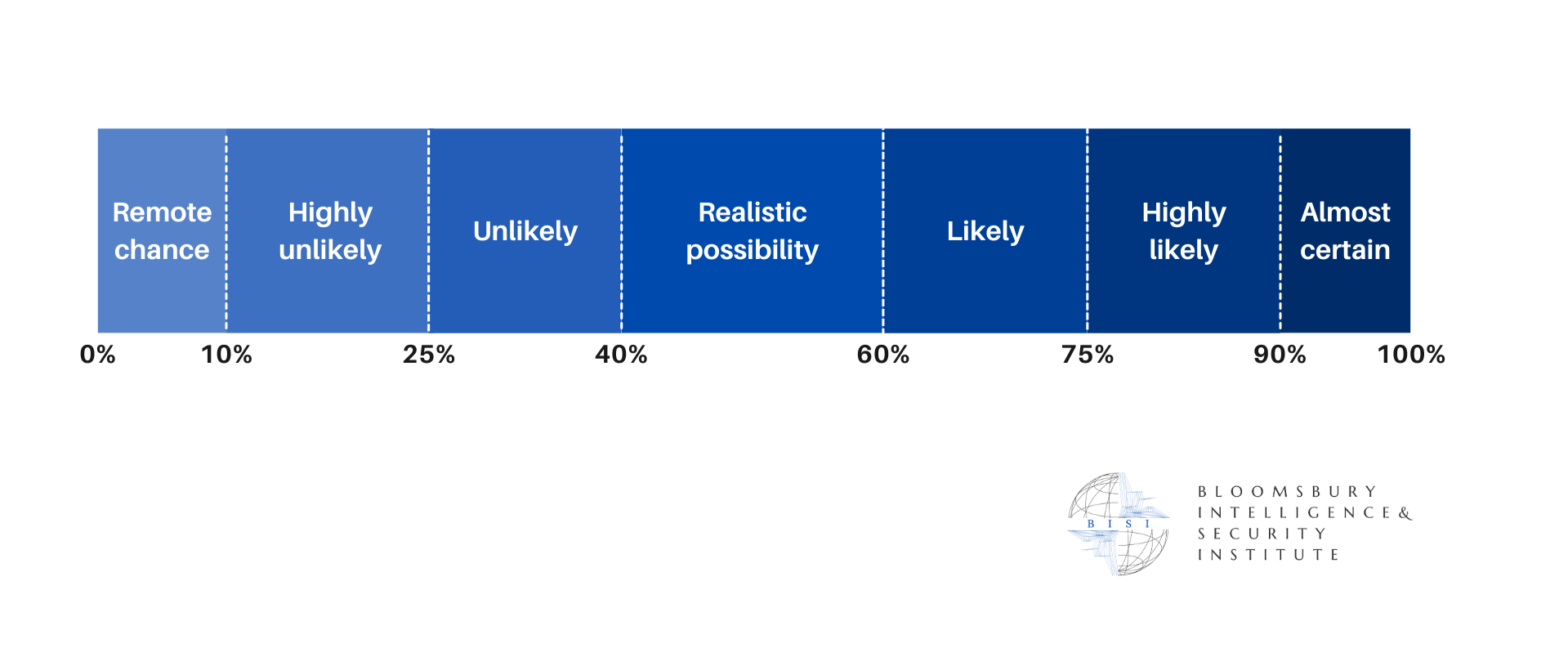
CENTCOM is highly likely to continue the "CLAIM" / "TRUTH" format amid the fragile ceasefire and contested Strait of Hormuz status. Further single-incident contradictions are a realistic possibility, particularly if the Minab investigation is released or remains withheld. Independent verifiers will likely retain de facto authority over disputed claims.
Medium-term (3 - 12 months)
It is likely that defence-communications doctrine is formally revised to institutionalise rapid rebuttal, while scrutiny of accuracy intensifies. Allied reliance on CENTCOM messaging is likely to soften in favour of national and independent assessment. AI-detection limitations make a clean information environment highly unlikely within this window.
Long-term (>1 year)
Combatant-command fact-checking is almost certain to become a standard feature of major conflicts. Its credibility will likely remain contingent and brittle, with the "liar's dividend" entrenched as a structural feature of AI-saturated information warfare. A shift towards verifiable, evidence-led military disclosure rather than one-word verdicts is a realistic possibility but not the most likely path given current accountability trends.