
Africa’s first G20: A Test for Non-Western Multilateralism
By Michele Santolini | 15 December 2025
Summary
Cyril Ramaphosa’s ambition of establishing South Africa (SA) as an economic governance leader through the G20 has been undermined by ambivalent results and notable international absences.
The U.S. delegation’s boycott derailed the event and is highly likely to reinforce the Trump administration’s fracture with emerging economies on key issues such as debt management, poverty reduction and sustainable growth. The EU leveraged this dissonance to build relationships with African countries, albeit without substantial returns.
The future of the G20 as an effective multilateral framework appears uncertain amid a loss of interest by great powers, despite the initiative displayed by the unforeseen adoption of a final document.
Context
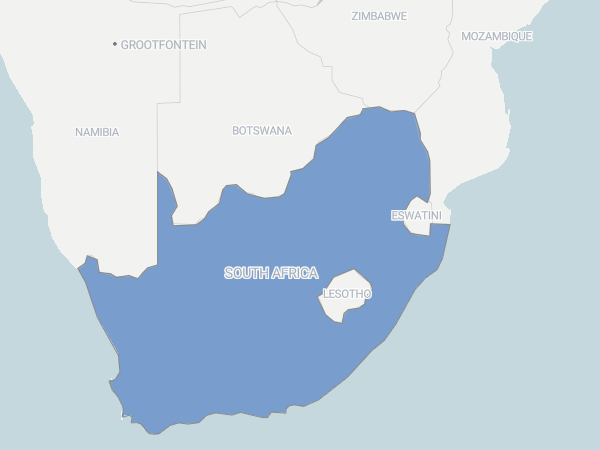
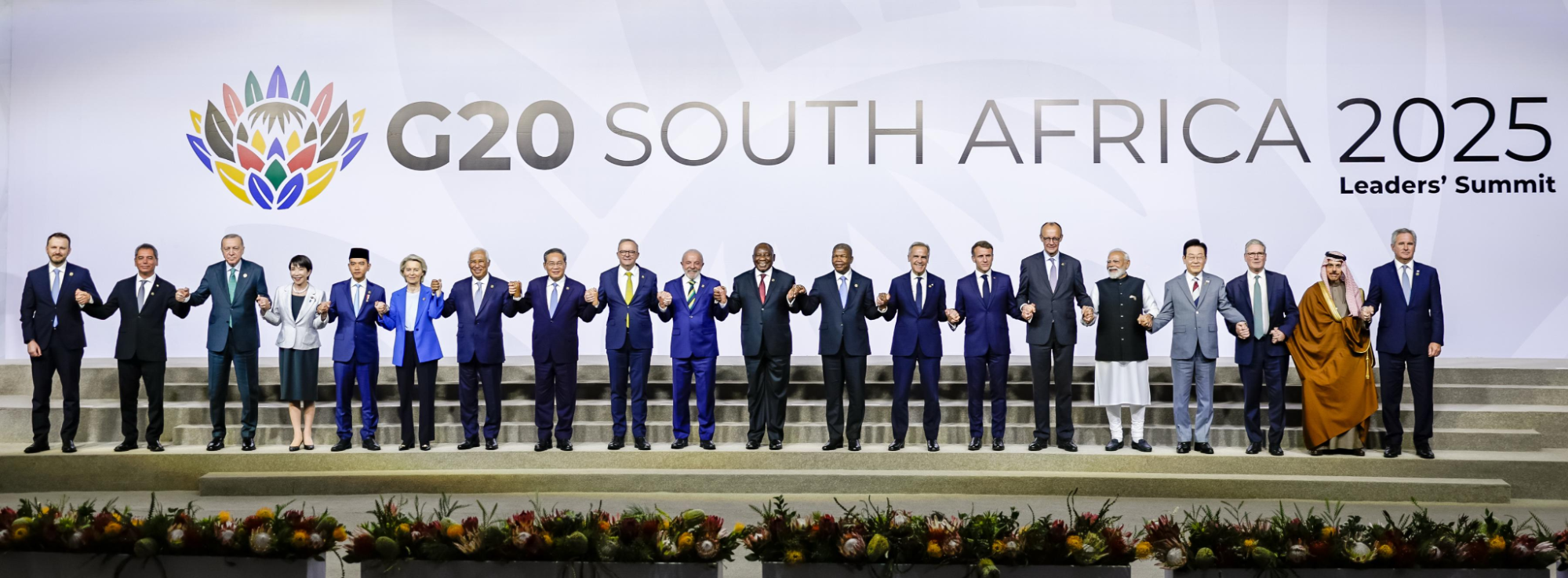
On November 24, the G20 international forum, composed of the world’s major economic powerhouses, was held for the first time on African soil in Johannesburg, South Africa (SA). The country’s president, Cyril Ramaphosa, chaired the event with the official aim of “placing the priorities of Africa and the Global South at the heart of the agenda”. After Indonesia, Brazil, and India’s turns, all fully-fledged BRICS members, the South African presidency seemed to signal the consolidation of emerging economies’ growing relevance in global multilateral governance.
However, U.S. President Donald Trump’s boycott of the event, citing the alleged persecution of the local Afrikaner white minority, loomed over the conference and propelled a series of other notable absences, such as Xi Jinping’s and Vladimir Putin’s.
Despite these hindering factors, the conference adopted a final communiqué covering pivotal issues such as global inequalities, developing countries’ debt burden, energy transition and critical raw materials.
Implications
President Ramaphosa’s bid for international recognition via hosting the G20 reflects the ongoing sharp deterioration of SA’s economy amid declining approval ratings, with the African National Congress (ANC) consistently polling around 40% for the first time since the end of apartheid. SA’s unemployment rate reached 31% in late 2025, while inflation rose to 3.6% in November. As the event was poorly received by the country’s public opinion, its aftermath is highly likely to weaken the president’s domestic position vis-à-vis opposition parties contesting the presidential economic policies, such as Jacob Zuma’s ANC splinter party uMkhonto weSizwe, now polling at 15-16% on a national level.
In parallel, the US’s refusal to engage in the G20 undermined its capacity to serve as a meaningful multilateral framework and clashed with Ramaphosa’s claims of an “African Momentum”, questioning the existence of a consensus-based global economic agenda. The decision underscores a growing fracture between the Trump administration and the Global South, with the adoption of a final document, rather than a sign of effectiveness, representing a collective act of defiance toward Washington.
On the contrary, Ursula Von der Leyen welcomed the event as an important initiative for fuelling “inclusive and sustainable economic growth”. The EU leveraged the US unilateral approach to reinforce its role as a driver of multilateralism and to strengthen partnerships with African countries, as manifested by the signing of the EU-SA “Clean Trade and Investment Partnership” (CTI) ahead of the summit. The initiative reflects the EU’s growing need for energetic diversification and its role in the global race for access to critical raw materials. Despite the CTI and its involvement in the draft of the communiqué, the EU appears unlikely to achieve more concrete results in the near future.
Nevertheless, as a consequence of the US boycott and the absence of the leaders of Argentina, China, Indonesia, Mexico and Saudi Arabia, the event’s political relevance appears sensibly reduced. The economically assertive agenda promoted by the African delegations did not align closely with the Chinese delegation’s positions and struggled to attract wider backing from other non-European countries. As testified by French President Emmanuel Macron’s statement, “The G20 may be reaching the end of a cycle”, a global loss of confidence looms over the framework.
Forecast
Short-term (Now - 3 months)
Cyril Ramaphosa’s administration is highly likely to suffer from worsening approval ratings as a result of the G20. At the same time, US-South Africa relations, currently at a historic low since the 2000s, are highly likely to deteriorate further.
Medium-term (3-12 months)
US relations with Africa vis-à-vis economic issues management are likely to experience a shift from multilateral frameworks to bilateral accords and traditional diplomacy.
Long-term (>1 year)
The G20 framework is highly likely to lose political relevance, especially in the context of the Global South’s needs, despite the adoption of a final document.
