Adapting to a Hotter Future: Jordan’s Climate Resilience Strategy
By Trishnakhi Parashar | 29 June 2026
Summary
Jordan faces severe climate change related challenges, driven by prolonged droughts, rising temperatures, and worsening water security, placing significant pressure on agriculture, economy and livelihoods.
The government is responding through substantial adaptation initiatives, including a major desalination project and a climate-resilient roadmap for water and sanitation services.
Although significant steps have been taken, climate change is expected to increase vulnerabilities, pressure state resources, and reshape Jordan’s long-term development trajectory.
Context
Like many states in the Middle East, Jordan has been grappling with environmental and climate-related challenges, particularly chronic water scarcity and recurrent droughts, which remain among the most alarming issues. For decades, Jordan has struggled to balance its limited freshwater resources against its growing domestic demand. However, the challenges have intensified significantly when the influx of Syrian refugees coincided with rising temperatures, declining rainfalls, and an overall worsening water shortage. Climate risks in Jordan are not limited to persistent dry conditions; the state is also vulnerable to flash floods, particularly in arid and semi-arid areas.
The Iran-Israel-USA war has also become intertwined with Jordan’s water crisis. Jordan relies significantly on water imports from Israel under mutual water sharing agreements. However, Israeli water exports have been gradually decreasing amid the Gaza war and other regional tensions, exposing the fragility of these agreements. Moreover, the targeting of water facilities during the war has further elevated risks not only for Jordan but for the whole Middle East region.
Today, the state faces more complex climate-security complications manifested in mounting agricultural production losses, disruptions in industrial activities, economic strain, and declining rural livelihoods. The consequences of climate change are increasingly visible in Jordan’s agricultural productivity, for instance, its traditional olive industry has experienced a decline despite contributing up to USD 1.4 b in economic value and supporting nearly 80,000 of its rural families.
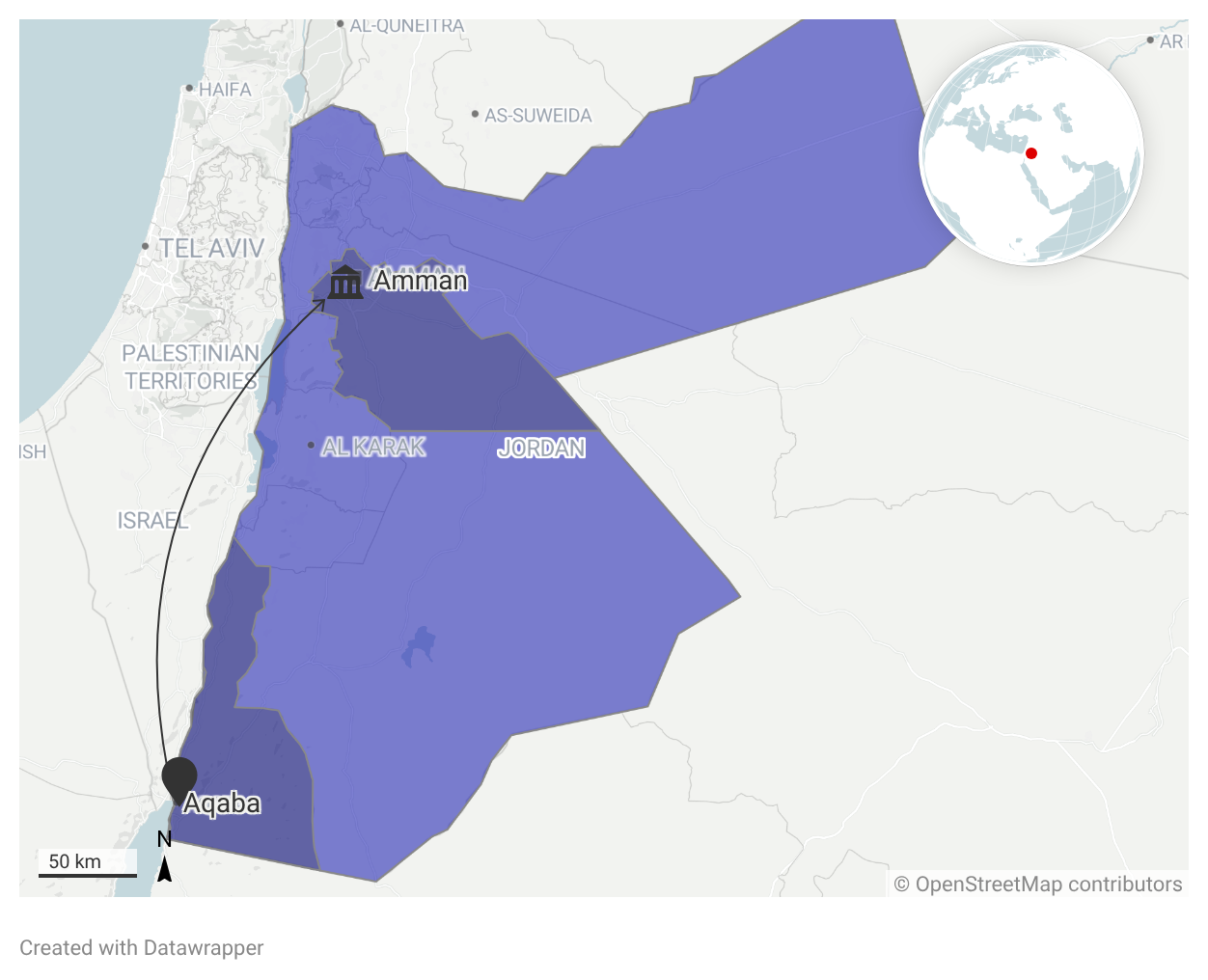
In response, the government has shifted towards long-term adaptation measures, such as far-reaching climate-resilient water management strategies crafted for safeguarding future water security. On 17 March 2026, Jordan approved a USD 203 m grant agreement with the United States government to support the Aqaba-Amman water Desalination and Conveyance Project (National Water Carrier). It is a flagship component of a broader USD 6 b water infrastructure initiative that has also secured support from the Green Climate Fund. The approval helped the project towards financial closure and opened the door for construction. The project’s initial construction phase is expected to focus on the desalination facilities in Aqaba on the Red Sea coast, followed by the development of a 438 km underground water conveyance pipeline and associated infrastructure linking Aqaba to Amman. Authorities are aiming to achieve full operational readiness within four years, and upon completion, the project will annually deliver approximately 300 m cubic meters of desalinated water.
Alongside infrastructure development, Jordan’s Ministry of Water and Irrigation launched a Climate-Resilient Water and Sanitation Safety Planning roadmap in May 2026. The initiative aims to transform water management from a proactive and preventive risk-management model. Consistent with the priorities of Jordan’s National Water Strategy 2023-40, the roadmap contributes to the state’s wider efforts to enhance water security and long-term resource resilience.
Implications
Climate adaptation is becoming an important policy priority for the government. The intersection of climate change and water scarcity places growing pressure on Jordan’s domestic stability and regional relations. Insufficient water supply and periodic supply disruptions risk public dissatisfaction, particularly since many refugees continue to experience unreliable access to water. Regionally, Jordan’s situation has increased its reliance on transboundary water-sharing agreements with Israel and Syria over the Jordan and Yarmouk rivers, exposing it to domestic and diplomatic vulnerabilities. However, following the war, the future of the Jordan-Israel water-sharing agreement remained unclear, prompting Amman to explore alternative arrangements with Syria.
Operational demands are becoming more complex and resource-intensive. Water utilities, healthcare systems, municipalities, and the agricultural industry may face growing demands during drought periods, necessitating greater investment and emergency response. Moreover, significant volumes of water are lost through leakage and theft. To resolve these issues, Jordan will require more mega water projects, wastewater treatment facilities, digital monitoring, stricter enforcement rules and improvements in groundwater management. The transition toward climate-resilient water governance will require technological advancements, workforce training, modern infrastructure, and stronger inter-agency coordination.
Climate change emerges as an active internal security threat, intensified by increasing exposure to extreme heat, water shortages, and food insecurity. Prolonged droughts destabilise rural sources of income, reduce domestic food production, and drive internal displacement. These challenges complicate resource management and distribution, while elevating the importance of water and food security. As resource pressures increasingly spill over into urban areas, water supply restrictions risk igniting public animosity and straining trust in state institutions, particularly in areas with large refugee and local populations.
The economic toll of adapting to a hotter future threatens to impose a significant fiscal burden on the state. Water scarcity raises operational costs for households, businesses, and industries. Agricultural losses associated with heatwaves and droughts dry up rural livelihoods, decrease household incomes, and push affected communities into economic vulnerability. At the same time, investing in desalination and conveyance projects could create employment opportunities, improve long-term water security, and diminish the economic costs of future climate uncertainties.
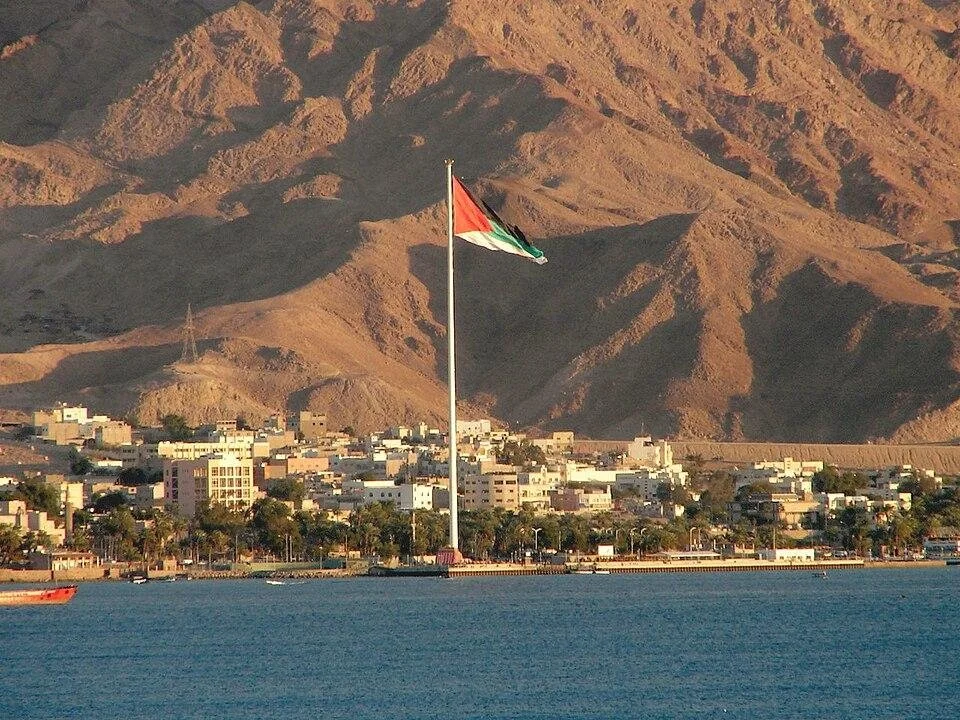
Aviad2001/Wikimedia
Forecast
Short-term (Now - 3 months)
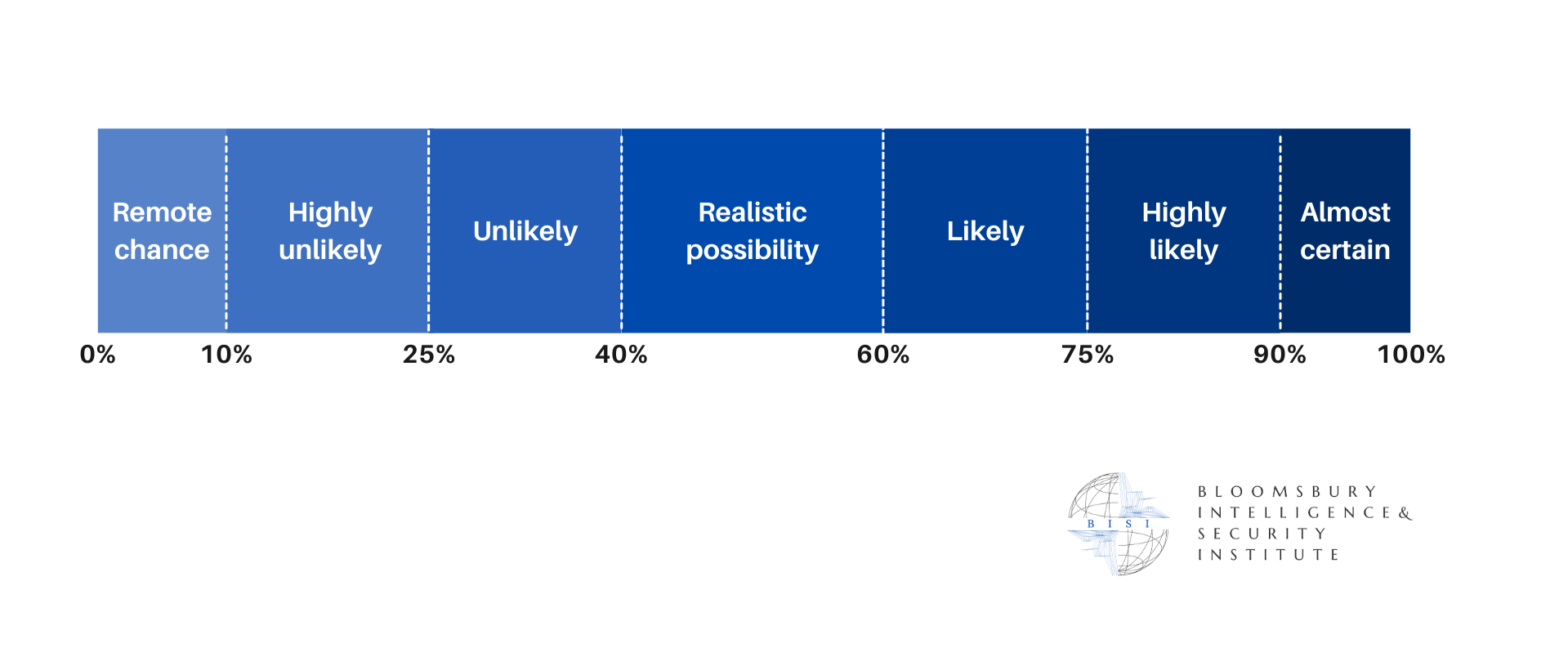
Jordan is highly likely to see a sharp rise in capital expenditure directed towards water infrastructure upgrades.
Seasonal heatwaves and below average rainfall are likely to continue putting pressure on agricultural production and water supplies.
Jordan is highly likely to expand technical cooperation with international partners and water-management institutions to strengthen water security.
Continued regional tensions are likely to complicate agreements over transboundary water cooperation with Israel.
Medium-term (3 - 12 months)
There is a realistic possibility that climate adaptation measures will accelerate significant shifts towards drought-resistant crop varieties, water-efficient irrigation systems, and smart farming practices, which will gradually reshape the traditional agricultural landscape.
Long-term (>1 year)
Desalination projects will likely become a cornerstone of Jordan’s national water security strategy and reduce dependence on groundwater extraction.
Climate adaptation measures and water-efficient technologies are likely to expand into the energy sector, public health, and urban planning.