2026 Hungarian Inflection Point: Tisza’s Challenge and the Future of EU Cohesion
By Dorota Vandakova | 23 March 2026
Summary
Hungary’s political landscape is shifting as the Tisza Party, led by Péter Magyar, has been polling ahead of Prime Minister Viktor Orbán’s long-dominant Fidesz government in several recent surveys, showing Tisza holding a 20 percentage point advantage among decided voters.
Increased political competition is likely to reshape Hungary’s relationship with the European Union (EU), particularly regarding rule-of-law disputes, EU funding access, and policy alignment.
The election outcome is possible to influence broader EU cohesion, with implications for decision-making on sanctions, institutional reform, and the Union’s response to geopolitical pressures.
Country profile data
GDP: 51,380
GDP per capita: 7.360
HDI: 0.846
Official currency: Hungarian Forint (HUF)
Population: 9.6m
Ethnic composition: 85.6% Hungarian, Romani 3.2%, German 1.9%, other 2.6%, unspecified 14.1%
Religious composition: Roman Catholic 37.2%, Calvinist 11.6%, Lutheran 2.2%, Greek Catholic 1.8%, other Christian 1.9%, unspecified 27.2%, none 18.2%
Major parties
Fidesz- Hungarian Civic Alliance
Leader: Viktor Orbán
Ideology: National-conservative, right-wing populist
Platform: National sovereignty, anti-immigration policies, strong state role in strategic sectors, scepticism toward deeper US integration
Status: Governing party since 2010.
Election context: The government led by Viktor Orbán faces what is widely considered its strongest electoral challenge in 16 years. However, the electoral contest takes place in a political environment that has been significantly reshaped by Orbán’s ruling party, Fidesz -Hungarian Civic Alliance, since it came to power with a constitutional majority in 2010. Over the past decade, Fidesz has implemented a series of institutional and legal changes that critics say favour the ruling party. These include reforms to the electoral system (such as redrawing constituency boundaries and introducing a winner-compensation mechanism), expanding government influence over public media, and passing multiple constitutional amendments that strengthened the executive’s position. These developments have led several international observers and democracy-monitoring organisations to argue that the playing field is tilted toward the incumbent government, even as opposition parties attempt to mount a competitive challenge.
Tisza Party
Leader: Péter Magyar
Ideology: Reformist centre-right/ anti-corruption movement
Platform: Anti-corruption reforms, restoring the rule of law, rebuilding relations with the EU and NATO, economic reforms and unlocking EU funds
Status: The party, Tisza Party, founded in 2024 by Péter Magyar, has rapidly emerged as a major challenger to the long-ruling Fidesz- Hungarian Civic Alliance of Viktor Orbán. Positioning itself as an anti-Fidesz reform movement, it has quickly gained public support and, despite its recent creation, has already led or competed closely with Fidesz in several opinion polls ahead of the upcoming elections.
Context
Hungary is approaching a critical political juncture ahead of the 2026 parliamentary election. Since 2010, Prime Minister Viktor Orbán and his Fidesz party have dominated the country’s political system. Through repeated electoral victories, constitutional changes, and institutional consolidation, the governing party has shaped much of Hungary’s political landscape over the past decade. Examples include the adoption of a new constitution in 2011, reforms to the electoral system that reduced the number of parliamentary seats and redrew constituency boundaries, the centralisation of media oversight under a government-appointed authority, and changes to the judiciary, such as restructuring the court administration system and lowering the retirement age for judges. However, the emergence of the opposition Tisza Party, led by former government insider Péter Magyar, has introduced a new dynamic into Hungarian politics and is highly likely to increase electoral competition in the coming years.
Tisza gained national attention during the 2024 European Parliament elections, where the party secured a strong result despite its recent formation, winning 7 of the European Parliament’s 21 seats allocated to Hungary and around 30% of the vote. Magyar, previously associated with institutions connected to the governing system, has framed his political campaign around anti-corruption measures, transparency, and institutional reform. The party has also emphasised the need to restore constructive relations with the European Union (EU), positioning itself as a reform-oriented alternative within the Hungarian political landscape. This messaging has resonated with segments of the electorate that express dissatisfaction with both the governing party and fragmented opposition groups.
Domestic implications
Governance and rule-of- law reforms
Hungary’s relationship with the EU has been marked by recurring disputes in recent years. EU institutions have raised concerns regarding judicial independence, media pluralism, and public procurement practices. These issues have contributed to the application of rule-of-law mechanisms that condition access to EU funds on governance standards. As Hungary remains one of the largest net recipients of EU structural and cohesion funding, the allocation and suspension of these resources have become politically significant. Domestic political debates increasingly intersect with questions about EU oversight, sovereignty, and economic development.
The rise of Tisza introduces uncertainty into this political environment. If the party continues to lead the polls (48% to Fidesz’s 39%), Hungary is highly likely to experience a more competitive electoral environment than in previous election cycles. It is possible to encourage new forms of political coordination among opposition groups or to prompt adjustments in the governing party's campaign strategies. Political messaging surrounding governance reforms, economic policy, and relations with EU institutions is therefore likely to become more prominent as parties attempt to mobilise voters ahead of 2026.
However, structural factors within Hungary’s electoral system may limit the scale of political change. The current electoral system tends to favour long-standing parties with established organisational networks, and the Fidesz party retains substantial advantages in political infrastructure, media presence and governance experience. This is partly due to the mixed electoral system introduced after the 2011 reforms, which combines single-member constituencies with a national party list: parties that consistently win many districts can convert relatively small vote leads into larger parliamentary seat shares. In addition, Fidesz benefits from a nationwide party organisation, strong incumbency advantages from more than a decade in government, and significant visibility through pro-government media outlets. As a result, even if opposition support increases, converting electoral momentum into parliamentary representation will likely remain challenging.
Economic governance will also remain closely linked to Hungary’s political relationship with the EU. EU financial mechanisms, including cohesion and recovery funds, represent an important source of investment for infrastructure, regional development, and public services within Hungary. Continued disputes over rule-of-law standards will likely therefore affect access to these funds, potentially influencing fiscal planning and long-term economic development. EU institutions have already suspended or restrained billions of euros in cohesion and recovery funds over rule-of-law and corruption concerns, and stripped over EUR 1b in cohesion money from failing the required reforms.
Opposition actors, particularly the Tisza Party, have emphasised the restoration of constructive relations with EU institutions as a means of improving governance standards and unlocking suspended funding. For domestic stakeholders such as regional governments, infrastructure contractors, and businesses dependent on EU-supported projects, the outcome of these negotiations could have tangible economic consequences. Under the Fidesz government, several high-profile cases highlighted extensive corruption, including allegations of preferential awarding of public contracts, misuse of EU funds, and links between state resources and politically connected businesses. If political power shifts under a Tisza-led government, stronger anti-corruption measures and greater transparency in public procurement could significantly affect how contracts are awarded, EU funds are managed, and regional development projects are executed.
Geopolitical Implications
Relations with the European Union
Beyond Hungary’s domestic politics, these developments also carry implications for the EU. Hungary has frequently diverged from the EU majority on several policy issues, including sanctions policy, institutional reform, and certain foreign policy decisions. As several EU decisions require unanimity among member states, Hungary’s stance has at times influenced the pace and scope of collective EU action, particularly regarding aid to Ukraine. A shift in Hungary’s domestic political balance, or the emergence of a more competitive parliament, could therefore affect Hungary’s role in EU negotiations and decision-making processes. The emergence of a more competitive political environment in Hungary could therefore influence EU decision-making dynamics.
At the same time, continuity in leadership under Viktor Orbán would likely sustain Hungary’s current geopolitical positioning within Europe. Orbán has frequently positioned Hungary as a leading voice among conservative and sovereigntist political movements within the EU, emphasising national sovereignty and scepticism toward deeper European integration.
Hungary and Russia relations and post-War developments in Ukraine
Under the leadership of Viktor Orbán and his party, Fidesz-Hungarian Civic Alliance, Hungary has maintained comparatively close political and economic ties with Russia and its president Vladimir Putin. Although Hungary has ultimately approved all EU sanctions packages following Russia’s invasion of Ukraine, the government has repeatedly criticised the sanctions and at times delayed or threatened to veto them during negotiations within the EU. Budapest has also argued for maintaining channels of dialogue with Moscow and prioritised continued energy cooperation, particularly regarding Russian gas supplies and the expansion of Hungary’s nuclear energy capacity.
Opposition forces, including the Tisza Party led by Péter Magyar, have generally advocated a more critical stance toward Russia and stronger support for Ukraine. In such a scenario, Hungary will likely adopt a more cooperative approach to EU sanctions policy, deepen political and economic support for Ukraine, and play a more active role in discussions on post-war reconstruction and development. While energy security and economic considerations will likely remain important constraints, a change in government could reduce tensions with EU partners and lead to a clearer alignment with the EU’s collective strategy toward Russia and Ukraine.

Scenarios
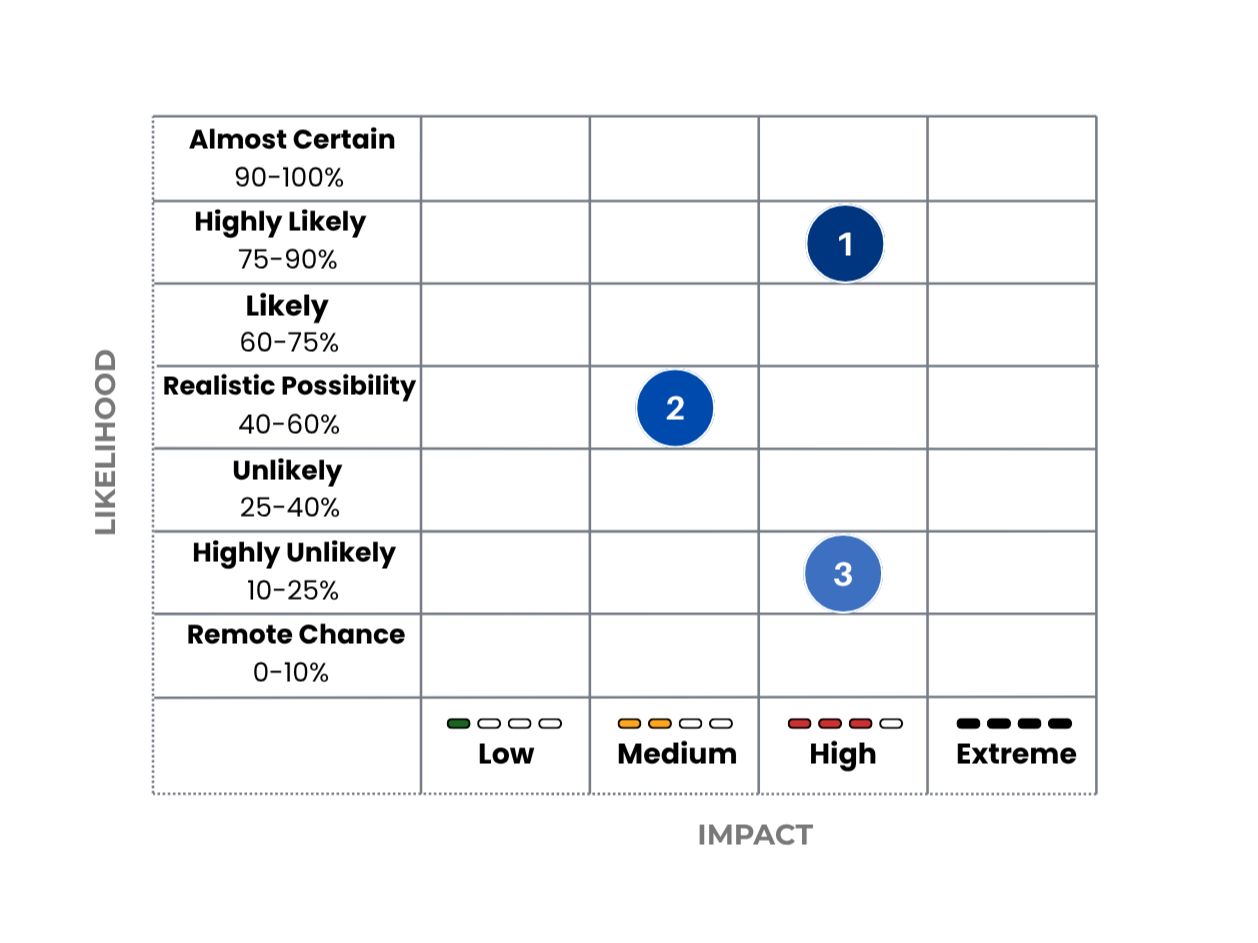
Scenario 1: Government Change and EU Re-Alignment
According to polls, it is highly likely that the Tisza Party will defeat Fidesz- Hungarian Civic Alliance and form a new government. Such an outcome could lead to significant institutional reforms, including anti-corruption measures, judicial reforms, and recalibration of Hungary’s relationship with the EU. This scenario would represent the most substantial political shift in Hungary since 2010 and could reshape both domestic governance and Hungary’s role within the EU.
Potential impacts: This outcome will highly likely improve Hungary’s relations with the EU by aligning more closely with EU norms and policies. Anti-corruption measures and judicial independence are likely to be strengthened. Investor confidence is possible to increase, potentially improving Hungary’s economic prospects. Overall, this scenario will likely bring greater political stability through comprehensive institutional reforms.
Scenario 2: Policy Continuity with Intensified Political Competition
The Fidesz Party retains its parliamentary majority in the 2026 elections, although with reduced margins. The Tisza party consolidates its position as a primary opposition force and increases parliamentary competition. This scenario will likely maintain policy continuity while intensifying domestic political debate and scrutiny of government decisions between 2026 and 2028.
Potential impacts: The Tisza Party will consolidate its position as a primary opposition force. Policy continuity is highly likely to be maintained, ensuring stability in governance. At the same time, increased parliamentary scrutiny and political debate is possible to lead to moderate improvements in governance reforms. Domestic political polarisation is likely to increase, creating a more contentious political environment.
Scenario 3: Opposition Coalition and Parliamentary Rebalancing
Tisza Party is unlikely to gain its parliamentary representation significantly and form or lead a broader opposition coalition capable of weakening the governing majority of the Fidesz party. This would produce a more competitive political environment and greater parliamentary oversight, potentially leading to debates over institutional reform and Hungary’s relationship with the EU.
Potential impacts: This will likely accelerate debates on institutional reform and anti-corruption measures. Hungary’s EU policies will likely be reoriented, potentially moving toward greater integration with EU standards. While this scenario is likely to lead to short-term political instability, it is also likely to strengthen long-term democratic resilience.