Trump-Xi Summit: Implications for Technology and Trade
By Martyna Chmura | 15 June 2026
Summary
President Donald Trump and President Xi Jinping used the May 2026 Beijing summit to stabilise bilateral ties, but produced limited progress on the main disputes shaping the United States (US)-China technology competition.
Artificial intelligence (AI) chips, critical minerals, cybersecurity and market access remained central points of contention, indicating that commercial ties will persist but remain constrained by security competition.
US-China technology relations are likely to remain structured around selective interdependence, with non-sensitive trade continuing while advanced technologies remain restricted.
Context
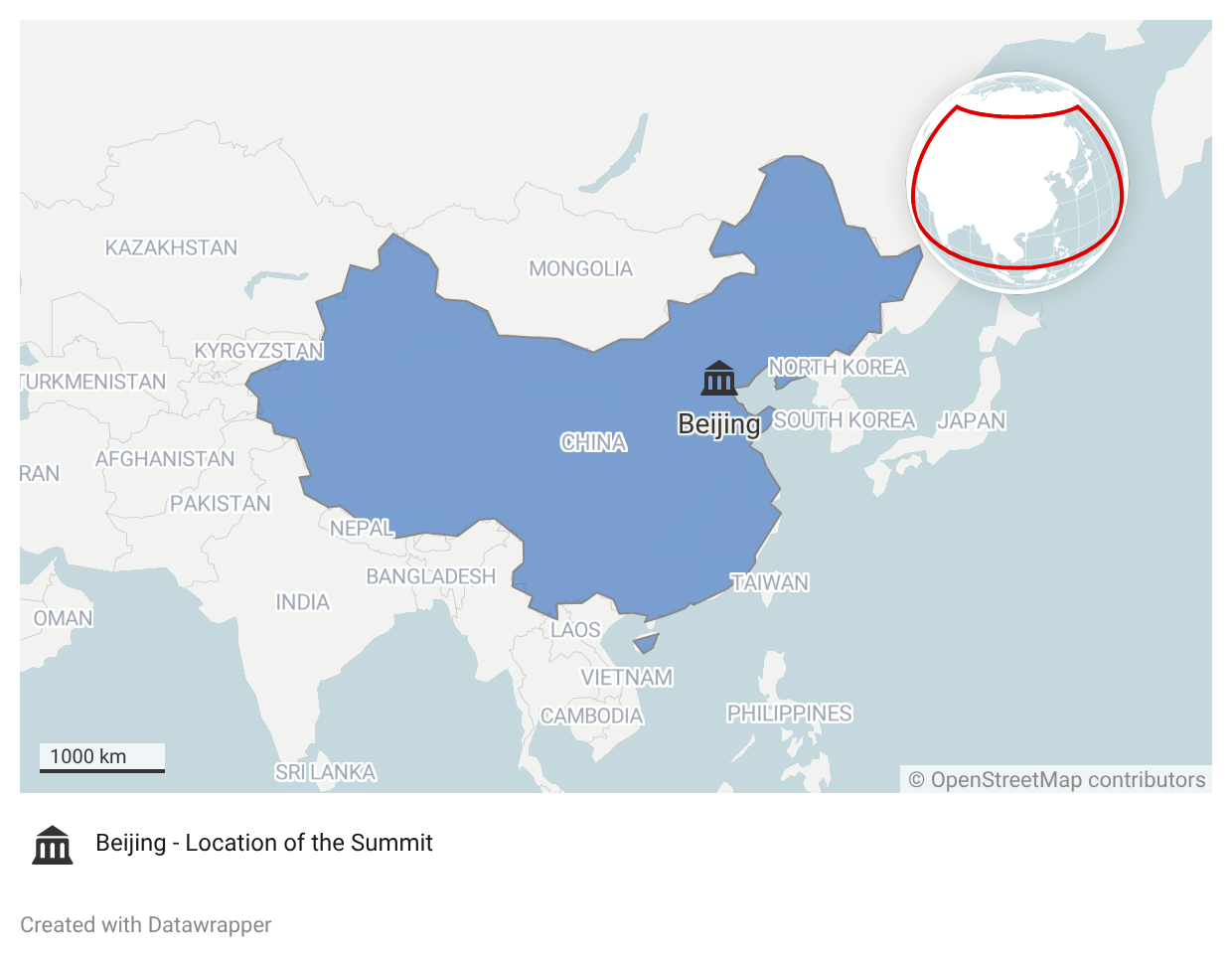
President Donald Trump visited Beijing on 14-15 May 2026 for a state visit with President Xi Jinping, the first visit by a US president to China since 2017. The summit followed a period of renewed trade tensions, technology restrictions and strategic uncertainty, with both governments seeking to reduce near-term volatility without resolving their wider competition.
The White House framed the visit as producing commercial and diplomatic gains, citing Chinese commitments to buy 200 Boeing aircraft, purchase at least USD 17b per year in US agricultural products between 2026 and 2028, restore market access for US beef and poultry, and create new US-China Boards of Trade and Investment. The two sides also endorsed a framework of “constructive strategic stability” and agreed to maintain communication on Iran, North Korea, trade and investment.
Technology was a major feature of the visit, even where it was not always foregrounded in official readouts. NVIDIA Chief Executive Officer Jensen Huang, Apple Chief Executive Officer Tim Cook and Tesla Chief Executive Officer Elon Musk joined the US delegation, signalling the importance of market access and technology supply chains. The main technology flashpoints were advanced AI chips, US export controls, China’s access to foreign technology firms and rare-earth supply chains. Significantly, China accounted for 59% of global rare-earth mining and 91% of rare-earth refining in 2024, giving Beijing significant leverage over sectors including semiconductors, electric vehicles, energy infrastructure and defence production.
Implications
The announced outcomes indicate that the summit produced a short-term diplomatic pause rather than any long-term substantive settlement. Within this context, the concept of a “constructive China-US relationship of strategic stability” emerged as the summit’s principal diplomatic framework. President Xi Jinping described it as a model based on cooperation, managed competition, manageable differences and “expectable peace”. However, this language does not remove disagreement over Taiwan, export controls, cyber activity, market access or strategic supply chains. This makes the summit closer to a stabilisation mechanism than a reset in bilateral relations.
For the technology sector, the summit confirmed that commercial engagement and security competition will continue to coexist. US technology companies still seek access to China’s market, but concerns persist in Washington that advanced chips, AI systems, and digital infrastructure could strengthen Chinese military and surveillance capabilities. This tension was visible before the summit, when Representative Gregory Meeks introduced legislation to block exports of Nvidia H200 and other advanced AI chips to China, arguing that such sales could strengthen China’s AI and defence capabilities. However, in May 2026, the Trump administration reportedly cleared H200 sales to 10 Chinese firms, supporting US commercial access to China’s AI market. This suggests that any opening in chip exports is likely to remain conditional and politically contested, rather than a full reversal of US technology controls.
The summit also highlighted how critical minerals have become part of the US-China technology competition. China’s dominance in rare-earth processing and permanent-magnet manufacturing gives Beijing leverage over supply chains that support advanced manufacturing, clean energy, electronics, and defence production. This creates an asymmetry where Washington can restrict China’s access to advanced semiconductors, while Beijing can pressure key inputs for the industries that depend on them. The risk is therefore not only supply disruption, but deeper strategic dependence on a competitor for materials central to industrial and military capability.
For global markets, the summit lowers the risk of sudden escalation but does not restore normal globalisation. Non-sensitive trade may become more predictable through the proposed Boards of Trade and Investment. Advanced technology sectors, however, remain subject to export controls, investment screening and national-security rules, creating a more managed but still fragmented operating environment for multinational firms.
The summit also showed the limits of leader-level diplomacy in addressing complex technology risks. AI, cybersecurity, surveillance, and digital infrastructure were either discussed only briefly or left largely outside the official readouts, despite their central role in US-China competition. This leaves several operational risks unresolved, including cyber activity against critical infrastructure, the security of connected vehicles, data access by foreign-linked firms and the use of AI-enabled tools in military or intelligence contexts. The result is a relationship in which high-level meetings can reduce political volatility, but the most sensitive technology disputes still require sustained technical, regulatory and security-level engagement.
Forecast
Short-term (Now - 3 months)
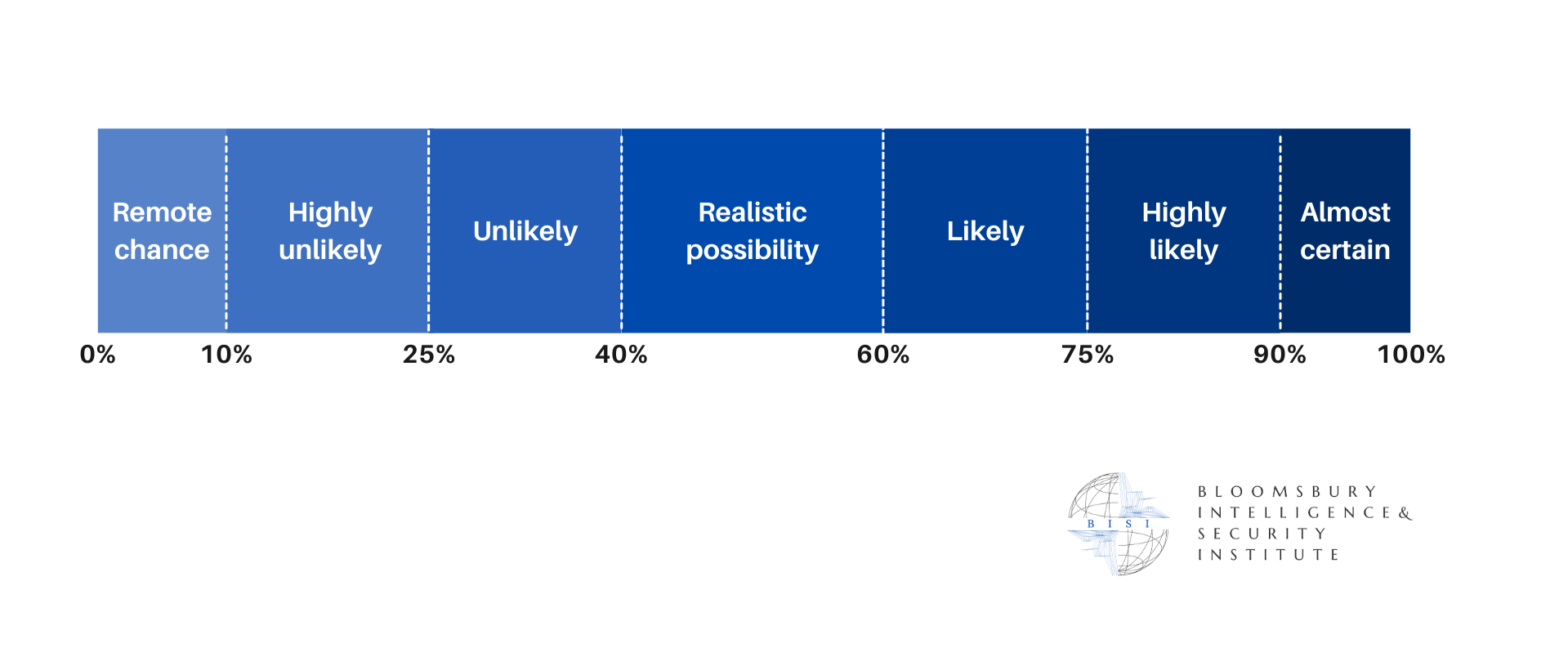
The new US-China Boards of Trade and Investment are highly likely to reduce immediate market uncertainty by keeping commercial talks open, though they are unlikely to resolve disputes over AI chips, cyber activity or critical minerals.
Limited technology licensing arrangements, including around advanced chips and rare-earth access, are likely to remain politically contested as both governments balance commercial interests against national-security concerns.
Medium-term (3 - 12 months)
Xi’s planned September 2026 Washington visit is likely to test whether “constructive strategic stability” can move beyond summit language into concrete arrangements on trade, AI safety, export controls and crisis communication.
The November 2026 US midterm elections are highly likely to harden political scrutiny of China policy, limiting the administration’s ability to offer major technology concessions and increasing pressure for tougher controls on chips, data and supply chains.
Long-term (>1 year)
US-China technology competition is highly likely to remain structured around selective interdependence, with non-sensitive trade continuing whereas AI, semiconductors, cyber capabilities and critical minerals remain restricted.
A full technology reset is highly unlikely, as both countries will continue treating advanced technologies as strategic assets central to economic power, military capability and long-term geopolitical influence.