
Kazakhstan’s Digitalisation: Driving Economic Diversification and Regional Influence
By Anna Belcikova | 8 December 2025
Summary
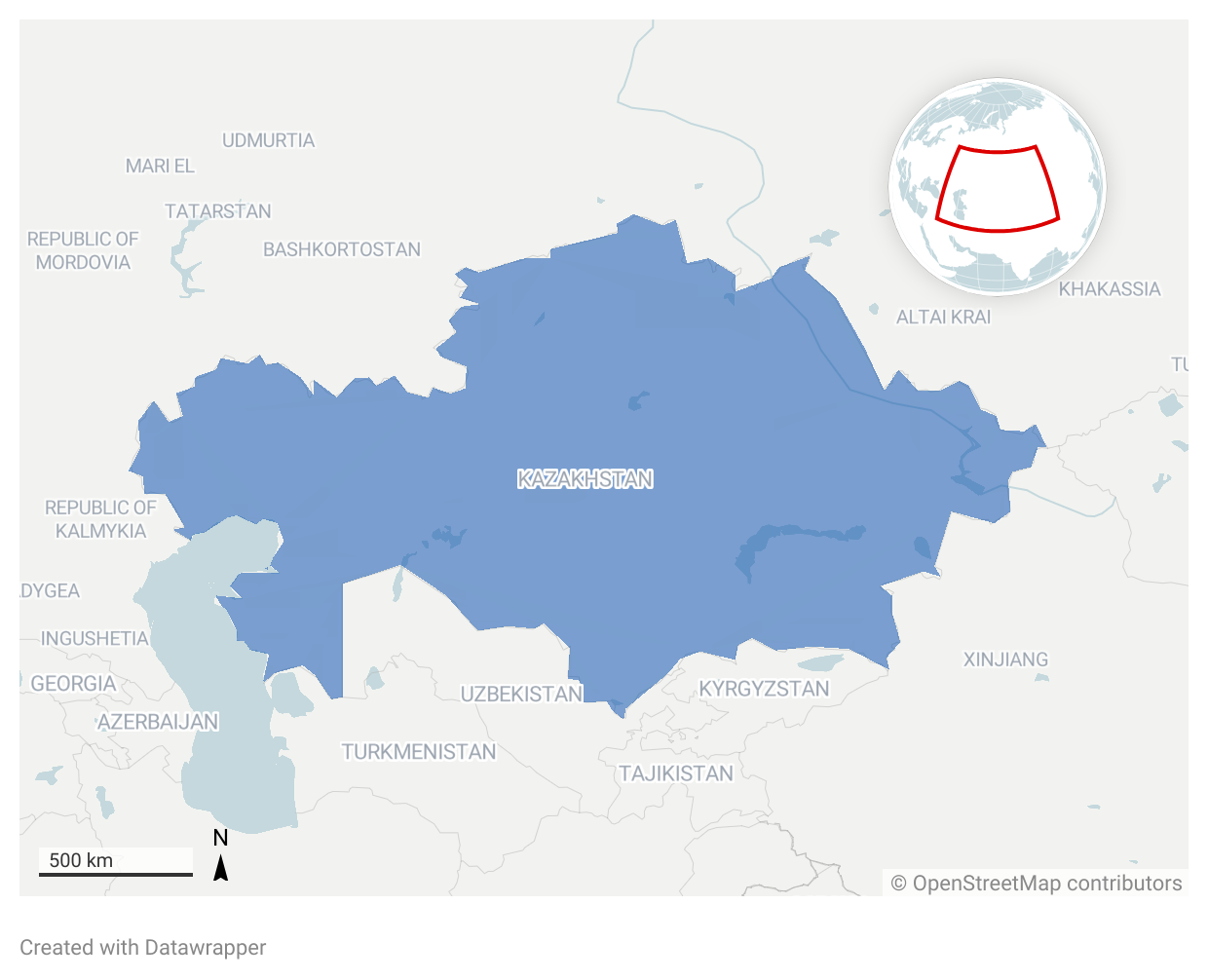
At his State of the Nation Address in September, Kazakh President Kassym-Jomart Tokayev revealed his plans to transform Kazakhstan into a fully digital state within the next three years.
This digitalisation strategy will help diversify Kazakhstan’s economy by modernising existing industries, such as agriculture, and developing new technology-driven sectors, including fintech and AI. It will also position Kazakhstan as the region’s technological hub, attracting diverse investment partnerships.
In the future, Kazakhstan’s digitalisation is likely to accelerate, creating new economic opportunities and reducing the country’s reliance on its traditionally raw-materials-based economy, particularly oil, gas and uranium.
Context
During his annual State of the Nation Address on September 8th, Kazakh President Kassym-Jomart Tokayev unveiled ambitious plans to transform Kazakhstan into a fully digital state. Tokayev reaffirmed this objective a month later at the Digital Bridge International Forum, emphasising a three year deadline. His vision is to modernise the state’s governance and economy by integrating Artificial Intelligence (AI) and technology. Positive impact has already been felt through the digitalisation of public services, as well as decreased corruption and administrative barriers. Measures announced towards helping achieve this sustainably and ethically included the creation of a new Ministry of Artificial Intelligence and Digital Development, as well as a guiding national Digital Code. The President himself acknowledged that his ambitions reflect a “strategic choice that will determine the future of Kazakhstan”. Therefore, such rapid digital transformation plans carry both domestic economic and regional geopolitical implications, with Kazakhstan aiming to double its GDP to USD 4.5b by 2029. They represent a national strategy aimed at economic diversification and solidifying the country’s position as Central Asia’s technological hub.
Implications
Kazakhstan’s digitalisation will help diversify the state’s traditionally raw-material-based economy by both modernising traditional industries and enabling the development of new high-value sectors. The agricultural sector, which has already received a trillion tenge (USD 1.95b) in investments in 2025, will benefit from digitalisation by increasing efficiency in production processes and transparency in land management. Similar digital upgrades in manufacturing and transport will raise productivity and lower operational costs, with the latter also enhancing Kazakhstan’s transit potential. Simultaneously, digitalisation is fostering the expansion of technology-intensive industries. The Astana Hub Technology Park, which has already generated 1.2t tenge (USD 2.2b), demonstrates the significance of investing in digital ecosystems, with it producing considerable economic returns. Consequently, Kazakhstan’s strategic project regarding the first fully digital ‘Alatau City’ is expected to provide the optimal environment for the growth of high-tech industries and entrepreneurial initiatives, such as finance and advanced medicine. The city’s special economic regime, characterised by preferential taxation and streamlined administrative procedures, is aimed at attracting considerable amounts of investment.
Beyond digitalisation being a driving factor of economic growth, it is also positioning Kazakhstan as Central Asia’s key technological hub. This strategy carries significant geopolitical implications and can be seen as an extension of the country’s multi-vector diplomacy. By presenting itself as a digital bridge between Europe and Asia, Kazakhstan has secured diverse partnerships, with global powers seeking to gain market access and the opportunity to shape emerging digital regulatory and governance standards. For example, China is investing in Kazakhstan’s AI ecosystem through Digital Silk Road initiatives, including hardware infrastructure cooperation, while the European Union (EU) is exploring collaboration on projects such as the Alem.AI International Center and Smart Cargo digital platform. The latter project highlights Kazakhstan’s potential as a digital bridge, with the platform making trade logistics more efficient and thus building trade route capacity. The United States has similarly demonstrated strategic interest in Kazakhstan’s digital rise, with Amazon investing USD 200m in the country’s internet infrastructure. Collectively, these collaborations represent how Kazakhstan is leveraging its digital transformation to enhance its regional influence, state capacity and ensure access to diverse partners.
Therefore, Kazakhstan’s digitalisation plans will enhance the state’s economic potential through diversification, whilst also solidifying its position as the region’s upcoming technological hub, strengthening its strategic and economic prominence on the international stage.

Conny Schneider/Unsplash
Forecast
Short-term (Now - 3 months)
Kazakhstan is very likely to focus on consolidating regulatory structures and policy frameworks regarding its digitalisation plans, such as the finalisation and adoption of the Digital Code. This will provide a legal foundation and greater transparency in terms of the development of new high-tech industries and the modernisation of existing ones.
Medium-term (3-12 months)
The development of projects such as the ‘Alatau City’ is highly likely to gain significant attention thanks to its ‘special economic zone’ status, revealing Kazakhstan’s future potential in high-tech industries and attracting early-stage investment.
Long-term (>1 year)
As digitalisation efforts continue, traditional industries are highly likely to show tangible efficiency gains and increased economic output, whilst new technologically-driven industries are expected to flourish. This will likely enhance Kazakhstan’s regional influence, due to its evolving role as a strategic hub digitally bridging Eurasia.
