
Israel’s Recognition of Somaliland: Implications for the Middle East
By Victoria Sainz | 18 February 2026
Summary
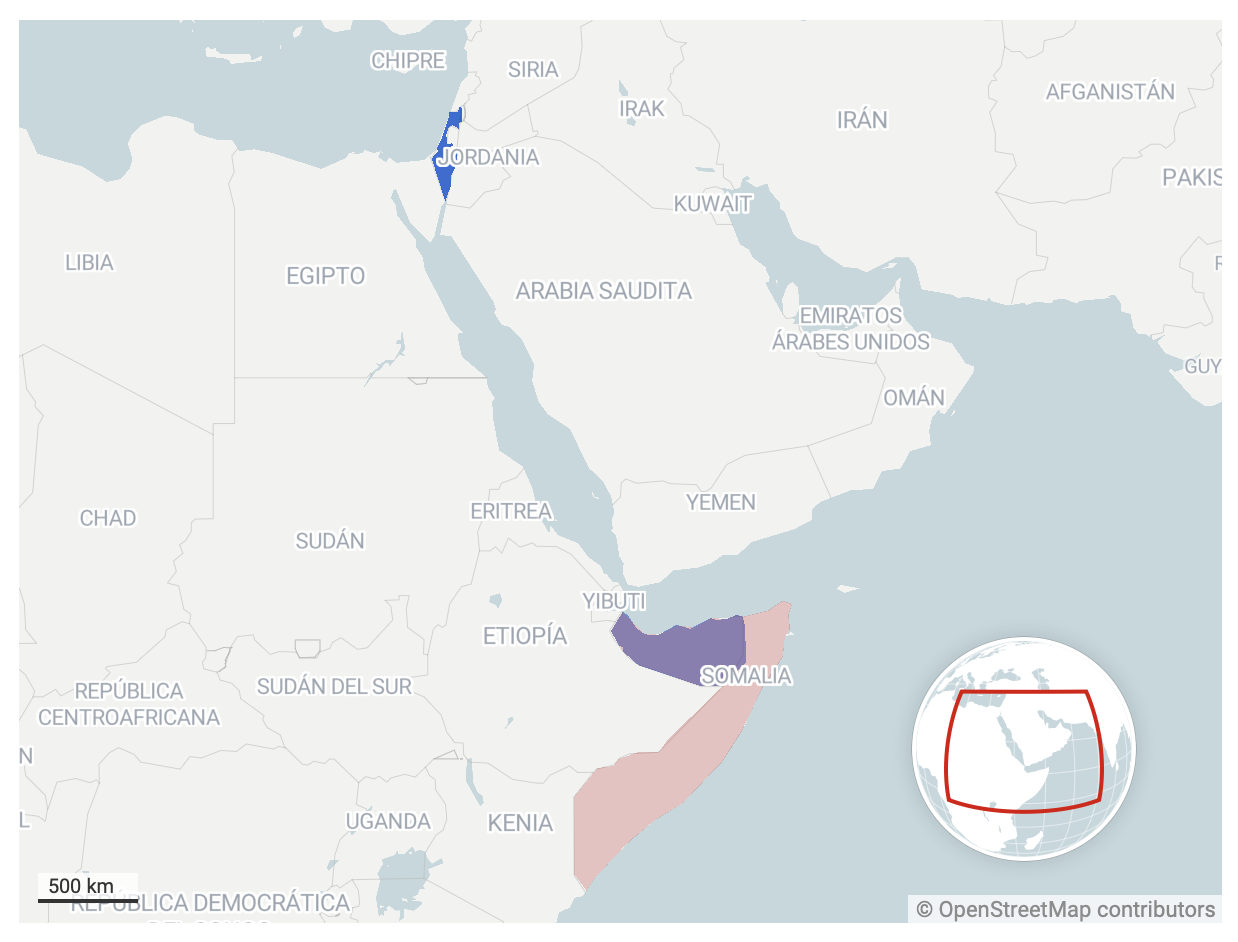
Somaliland has been recognised as a sovereign nation for the first time on December 26th, 2025, by Israel. The territory shifted from decades of political isolation to partial international legitimacy.
This move disrupts established diplomatic norms on Somali unity, intensifies regional friction, and creates new strategic and economic openings along the Red Sea.
Immediate backlash and diplomatic strain are likely. Conversely, gradual engagement and selective partnerships represent a realistic longer term trajectory rather than a quick universal recognition.
Context
On December 26, 2025, Somaliland was recognised for the first time as a sovereign nation-state by Israel, the first UN state to do so. This historic event brings to a close a peculiar chapter in the nation's past, considering that Somaliland, although currently occupied by Somalia, was a British protectorate from the 1800s until 1960. It then enjoyed a brief independence of five days before uniting with the former Italian Somaliland voluntarily, a union that many people in the area contend never came to pass.
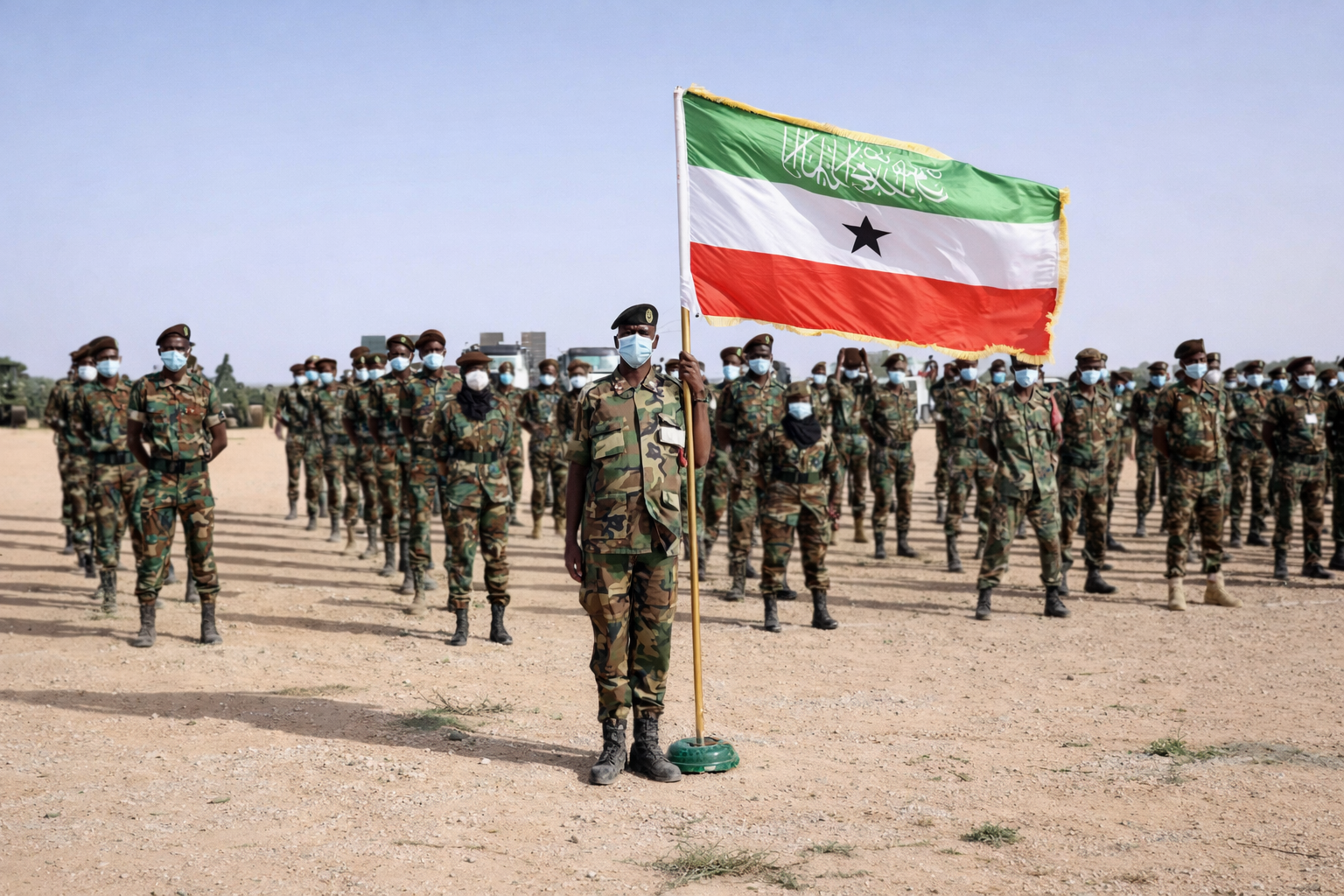
The call for independence in modern times can be traced to the Somali National Movement (SNM), which emerged in the 1980s in the midst of a brutal civil war that continues to this day. Following the fall of the central government in Mogadishu, Somaliland declared its independence in 1991. Yet, despite being a functioning democracy with its own currency and military for more than three decades, its 3.5 million citizens were in a state of "diplomatic limbo" until the recent Israeli declaration. This decision, in the spirit of the Abraham Accords, has sparked considerable debate in the African Union and UN circles, which could redefine the geopolitical security of the Red Sea region and the Horn of Africa.
Implications
As the first UN member state to grant de jure recognition, Israel has challenged the international “One Somalia” policy. This action strengthens Somaliland's pursuit of international recognition and may prompt Western countries, especially the U.S., to take similar steps. Conversely, it has triggered sharp condemnation from the African Union (AU), which declared the act “null and void”, fearing a precedent that could encourage other African secessionist movements. It also strained relations with Somalia, which views the recognition as an act of ‘aggression’.
From an operational point of view, recognition facilitates direct, formal diplomatic and military engagement without mediation from Mogadishu. It provides a framework for Israel to establish a permanent presence in the Red Sea corridor. However, it complicates regional counterterrorism operations. The AU and other stakeholders warn that political division may undermine collective efforts against al-Shabaab. Additionally, it forces partners like the U.S. to navigate a fractured diplomatic landscape between their ally, Israel, and the Somali federal government.
There are also security implications of this recognition. Somaliland’s 850-km coastline along the Gulf of Aden is a strategic asset for maritime security. Recognition enables cooperation against Iran-backed Houthi threats near the Bab el-Mandeb Strait. Somaliland has expressed willingness to host a U.S. military base in Berbera, offering an alternative to Djibouti, where Chinese influence is growing. However, this introduces new risks; Houthi rebels have already threatened to target any Israeli presence in the territory.
Lastly, economically, Israel’s decision is a catalyst for development, potentially increasing foreign direct investment (FDI) by 25-40%. It allows Somaliland to access Israeli technology, particularly drip irrigation that could boost agricultural yields by 200-300%. Furthermore, it legitimises the Berbera Port expansion, positioning it as a major hub for Ethiopian trade, which could reduce regional logistics costs by 30-40%. Finally, it removes legal barriers to aid from the World Bank and IMF.
Forecast
Short-term (Now - 3 months)
Diplomatic tensions are almost certain to rise quickly, with Somalia escalating the issue at the African Union and the United Nations, while most states adopt a cautious ‘wait and see’ approach.
Additionally, recognition from other antion states is unlikely at this stage.
Medium-term (3-12 months)
Incremental diplomatic engagement from a smaller number of strategically aligned states is a realistic possibility, though broad international recognition remains unlikely.
Security cooperation in Berbera, including logistical or intelligence coordination, becomes a realistic possibility, increasing Red Sea tensions.
Moderate growth in foreign direct investment and early agricultural modernisation projects are likely if political stability holds.
Long-term (>1 year)
Gradual accumulation of recognition by select states is plausible, but universal acceptance across the UN system remains uncertain.
A more formalised Israeli or even U.S. security footprint in Somaliland is a realistic possibility if regional instability persists.
Economically, sustained investment, expanded port activity, and significant agricultural gains are likely if access to multilateral financing improves.
