Implications of the Death of El Mencho for the War on Drugs
By Max Brockdorff | 11 March 2026
Summary
On 22 February 2026, Mexican security forces killed Nemesio Oseguera “El Mencho” Cervantes, leader of the Jalisco New Generation Cartel (JNGC). This was met with a wave of retaliatory violence by the JNGC in 20 states.
The operation was aided by the United States, providing strategic information on El Mencho’s location. This proves to be another example of US President Donald Trump’s wider militaristic approach to the War on Drugs.
The US remains committed to its strategy of targeting kingpins of major cartels; the impact on the flow of drugs across the US-Mexican border will be negligible.
Context
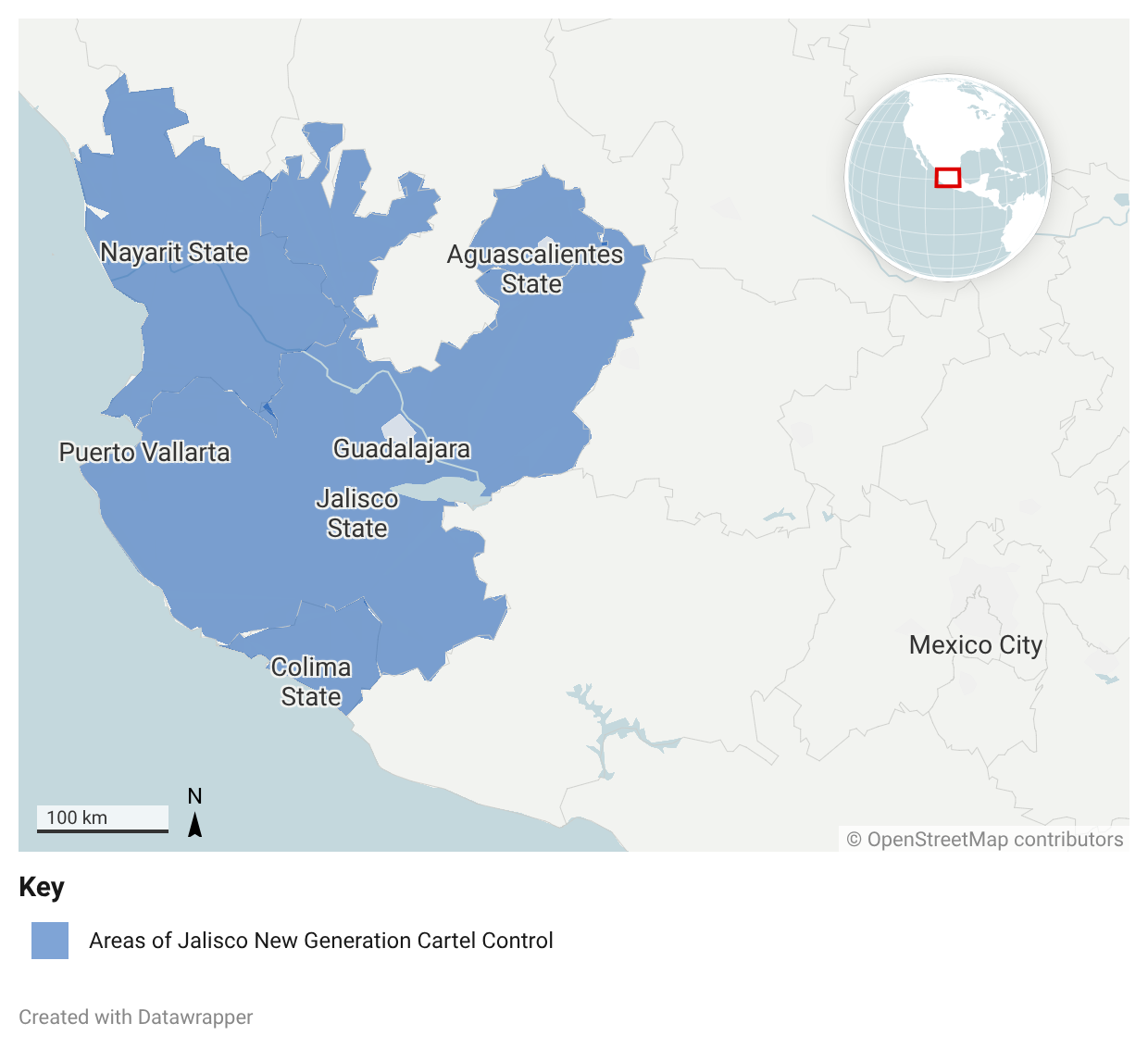
The killing of “El Mencho” was met with a wave of violence across Mexico, perpetrated by the CJNG. This included the setting up of over 250 roadblocks by the cartel in 20 states, and the killing of members of the National Guard, with the most extreme disruption concentrated in the state of Jalisco and its capital, Guadalajara. Flights to Puerto Vallarta were cancelled, and US tourists in the area were told to shelter. Violence after the killing or capture of cartel leaders is not unprecedented and occurred after the arrest of Ovidio Guzmán “El Ratón” López in 2019, though in that case with the Sinaloa Cartel.
US involvement was intelligence-related, with the new military-led Joint Interagency Task Force-Counter Cartel (JITF-CC) providing the location of El Mencho. The task force specialises in mapping networks of cartel members and passed intelligence on “El Mencho” to Mexican security and military services. This approach is an important component of President Trump’s militarised approach to the “War on Drugs”. Trump changed the legal classification of cartels to Foreign Terrorist Organisations (FTOS) and Specially Designated Global Terrorists (SDGTs) in February 2025, allowing the US to use the military for intelligence and operations.
The JITF-CC is using US military experience of mapping out Al-Qaeda and Islamic State networks in the War on Terror against cartels. This is just one aspect of Trump’s increasingly militarised War on Drugs, which has also included targeted strikes against alleged Cartel de los Soles vessels in the Caribbean. Though Mexican President Claudia Scheinbaum has refused to allow US troops to enter Mexican territory, under diplomatic pressure from Trump, she has taken a harder line against cartels.
Implications
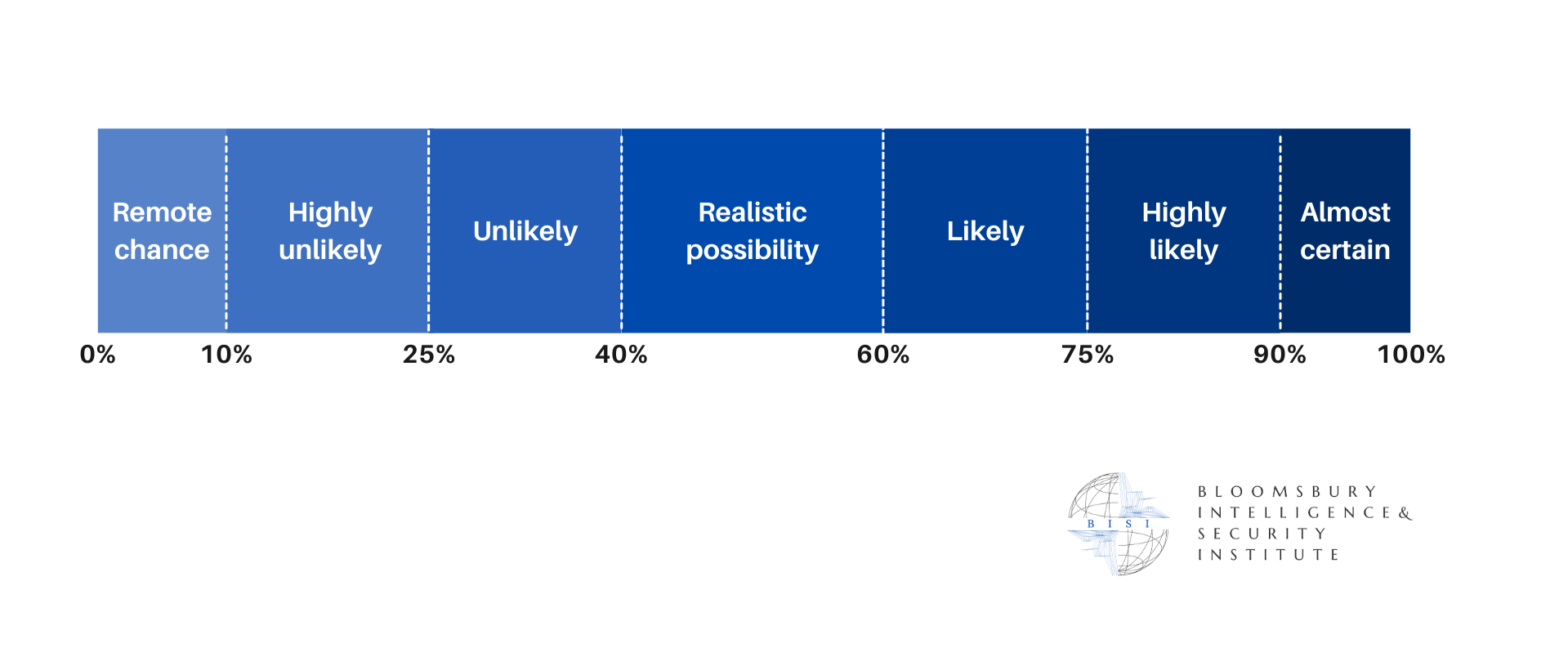
The US is highly likely to remain involved in anti-cartel operations, as evidenced by President Trump’s rhetoric encouraging further action in Mexico after the raid. The new JITF-CC task force was instrumental in the El Mencho raid, and so intelligence sharing with the Mexican government and security forces is almost certain to continue.
Direct military involvement by the US is unlikely, though, despite Trump’s threats, due to Scheinbaum’s opposition to foreign military intervention and her general cooperation with Trump’s demands for drastic action against the cartels. The US’s approach to the War on Drugs is therefore almost certain to remain the same, with its kingpin strategy seemingly vindicated by the death of El Mencho. US anti-cartel policy is likely to remain militarised, not just in Mexico but across Latin America.
Further anti-cartel action from Sheinbaum’s government is uncertain. US diplomatic pressure is likely to remain high, especially considering the ongoing renegotiation of the US-Mexico-Canada trade agreement.
However, further action against cartels is highly likely to spark subsequent waves of violence, raising further concerns over Mexico’s hosting of the 2026 World Cup. Scheinbaum is likely to remain publicly committed to her “hugs not bullets” campaign, but pressure from the US and the Mexican people will mean that her current policy course of militarised action will remain.
The historical record suggests that despite success in eliminating cartel leaders, little will change regarding the influence of cartels in Mexico and the flow of drugs into the US. The Sinaloa Cartel illustrates the outcomes of the kingpin strategy. Although the cartel fragmented after the capture of Joaquin “El Chapo” Guzman, violence only increased in the aftermath of Guzman’s capture due to a succession struggle and a civil war within the cartel, as the wider organisation splintered. The effect on the flow of drugs into the US was minimal.
CJNG has a decentralised franchise structure, meaning that local operations are unlikely to be affected in the short term by “El Mencho’s” death. It is uncertain whether the CJNG will succumb to internal divisions or continue its operations under a new leader. In either case, violence between cartel members and against civilians will likely occur. The death of El Mencho has undoubtedly caused disruption, but it is highly unlikely to affect the drug smuggling operations of the CJNG cartel. The CJNG cartel in any subsequent form will therefore continue to represent a security threat to the US and Mexico.

Forecast
Short-term (Now - 3 months)
Further action against the CJNG by the Mexican government is unlikely, at least until the 2026 World Cup.
Medium-term (3 - 12 months)
Further violence from members of the CJNG is likely to occur, due to a probable succession struggle or civil war within the organisation. This will represent a security threat to Mexican civilians and US tourists, especially in Jalisco State.
Long-term (>1 year)
The US is almost certain to continue its involvement in the Mexican War on Drugs, though this will very likely be limited to intelligence sharing.
The flow of drugs like fentanyl and cocaine into the US is unlikely to be disrupted, even in the case of a cartel civil war.