
Greenland Tariffs: Structural Fractures Emerge in Transatlantic Alliance
By Aryamehr Fattahi | 20 January 2026
Summary
On 17 January 2026, United States (US) President Donald Trump announced 10% tariffs on 8 European countries over opposition to US efforts to annex Greenland, escalating to 25% by June 2026.
The tariffs represent the first use of punitive trade measures by a North Atlantic Treaty Organisation (NATO) member to coerce territorial acquisition from an ally. The European Union (EU) is considering EUR 93b in counter-tariffs and the potential activation of its Anti-Coercion Instrument.
European countermeasures are highly likely within 60 days if tariffs proceed. A negotiated compromise addressing US security concerns without territorial transfer remains a realistic possibility over the medium term. Though de-escalation pathways are narrow, given Trump's maximalist positioning.
Context
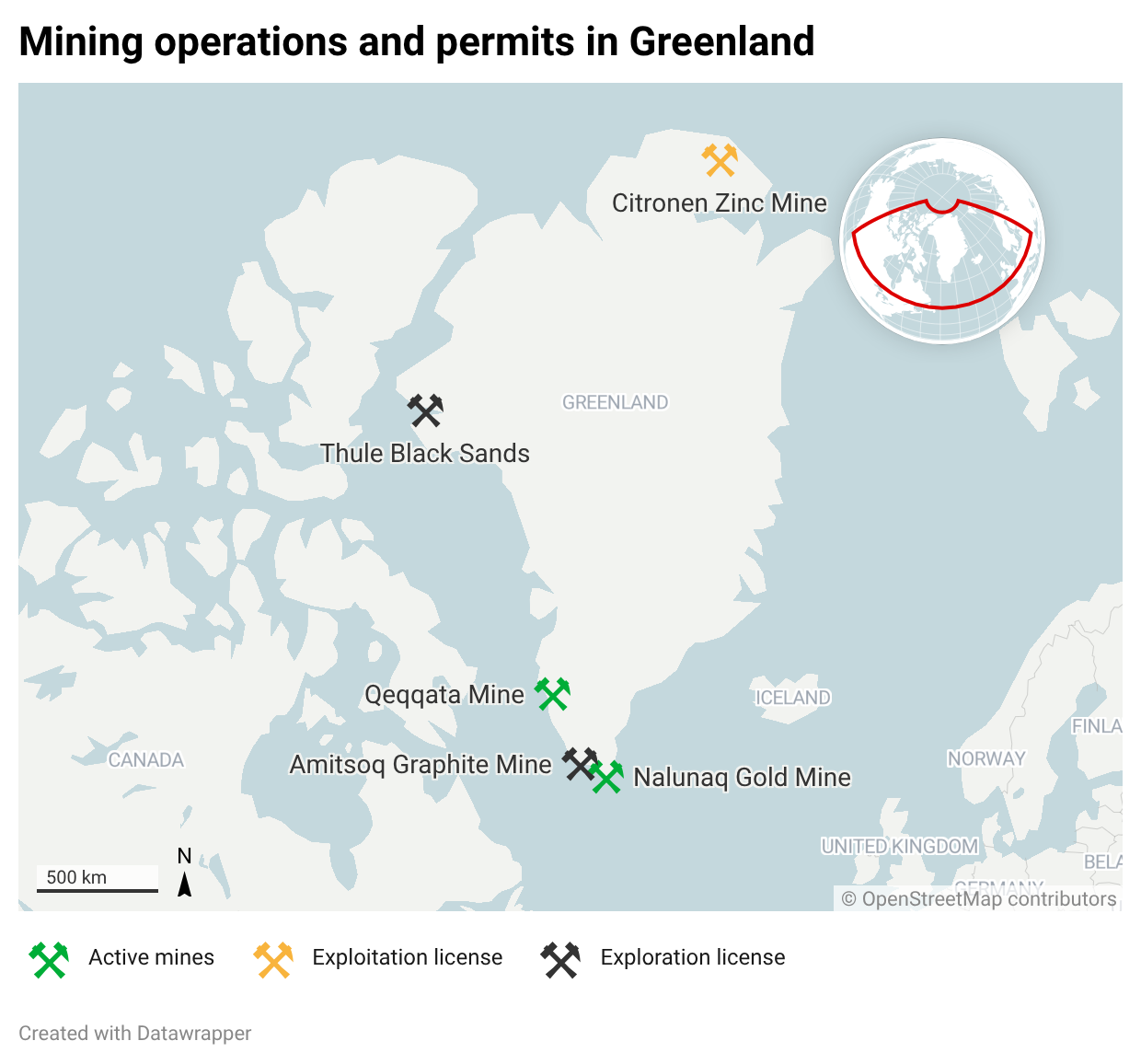
Greenland's strategic value to Washington stems from its position along the Greenland-Iceland-United Kingdom (GIUK) gap, a critical chokepoint for monitoring Russian submarine activity in the North Atlantic, and its substantial mineral wealth. The island holds approximately 1.5 million tonnes of rare earth reserves, with 25 of 34 minerals classified as critical by the European Commission. Trump has framed acquisition as essential for his proposed "Golden Dome" missile defence shield and Arctic security.
Trump's renewed push for Greenland began in December 2025, escalating sharply in January 2026. On 14 January, Vice President JD Vance and Secretary of State Marco Rubio met Danish Foreign Minister Lars Løkke Rasmussen and Greenlandic Foreign Minister Vivian Motzfeldt at the White House, with no progress made. Estimates suggest a purchase could cost USD 700b.
Within 24 hours of the failed talks, European allies began deploying forces to Greenland under Operation Arctic Endurance. Mass protests have also erupted simultaneously across the Danish realm, with an estimated 5,000 demonstrators marching to the US Consulate in Nuuk and over 20,000 rallying in Copenhagen.
Trump's tariff response came on 17 January. The announcement targeted all 8 nations that had sent military personnel, with 10% duties from 1 February 2026 rising to 25% by 1 June 2026.
The EU held an emergency meeting of its 27 ambassadors in Brussels on 18 January, holding back from immediately triggering the Anti-Coercion Instrument (otherwise known as the "trade bazooka") in favour of diplomatic engagement. A EUR 93b counter-tariff package, prepared by the EU last year, remains on the table should tariffs take effect, imposing duties of up to 30% on US products from cars to poultry. European Council President António Costa announced an extraordinary summit of EU leaders for later this week.
Major European leaders have since denounced Trump's threats to impose tariffs and annex Greenland as damaging to NATO cohesion and Trans-Atlantic cooperation. EU goods exports to the US totalled EUR 531.6b in 2024. The 2025 EU-US trade framework capped tariffs at 15% on European goods; European Parliament trade committee chair Bernd Lange has called for suspending implementation until the US ends its threats.
Implications and Analysis
The Greenland tariff crisis carries consequences across multiple domains, from alliance cohesion to sectoral trade exposure to Arctic strategic competition.
NATO Alliance Fractures
The structural damage to NATO from this episode is likely to persist regardless of how the immediate dispute resolves. For 75 years, the alliance rested on the assumption that territorial integrity between members was inviolable. Trump's explicit demands, backed by economic coercion and refusal to exclude military options, have significantly undermined internal cohesion and cooperation. The joint statement and European military response, while modest in scale, signal a fundamental shift in threat perception. That France, Germany, and other major European powers coordinated troop deployments to demonstrate solidarity against a nominal ally, rather than against Russia or China, represents an inflexion point in Trans-Atlantic relations.
Trade and Economic Consequences
The economic stakes for targeted countries are substantial but asymmetric. A 25% tariff would effectively close the US market for many European manufacturers, particularly in the automotive sector. Germany faces acute exposure, with the US having become its largest trading partner. French aerospace and luxury goods, and Dutch semiconductor equipment, face similar exposure. Sweden's industrial machinery and telecommunications sectors, and Finland's paper and forestry products, would see margins eliminated at 25% duty rates.
The EU's decision to hold back immediate deployment of the Anti-Coercion Instrument while keeping the EUR 93b counter-tariff package on the table reflects a calibrated approach. Brussels appears to be preserving diplomatic space while preparing retaliatory tools. Should the EU activate the Anti-Coercion Instrument, measures could extend beyond tariffs to include restricting US technology firms from EU public procurement contracts, a step that would significantly impact American cloud computing, software, and defence contractors operating in the European market. The extraordinary leaders summit later this week will likely determine whether Europe escalates or continues to pursue negotiated solutions.
The 2025 EU-US trade agreement, covering approximately EUR 1.68t in annual bilateral trade, now faces collapse. European Parliament's largest voting bloc has declared approval impossible. If the agreement unravels, it would eliminate the 15% tariff ceiling negotiated last summer and potentially return Trans-Atlantic trade to open conflict.
However, Denmark's vulnerability may strengthen rather than weaken Danish resolve: Capitulation would set a precedent that economic coercion can force territorial concessions from any ally, a principle no European government can accept. The Supreme Court dimension also adds legal uncertainty. Federal courts have ruled that Trump's use of the International Emergency Economic Powers Act (IEEPA) for tariffs exceeds presidential authority. However, the administration has indicated it possesses alternative authorities should IEEPA tariffs be struck down.
Arctic Geopolitics and Resource Competition
Trump's security framing, that Greenland represents a vulnerability to Russian and Chinese encroachment, contains legitimate concerns wrapped in exaggeration. China controls 60% of global rare earth mining and over 90% of processing capacity, creating supply chain vulnerabilities that Greenlandic reserves could theoretically address. Yet the immediate threat assessment appears overstated. Rasmussen stated directly that there is currently no threat in the Greenland area from either Russia or China. Russia's Arctic military buildup has focused on the Barents Sea near Norway, not Greenlandic waters. China, 4,800 miles distant, lacks military basing infrastructure for operations there, and Denmark and Greenland have rejected several proposed Chinese dual-use infrastructure projects since 2017, including a proposed airport and mining investments with potential strategic implications.
The US already maintains a substantial presence at Pituffik Space Base (formerly Thule), operating missile warning radar systems with a 3,000-mile detection range and supporting NORAD homeland defence. The 1951 Defence Agreement permits additional US installations if NATO deems them necessary, a framework that could address legitimate security concerns without territorial acquisition. Several alternatives to acquisition exist that could satisfy US security objectives: Expanded joint NATO exercises in Greenlandic waters, enhanced radar and surveillance infrastructure funded through bilateral agreement, pre-positioned US military equipment for Arctic contingencies, and formalised intelligence-sharing arrangements on Russian and Chinese Arctic activity.
Greenlandic Self-Determination
The 17 January protests represent the clearest expression yet of Greenlandic opposition to American acquisition. Approximately a quarter of Nuuk's population mobilised, with the Prime Minister leading the march, demonstrating the depth of sentiment against US designs. Polling from January 2025 found 85% oppose becoming part of the US, with only 6% in favour. Simultaneously, 56% support eventual independence from Denmark, but on Greenlandic terms, not through absorption into another state. Greenland's independence movement seeks self-determination, not subordination to a different metropolitan power. US pressure may accelerate independence discussions while simultaneously hardening opposition to American acquisition, outcomes that work against Washington's stated objectives.
Escalation Versus De-escalation Pathways
Several factors suggest the dispute is more likely to intensify than resolve quickly. Trump's maximalist public positioning, demanding "Complete and Total purchase," leaves little room for face-saving compromises. His letter to Norwegian Prime Minister Jonas Gahr Støre linking Greenland to his failure to receive the Nobel Peace Prize suggests personal grievance may be driving the policy. The tariff escalation timeline creates artificial deadlines that reward confrontation. De-escalation would likely require reframing the dispute around enhanced US-Danish-Greenlandic security cooperation rather than sovereignty transfer. The high-level working group established on 14 January offers a vehicle, but Trump's subsequent actions suggest limited patience for the diplomatic process.

Forecast
Short-term (Now - 3 months)
The 10% tariff is highly likely to take effect on 1 February 2026 as announced, with minimal prospect of European capitulation. EU countermeasures targeting US exports are highly likely within 60 days if tariffs proceed. The extraordinary EU summit this week will almost certainly produce a unified response framework. Suspension of the 2025 EU-US trade deal ratification is likely if tariffs take effect.
Medium-term (3-12 months)
A negotiated framework enhancing US security access without territorial transfer remains a realistic possibility, potentially emerging from continued diplomatic engagement by mid-2026. However, escalation to 25% tariffs by June is likely absent a breakthrough. The Supreme Court ruling on IEEPA authority, expected by summer 2026, may constrain or complicate administration options, though the administration appears confident of prevailing or possessing alternatives.
Long-term (>1 year)
Permanent structural damage to NATO's foundational assumptions is almost certain. European defence integration will likely accelerate, with increased emphasis on strategic autonomy. Greenland's path toward independence from Denmark may accelerate over 3-5 years, though it is likely to occur within the Danish-Greenlandic framework rather than through American acquisition.
