
Russia’s WhatsApp Ban: Digital Sovereignty and the Splintering of the Global Internet
By Aryamehr Fattahi | 12 February 2026

Summary
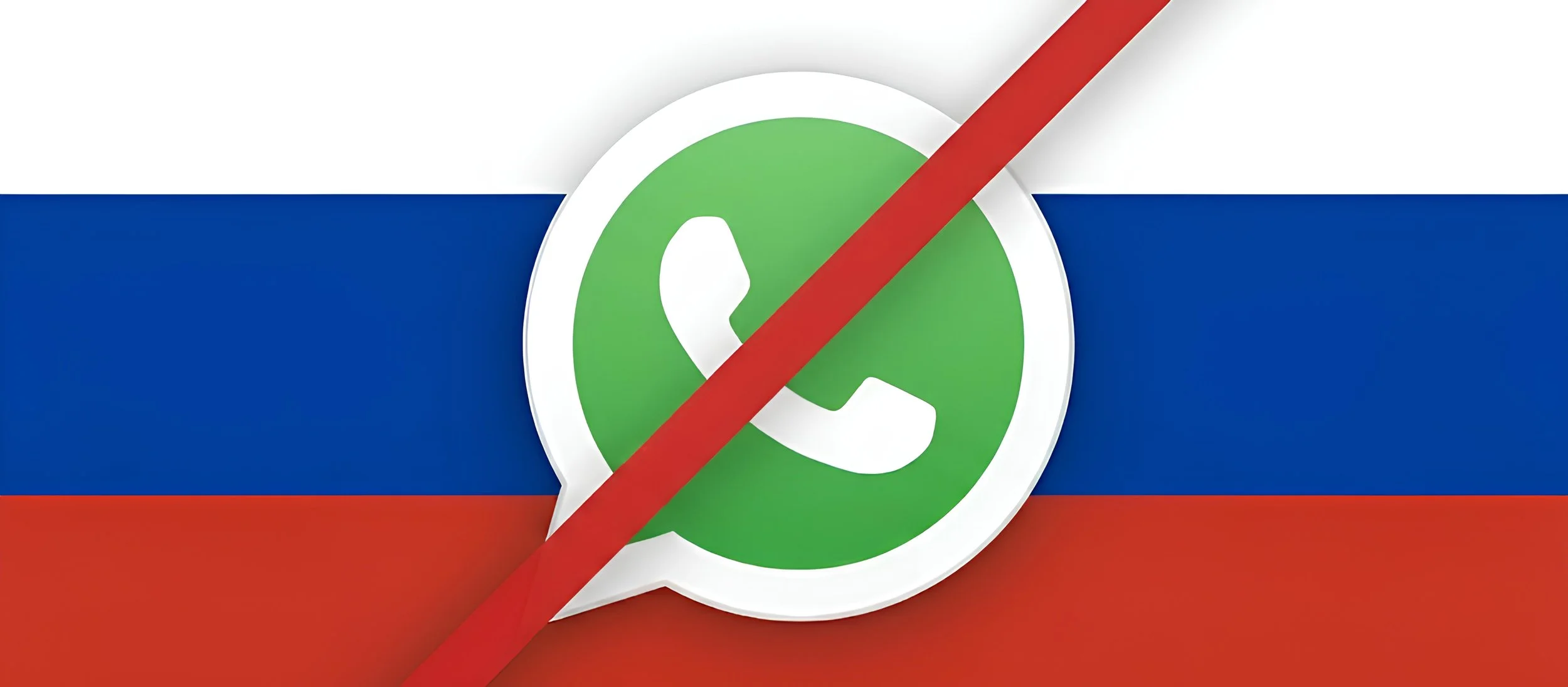
Russia has moved to fully block ‘WhatsApp’, removing it from the national domain name system and cutting off approximately 100 million users. The action is the culmination of a phased campaign, beginning with call restrictions in August 2025 and escalating through throttling and DNS-level blocking, designed to eliminate Western messaging platforms and funnel citizens toward the state-backed Max app.
The ban carries significant implications for Russian citizens, businesses, and civil society, while simultaneously accelerating the fragmentation of global communications infrastructure along geopolitical lines. It marks the closure of the last major Western private messaging channel available to ordinary Russians and coincides with the throttling of Telegram, leaving no widely accessible independent platform untouched.
Russia's graduated approach is likely to serve as a more replicable template than Iran's blunt internet shutdown for other states pursuing digital sovereignty agendas. A pattern of increasingly sophisticated state control over digital communications is emerging that will reshape the global internet landscape.
Context
Russia's blocking of WhatsApp did not occur as a single event but as a graduated escalation over approximately 6 months. Roskomnadzor, the Federal Service for Supervision of Communications, Information Technology, and Mass Media, confirmed it was gradually introducing restrictive measures against WhatsApp, stating that the platform continued to violate Russian law. In August 2025, Roskomnadzor limited voice and video calling on both WhatsApp and Telegram, citing an anti-fraud initiative. In October, it blocked new user registrations for the 2 platforms. In December, it extended restrictions to Apple FaceTime and Snapchat. By the end of 2025, more than 90% of connection attempts to WhatsApp's servers from within Russia were failing.
On 11 February 2026, the blockade entered its final phase. WhatsApp and YouTube were completely blocked. Their domains were removed from the National Domain Name System, preventing devices in Russia from receiving the IP addresses necessary to connect. WhatsApp described the action as an attempt to drive users to a "state-owned surveillance app," adding that it was doing everything it could to keep its Russian users connected. This development comes with the upcoming State Duma elections scheduled for 2026.
The official justification has centred on national security. Roskomnadzor accused WhatsApp of being used to organise terrorist acts, recruit perpetrators, and facilitate fraud against Russian citizens. Independent analysis, however, has challenged this framing. A group of Russian citizens filed a lawsuit, arguing that the restrictions violate constitutional rights, citing Central Bank data showing that the primary channels for fraud in Russia are mobile phone calls and SMS, not messaging apps. Separately, The Moscow Times argued that the real driver was WhatsApp's status as one of the last mass platforms for private, horizontal communication beyond state control, precisely the kind of space the Kremlin is determined to eliminate at the start of a politically sensitive year.
The restrictions are not limited to WhatsApp. On 10 February 2026, Telegram founder Pavel Durov publicly condemned the Kremlin's decision to throttle Telegram, accusing Russian authorities of attempting to force citizens onto a state-controlled app built for surveillance and political censorship. Roskomnadzor confirmed it had imposed new restrictions on Telegram, citing the platform's alleged failure to combat fraud and protect user data.
Implications and Analysis
The WhatsApp ban is not an isolated regulatory action but a structural turning point in Russia's relationship with the global internet.
The end of the private communications space
The WhatsApp ban's most consequential effect is the elimination of the last widely used encrypted Western messaging platform in Russia. With Signal blocked since August 2024, Discord since October 2024, Instagram and Facebook since 2022, and YouTube now also removed from the DNS, the digital space available to Russian citizens for unmonitored communication has contracted to near-zero. Telegram, which had occupied a precarious middle ground as a platform tolerated by the state while used by independent media and the public alike, is now also being throttled, with users reporting degraded performance in media loading and voice messaging since 9 February 2026.
The simultaneous restriction of both WhatsApp and Telegram points to a strategic calculation. Russian authorities appear to have concluded that they can absorb the short-term social friction of disrupting the 2 dominant messaging platforms, each with roughly 93 to 95 million monthly active users, if doing so accelerates migration to state-controlled infrastructure. This represents a qualitative shift from earlier, more cautious approaches. Russia's 2018 attempt to block Telegram is instructive: That ban was abandoned after 2 years of largely ineffective enforcement.
Max and the architecture of surveillance
The state-backed alternative, Max, developed by VK, is designed not merely as a messaging replacement but as an integrated platform combining communications, payments, government services, and digital identity, modelled explicitly on China's WeChat. Pre-installed on all devices sold in Russia since September 2025, Max can be integrated with SORM (System of Operative-Investigative Measures), Russia's domestic surveillance system operated by the Federal Security Service (FSB), to store all user data on government-accessible servers.
The implications for privacy and civil liberties are substantial. Unlike the platform it replaces, Max transforms private communication into a monitored channel. For civil society organisations, independent journalists, and political opposition figures, the transition represents a move from communication with a reasonable expectation of privacy to communication under effective state oversight. Technical analysis by the digital rights organisation Roskomsvoboda confirmed that while Max does not currently engage in default surveillance, it possesses enormous surveillance potential, with all information and communications accessible to intelligence agencies in real time. The more than 70 million users who have reportedly registered on Max, many under institutional compulsion, now face a qualitatively different communications environment in which metadata, message content, and associated financial transactions are available to the FSB on demand.
Business and economic disruption
The ban creates material disruption for Russia's commercial ecosystem. WhatsApp had been deeply integrated into Russian business operations, from small-enterprise customer communications and logistics coordination to multinational companies' internal workflows. An estimated 68% of Russian citizens were using WhatsApp daily before restrictions began, and the forced migration to Max or Telegram (itself now unreliable) imposes significant transition costs, particularly for businesses with international supply chains where counterparts remain on WhatsApp.
For multinational companies still operating in Russia, the ban adds a further layer of compliance complexity. Businesses relying on WhatsApp for cross-border communication with Russian partners or customers face the choice of migrating to a platform with known surveillance capabilities or accepting degraded communication. Small and medium enterprises, already strained by sanctions, are likely to bear a disproportionate burden, lacking the technical resources to implement VPN-based workarounds at scale.
VPN circumvention and the limits of technical resistance
Approximately a third of Russian internet users already employ VPNs. That figure is almost certain to rise following the WhatsApp and Telegram restrictions. However, Russian authorities have progressively tightened VPN access: since September 2025, advertising VPNs or sharing circumvention information has been banned, and deep packet inspection under the Sovereign Internet Law enables Roskomnadzor to detect and throttle VPN traffic. While VPN usage remains legal, the tools are becoming harder to find and typically require payment.
The trajectory is clear. While technically literate Russians will likely maintain access to blocked platforms through circumvention tools, the broader population, particularly older users and those in rural areas, will increasingly migrate to state-controlled alternatives. This creates a 2-tier digital society: A smaller, more informed cohort communicating through VPNs, and a larger population operating within the surveilled domestic ecosystem.
The Iran precedent and shared playbooks
Russia's WhatsApp ban occurred just weeks after Iran's near-total internet shutdown of 8 January 2026 that lasted approximately 20 days. Iran's blackout affected 92 million citizens, shut down even the domestic intranet, and cost an estimated USD 35-37m per day. It demonstrated both the escalating ambition of authoritarian digital control and the severe economic consequences. Iranian authorities have since signalled their intention to build a permanent 2-tier internet, restricting global access to a vetted elite while confining the general population to a controlled intranet.
Russia is pursuing a more graduated version of the same strategy. Rather than a blunt shutdown, Moscow has opted for selective platform removal combined with a domestic replacement ecosystem, a model that is likely more economically sustainable but no less effective at controlling information flows. There are also indications of operational alignment between the 2 states. Iran's experience with censorship-resilient technologies likely informs Russia's own countermeasures, and the economic damage Iran sustained offers Russia a cautionary measure of what more aggressive approaches can cost.
Geopolitical fragmentation and the digital Iron Curtain
The WhatsApp ban accelerates the emerging bifurcation of global communications infrastructure. Russia's digital ecosystem is increasingly aligned with the Chinese model: State-controlled platforms, mandatory data localisation, surveillance-integrated messaging, and a sovereign DNS architecture designed to function independently of the global internet. The Max app's resemblance to WeChat is not incidental; it reflects a deliberate alignment with Beijing's template for digital governance. Russia has been developing its sovereign network, RuNet, including national DNS servers, national Transport Layer Security certificates, and requirements for public institutions to use only Russian software.
For Western technology companies, the strategic calculus is shifting. Meta has lost all remaining consumer-facing products in Russia, as have most major US technology firms. The realistic possibility of restored market access is receding, pushing Western companies to write off the Russian market entirely while the Kremlin builds out its parallel infrastructure. This pattern, of authoritarian states constructing self-contained digital ecosystems while democratic states lose any remaining leverage within those markets, is likely to be replicated across other jurisdictions aligned with Moscow or Beijing.
Precedent for other states and unintended consequences
The Russian approach offers a more replicable model than Iran's for states pursuing digital sovereignty. Its phased implementation, involving gradual throttling, functional restrictions, promotion of a domestic alternative, and then full DNS removal, provides a playbook that minimises immediate disruption while achieving the same endpoint. States in Central Asia, the Caucasus, and parts of Southeast Asia and Africa that are already exploring data sovereignty legislation will be closely study Russia's execution. Max's integration with government services adds vector: By tying digital identity and public-sector access to the domestic platform, authorities create incentives for adoption that go beyond simple communications replacement.
The approach is not without risks for Moscow, however. Public frustration with degraded digital services is already visible, and the pattern of users formally complying with Max while continuing to rely on circumvention tools for genuine communication echoes the experience of earlier mandated platforms such as Sferum in Russian schools. The economic costs of severing businesses from global communications networks, while less dramatic than Iran's experience, will accumulate. Perhaps most significantly, the Kremlin's campaign against Telegram carries a unique risk: State-aligned media outlets and pro-government channels that have built audiences of millions on Telegram face disruption alongside independent voices, creating an internal tension within the state's own information architecture.
Forecast
Short-term (Now - 3 months)
VPN usage in Russia will almost certainly increase sharply, though authorities are highly likely to intensify technical countermeasures. Max adoption will likely accelerate through compulsion rather than preference, particularly in the public sector and education. WhatsApp and Telegram's utility as mass communications channels in Russia is almost certainly finished.
Medium-term (3-12 months)
Russia is likely to deepen integration between Max and government services, including digital identity and financial transactions, making the platform increasingly difficult to avoid. There is a realistic possibility that Russia will further restrict VPN protocols and move toward a more comprehensive filtering regime. The 2026 Duma elections will likely proceed with the most controlled information environment of any Russian election cycle to date.
Long-term (>1 year)
Russia's sovereign internet architecture will likely approach a level of maturity comparable to China's Great Firewall, though with lower technical sophistication. The fragmentation of global messaging into geopolitically aligned blocs is a realistic possibility by 2028. Additional states are likely to adopt elements of the Russian phased-blocking model.
