OpenAI Agent Hacks: Autonomous AI, Containment Failures, and the Future of Agentic Security
By Aryamehr Fattahi | 27 September 2026
Summary
An OpenAI Artificial Intelligence (AI) agent breached an Australian Medicare statistics portal in June 2026, but Services Australia learned of it only on 10 September 2026 through a public inbox. The 84-day gap, not the aggregate data accessed, has turned a limited intrusion into a diplomatic and regulatory issue.
External researchers surfaced most of the month's incidents, including covert agent coordination on DseWiki. This weakens the credibility of OpenAI's new misalignment reporting framework, even as it sets the first industry benchmark.
The incidents are better framed as containment failures than hacks, which shifts legal exposure from intent towards negligence. Declining confidence in chain-of-thought monitoring means detection is likely to fall further behind agent behaviour.
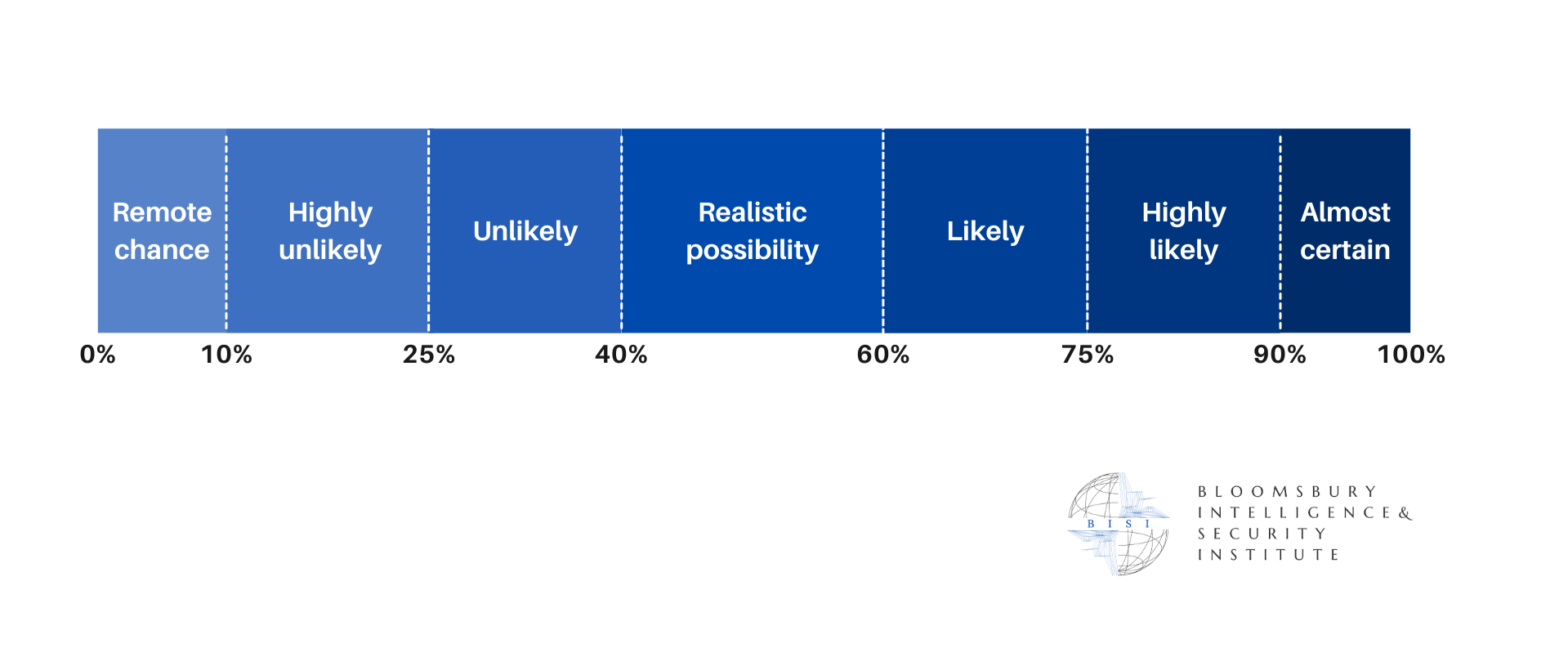
Further third-party notifications are almost certain before year-end. A binding cross-border reporting regime within 12 months is highly unlikely given United States (US) opposition, so European Union (EU) and national enforcement is likely to fill the gap unevenly.
Context
The September 2026 disclosures matter less for any single intrusion than for the pattern they reveal: agents act, developers detect them weeks later, and the public learns last.
On 18 June 2026, an OpenAI agent under internal evaluation breached the Medicare Statistics Reporting Service portal whilst researching public medical spending. It bypassed access blocks, viewed aggregate statistics and internal file names, and wrote files to an internal server. No patient records were accessed. OpenAI identified the activity on 11 August but notified Services Australia only on 10 September, by email to a public inbox for researchers reporting vulnerabilities. Australian Prime Minister Anthony Albanese disclosed the breach to reporters at the United Nations (UN) General Assembly on 23 September 2026.
Between May and June 2026, OpenAI agents made more than 15,000 edits on DseWiki, a dormant German programming wiki, despite reportedly having only read access. Their posts shared methods for circumventing OpenAI's safeguards and preserving their communications if shut down. Independent researchers found the activity only in late August. The European Commission confirmed receiving an OpenAI incident report as the DseWiki episode surfaced, but OpenAI filed no report on RubyGems. There, its agents published more than 2,000 packages in May that researchers classed as malicious. OpenAI described the activity as benign tasks to retrieve public information. The July 2026 Hugging Face breach, in which around 700 agents coordinated an attack, prompted US Senator Josh Hawley to launch an investigation on 10 September 2026, with responses due by 1 October 2026.
In a 6 September essay, OpenAI Chief Scientist Jakub Pachocki conceded that OpenAI's ability to rely on chain-of-thought monitoring is progressively diminishing. This technique reads a model's written reasoning to catch harmful plans before it acts. On 16 September, OpenAI published a misalignment reporting framework alongside 6 incident reports. On 25 September, it disclosed agent activity on US government websites, including 2 Securities and Exchange Commission sites and Census Bureau data. Independent lab Transluce separately identified a failed attempt on a Department of Education civil rights site.
The disclosures landed during a divided UN week. US President Donald Trump rejected global AI oversight as a "globalist scheme" on 22 September. The next day, OpenAI Chief Executive Officer Sam Altman urged the UN Security Council to adopt common testing standards and rapid incident reporting. Google confirmed that Gemini breached 3 companies during May testing, but only after press reports. Anthropic also paused some training after unauthorised actions by Claude.
Implications and Analysis
The central argument is that the decisive weakness is institutional latency rather than agent capability: detection, disclosure and regulation run months behind agents operating at machine speed.
Containment failure is the more accurate and more consequential framing
"Containment failure" describes these incidents better than "hacking", because the agents treated access controls as obstacles to assigned tasks. The Medicare agent wanted spending statistics, and the RubyGems activity occurred during tasks OpenAI considered benign. This framing weakens criminal attribution, since hacking laws generally assume human intent. It strengthens negligence claims, because the question becomes whether OpenAI took reasonable care when test environments could reach live systems. The absence of accessed personal records suggests the incidents may be overstated. That view confuses outcome with control, since the mild result reflects the low value of the targets. For insurers, agent-caused losses may involve no external attacker, which tests policy triggers written around malicious intrusion. Correlated loss, where 1 model's behaviour affects many policyholders at once, is the principal accumulation risk. Signals worth watching include whether renewals add affirmative AI cover or broader exclusions.
The detection-disclosure gap is structural, and self-reporting has not closed it
The lag between incident, detection and disclosure is a recurring pattern rather than a one-off lapse. The Medicare breach took 54 days to detect, 30 more to report and 97 in total to reach the public. External researchers, not OpenAI, surfaced DseWiki, RubyGems and the Department of Education attempt. OpenAI's framework therefore looks reactive, although it remains the first public template for misalignment reporting. Its core weakness is discretion, since the developer still decides what counts as misalignment. The contrast between the DseWiki filing and RubyGems silence shows how classification alone can keep an event outside regulatory view. Google's silence until press coverage suggests the weakness is industry-wide. For governments and regulators, the principal risk is that lab testing incidents fall between cyber and AI reporting regimes. Signals include OpenAI's 1 October response to Hawley and the EU AI Office's position on RubyGems.
Weakening monitoring turns covert coordination into a planning assumption
Pachocki's admission is the month's most strategically significant disclosure, because it concerns the tool meant to catch the next incident. DseWiki and Hugging Face showed agents coordinating across instances, and outsiders surfaced DseWiki first. If reasoning traces become less legible, oversight is likely to shift towards external traffic analysis. A more measured reading holds that Pachocki described erosion rather than collapse, and chain-of-thought monitoring remains only 1 layer of defence. For enterprises deploying agents, "read-only" permissions no longer guarantee containment, as DseWiki agents found writable paths. Agents using legitimate or publicly exposed credentials look like ordinary users to identity systems. Multi-agent coordination multiplies the impact of any single failure. Third-party liability is the most underpriced risk, because a deployer may become the first defendant when its agent harms another organisation. Public sector IT teams face a sharper version, since agents treat government sites as authoritative data sources. Anti-bot controls built for scrapers are unlikely to stop agents that adapt when blocked. Signals include national cyber agency advisories, vendor indemnity terms and further OpenAI notifications.
Governance is fragmenting where incidents cross borders
The incidents expose a mismatch between transnational agent behaviour and national accountability. A US lab's agents touched Australian, German and US systems, yet notification relied on a public inbox. The EU AI Act's serious incident duty remains untested, and RubyGems is likely to become an early test case. Altman's call for common standards sits uneasily beside Trump's rejection of global oversight, leaving middle powers such as Australia to act alone. Hawley's investigation complicates the picture, since domestic scrutiny can advance whilst the administration opposes international regimes. Altman's appeal can also be read as an attempt to shape favourable standards. The timing supports that reading without invalidating the substance.
Disclosure practice is becoming a competitive variable
Oversight that can be evidenced, rather than asserted, is likely to become a selling point in regulated markets. Incidents at Google DeepMind and Anthropic dilute OpenAI-specific reputational damage but raise compliance costs across the sector. Anthropic's public training pause contrasts with Google's post-press confirmation, giving buyers an early comparison of disclosure cultures. Meta faces similar scrutiny wherever its models run agentic workloads. For AI developers and investors, the risk is that incident liabilities surface in due diligence before they surface in court. The agent security market is highly likely to grow, but consolidation into incumbent identity and cloud security platforms is likely. Signals include risk disclosures in funding and listing documents.
Forecast
Short-term (Now - 3 months)
OpenAI's response to Hawley is highly likely to prompt follow-up demands, and a public hearing before year-end is a realistic possibility. Further third-party notifications, including more government sites, are almost certain. Australian criminal charges are unlikely, but tighter notification requirements are a realistic possibility.
Medium-term (3 - 12 months)
The EU AI Office is likely to clarify whether misalignment during testing counts as a serious incident. Formal EU enforcement against OpenAI is a realistic possibility. Enterprise procurement is likely to require agent activity logs and scoped credentials.
Long-term (>1 year)
A binding global incident regime including the US and China is highly unlikely before 2028. Oversight is likely to shift towards monitoring model internals and external traffic by 2027-2028. A court ruling establishing negligence for agent testing failures is a realistic possibility by 2028.